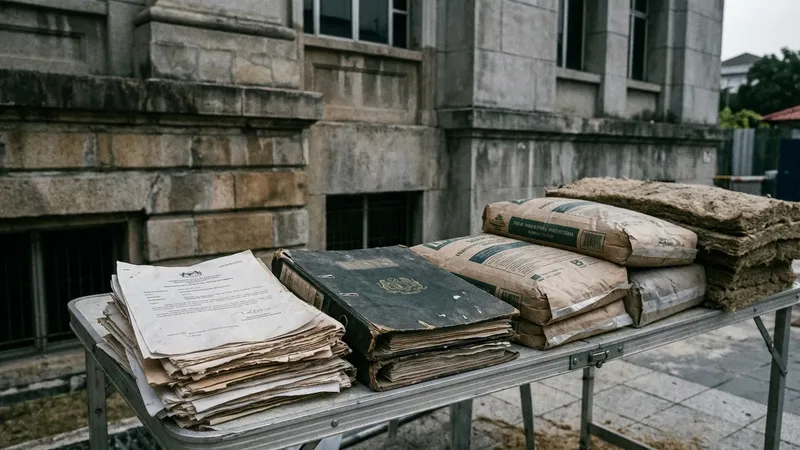
Despite advocacy efforts spanning four decades, Malaysia has not enacted a comprehensive ban on asbestos. As the newly appointed natural resources minister takes office, NGOs and labor unions are demanding urgent action before mesothelioma cases double over the next two decades.
Current Asbestos Status in Malaysia
What’s Restricted
| Type | Status | Since |
|---|---|---|
| Amphibole asbestos | Partially banned | 1999 |
| Government buildings | Restricted | 2005 |
| Chrysotile (white asbestos) | Still allowed | : |
| Private construction | Unregulated | : |
While amphibole asbestos was partially banned in 1999 and government buildings have faced restrictions since 2005, chrysotile asbestos remains legal under “controlled use” policies, and private construction is essentially unregulated.
The Growing Health Burden
Mesothelioma Projections
| Year | Cases (Malaysia) |
|---|---|
| 2022 | 27 |
| 2030 | ~35 (projected) |
| 2045 | 51 (projected) |
The Global Cancer Observatory projects Malaysia’s mesothelioma cases will nearly double by 2045. Given mesothelioma’s 30-50 year latency period, today’s exposures will cause cancers through 2075 and beyond.
The Economic Reality
Advocacy groups cite research showing:
For every $1 spent on asbestos consumption, the economy absorbs nearly $4 in healthcare costs, rehabilitation, and lost productivity.
The argument that asbestos is economically necessary ignores these downstream costs.
Who’s Pushing for a Ban
A coalition of organizations has called on the new natural resources minister to prioritize a total ban:
- Building and Wood Workers’ International (BWI)
- Consumers’ Association of Penang (CAP)
- Sahabat Alam Malaysia (environmental group)
- Health and Safety Advisory Centre (HASAC)
These groups have been sounding the alarm since the 1980s, often facing fierce resistance from industry lobbyists.
Who’s at Risk
Current Exposure Sources
| Sector | Risk |
|---|---|
| Construction workers | Daily exposure during renovation/demolition |
| Maintenance workers | Working with legacy materials |
| Utilities workers | Asbestos-cement water pipes |
| Waste management | Handling asbestos debris |
Upcoming Infrastructure Risk
Malaysia’s Water Sector Transformation 2040 (WST2040) agenda plans to replace aging infrastructure, including thousands of kilometers of asbestos-cement water pipes. Without proper regulations, workers removing this piping face significant exposure risk.
Today’s exposures in Malaysia will cause mesothelioma cases through 2075 and beyond, given the disease’s 30-50 year latency period. Every year without a comprehensive ban means more future diagnoses and deaths.
Industry Resistance
Anti-asbestos activists have revealed that Malaysia’s asbestos industry may be using a public relations firm to fight the ban. The Consumers Association of Penang highlighted how industry groups supporting “controlled use” of chrysotile employ PR tactics to delay regulation.
Common Industry Arguments (and Rebuttals)
| Argument | Rebuttal |
|---|---|
| ”Controlled use is safe” | WHO: No safe level of asbestos exposure |
| ”Economic necessity” | $1 use = $4 healthcare costs |
| ”Jobs depend on it” | Alternative materials create jobs too |
| ”Only certain types are dangerous” | All asbestos types cause mesothelioma |
What Advocates Want
The coalition is urging the government to:
- Finalize a total asbestos ban within the current parliamentary term (before 2027)
- Convene urgent stakeholder meetings with unions and health experts
- Develop safe removal protocols for legacy asbestos
- Protect workers during infrastructure replacement projects
- Lead ASEAN in regional asbestos policy
Global Context
Malaysia lags behind much of the world in asbestos regulation:
| Country/Region | Status |
|---|---|
| European Union | Banned |
| Australia | Banned (2003) |
| Canada | Banned (2018) |
| United States | Chrysotile banned (2024) |
| Malaysia | Not fully banned |
Over 70 countries have enacted comprehensive asbestos bans. Malaysia’s continued allowance of chrysotile puts it among a shrinking minority.
Implications for people with mesothelioma
For Malaysian Patients
- Limited specialized treatment centers
- Challenges in establishing occupational exposure history
- Potential compensation through workplace injury systems
For International Readers
Malaysia’s situation illustrates how asbestos continues to cause harm in countries without comprehensive bans. Products manufactured in countries with weak regulation can enter global supply chains, as seen in the Australian children’s sand recall.
What Comes Next
The advocacy groups have set a clear deadline: a total ban before 2027. Whether the new minister prioritizes this issue will determine whether Malaysia joins the majority of developed nations in eliminating ongoing asbestos exposure.
What's currently banned in Malaysia?▼
Only amphibole asbestos was partially banned in 1999. Government buildings have faced restrictions since 2005. However, chrysotile (white asbestos) remains legal under “controlled use” policies, and private construction is essentially unregulated.
Why hasn't Malaysia banned asbestos?▼
Industry lobbyists have fought regulation for decades, using PR tactics to promote “controlled use” as safe. Common arguments cite economic necessity. But advocates note that $1 spent on asbestos generates $4 in healthcare costs, making the economic argument hollow.
Who is at risk in Malaysia?▼
Construction workers, maintenance workers, utilities personnel (especially those handling asbestos-cement water pipes), and waste management workers face ongoing exposure. The upcoming WST2040 infrastructure project will replace thousands of kilometers of asbestos-cement pipes, potentially exposing many workers.
How does Malaysia compare to other countries?▼
Over 70 countries have comprehensive asbestos bans, including the EU, Australia (2003), Canada (2018), and the US (chrysotile banned 2024). Malaysia remains among a shrinking minority that allows chrysotile asbestos.