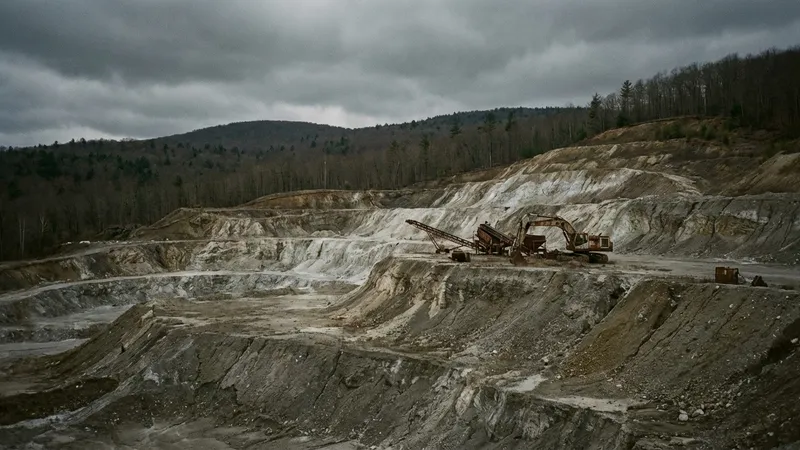
Vanderbilt Minerals, LLC, a Norwalk, Connecticut-based mining company, filed for Chapter 11 bankruptcy protection on February 16, citing $117.2 million in accumulated talc litigation costs. The filing in the U.S. Bankruptcy Court for the Northern District of New York (Case No. 26-60110) immediately freezes more than 1,400 pending lawsuits alleging the company’s talc products contained asbestos.
The company reported $64.3 million in revenue for 2025 and approximately 125 employees. Chief Restructuring Officer Dean Vomero stated the business “was cash-flow positive absent the growing costs of the talc-related litigation.”
The Talc-Asbestos Connection
Vanderbilt mined talc from its Gouverneur mine in St. Lawrence County, New York, from 1940 until 2008. The geological formation in that region contains naturally occurring asbestos minerals, including tremolite and anthophyllite, interspersed with talc deposits.
In 1972, OSHA required that tremolite talc from the Gouverneur site be handled as asbestos due to cross-contamination. The Mine Safety and Health Administration agreed. Vanderbilt officials objected.
The company’s NYTAL brand industrial talc was used in manufacturing molds, floor tiles, paints, ceramics, rubber, plastics, and pharmaceuticals. Court testimony has indicated that some NYTAL grades contained significant amounts of asbestos fiber. Vanderbilt stopped mining talc in 2008.
How Litigation Costs Escalated
Pending cases against Vanderbilt grew from 307 in 2019 to more than 1,400 at the time of filing. Annual defense and indemnity costs rose from $2.9 million in 2019 to $8.0 million in 2025.
The company and its parent, R.T. Vanderbilt Holding Company, have settled more than 1,250 cases and had more than 4,500 dismissed. But recent jury verdicts accelerated the financial pressure:
| Year | Case | Verdict | Details |
|---|---|---|---|
| 2025 | Bishop v. Vanderbilt | $12.25 million | Woman lived near Gouverneur mine. First U.S. environmental exposure verdict. |
| 2024 | Barone v. Vanderbilt | $22.5 million | GE plastics plant worker exposed to Vanderbilt talc in 1960s. Included $7.5M in punitive damages. |
| 2023 | Peckham v. Vanderbilt | $20 million | 50% liability for exposure during window frame removal in the 1960s. |
In the Bishop case, a St. Lawrence County jury found Vanderbilt knew about asbestos in its mines since 1947. Anna Bishop had lived less than one mile from the company’s mining operations from 1964 to 1984 and died of mesothelioma in January 2023. The verdict was the largest in St. Lawrence County history.
The Sale Plan
Vanderbilt is pursuing a sale of its operating assets to stalking horse bidder Commodore Materials, LLC, for approximately $50 million. The deal includes:
- $15 million in debtor-in-possession financing from an affiliate of the buyer
- A $2 million break-up fee and up to $1 million in expense reimbursement
- An auction scheduled for April 2, 2026
- A sale closing deadline of April 17, 2026
The company also seeks court approval of a settlement with parent R.T. Vanderbilt Holding Company resolving intercompany claims tied to a $27.9 million promissory note.
What the Automatic Stay Means
The Chapter 11 filing triggers an automatic stay that halts all 1,400+ pending lawsuits. People with claims against Vanderbilt will not be able to proceed with their individual cases while the bankruptcy is active. Recovery for claimants will depend on how the court handles the $117.2 million in talc liabilities against available proceeds.
As of February 15, the company had approximately $1.3 million in liquidity and projected a $4.7 million deficit by mid-April without new financing.
Part of a Pattern
Vanderbilt joins a growing list of talc and asbestos companies that have filed for bankruptcy to manage mass tort liabilities:
- Imerys Talc America (former J&J talc supplier): Filed Chapter 11 in February 2019, facing 14,600+ lawsuits. A proposed $862 million asbestos trust was announced in January 2024.
- Johnson & Johnson: Attempted twice to resolve tens of thousands of talc claims through a subsidiary bankruptcy strategy. Both attempts were rejected by courts.
The filing comes amid record-breaking talc verdicts. Juries awarded over $2.5 billion in mesothelioma and talc-related verdicts in 2025 alone.
Vanderbilt Minerals continues operating under court supervision during the bankruptcy process. The company’s current product lines (clays, silicates, and other non-talc minerals) serve more than 800 customers across approximately 60 countries. Talc mining ceased in 2008.
Why did Vanderbilt Minerals file for bankruptcy?▼
The company filed Chapter 11 after accumulating $117.2 million in talc-related litigation costs. Annual defense costs tripled from $2.9 million in 2019 to $8.0 million in 2025, and recent verdicts exceeding $12 million, $20 million, and $22.5 million increased financial pressure.
What happens to pending lawsuits against Vanderbilt?▼
The Chapter 11 filing triggers an automatic stay that freezes all 1,400+ pending cases. Claimants cannot proceed with individual lawsuits during the bankruptcy. Their recovery will depend on the outcome of the bankruptcy proceedings and how the court allocates available funds.
Was asbestos found in Vanderbilt's talc?▼
Multiple court proceedings have found that Vanderbilt’s talc from the Gouverneur mine in New York contained naturally occurring asbestos, including tremolite and anthophyllite. In 1972, OSHA required the company’s talc to be handled as asbestos. A jury in 2025 found the company knew about asbestos in its mines since 1947.
Who is buying Vanderbilt's assets?▼
Commodore Materials, LLC is the stalking horse bidder at approximately $50 million. An auction is scheduled for April 2, 2026, with a closing deadline of April 17.
References
Insurance Journal. Asbestos Lawsuits Prompt Vanderbilt Minerals to File Bankruptcy.
https://www.insurancejournal.com/news/national/2026/02/18/858334.htm
Bondoro. Case Summary: Vanderbilt Minerals Chapter 11.
https://bondoro.com/vanderbilt-minerals/
Global Cosmetics News. Vanderbilt Minerals Files for Bankruptcy Amid Surge in Talc-Related Asbestos Lawsuits.
https://www.globalcosmeticsnews.com/vanderbilt-minerals-files-for-bankruptcy-amid-surge-in-talc-related-asbestos-lawsuits/
PR Newswire. Vanderbilt Mining Hit with $12.25 Million Asbestos Exposure Verdict.
https://www.prnewswire.com/news-releases/vanderbilt-mining-hit-with-12-25-million-asbestos-exposure-mesothelioma-cancer-verdict-302545903.html
Verita Global. Vanderbilt Minerals Claims Information.
https://www.veritaglobal.net/Vanderbilt