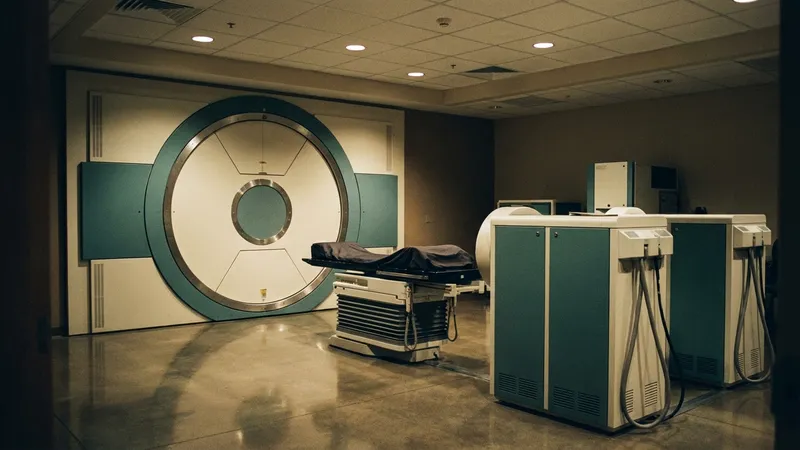
A UK-based Phase III clinical trial is testing whether proton beam therapy can improve survival for people with pleural mesothelioma compared to standard active surveillance. The HIT-Meso trial, led by Dr. Crispin Hiley at the UCL Cancer Institute, is actively recruiting across up to 25 centers in the United Kingdom.
The trial targets a two-year overall survival rate of 50%, up from the approximately 30% seen with surveillance alone. If successful, it could establish proton beam therapy as a frontline treatment option for early-stage pleural mesothelioma.
How Proton Beam Therapy Differs
Proton beam therapy uses charged particles instead of conventional X-rays to deliver radiation. The key advantage is precision: protons deposit most of their energy at a specific depth within the body and stop, reducing radiation damage to surrounding healthy tissue.
For pleural mesothelioma, which develops in the thin lining around the lungs, this precision matters. Conventional radiotherapy can damage the heart, lungs, and esophagus. Proton therapy’s targeted delivery could allow higher doses to the tumor while sparing critical organs nearby.
In the HIT-Meso trial, participants randomized to the treatment arm receive 50Gy in 25 daily fractions over five weeks. Visible tumors receive an integrated boost to 60Gy. Treatment is delivered at two specialized proton centers: University College London Hospitals and the Christie NHS Foundation Trust in Manchester.
Trial Design and Eligibility
HIT-Meso (NCT05655078) is a randomized controlled trial with 1:1 allocation. Half of participants receive proton beam therapy, while the other half continue with active surveillance, the current standard of care for many people with early-stage pleural mesothelioma.
The trial aims to enroll 148 participants. Eligibility requires a biopsy-confirmed diagnosis of malignant pleural mesothelioma (any histological subtype), no distant metastases, adequate lung function, and no prior thoracic radiotherapy. Participants must be 18 or older.
The primary endpoints are progression-free survival and overall survival. Secondary endpoints include safety, toxicity, quality of life, and health economics data. Every participant undergoes CT scans and blood sample collection over a two-year follow-up period.
People with pleural mesothelioma in the UK who are interested in the HIT-Meso trial can contact the trial team at [email protected] or search for NCT05655078 on the NIHR Be Part of Research platform.
Why This Trial Matters
Most people with pleural mesothelioma currently face limited treatment options. Standard first-line treatment typically involves chemotherapy, and surveillance is common for those whose disease is stable. Proton beam therapy has shown promise in other thoracic cancers but has not been rigorously tested in a Phase III setting for mesothelioma. MesoWatch tracks active mesothelioma clinical trials across multiple countries.
The trial also includes a qualitative sub-study, conducted by the University of Sheffield, that captures patient experiences during treatment. Eight to 10 participants from the proton therapy arm will contribute to this research, which could shape how future trials report on quality of life.
The HIT-Meso trial is funded by Asthma + Lung UK and Mesothelioma UK, and sponsored by University College London. Recruitment began in April 2024 and is expected to continue through March 2027.
What is proton beam therapy?▼
Who is eligible for the HIT-Meso trial?▼
Where is proton beam therapy available for this trial?▼
How long does proton beam treatment take?▼
References
BBC News. (2026-03-10). Proton beam hope for asbestos cancer patients.
https://www.bbc.com/news/articles/cly0pn1xn79o
ClinicalTrials.gov. (2024-04-01). HIT-Meso: Hemithoracic Intensity-modulated Pleural Proton Beam Therapy for Mesothelioma.
https://clinicaltrials.gov/study/NCT05655078
Mesothelioma UK. (2024-04-01). HIT-Meso Trial Information.
https://www.mesothelioma.uk.com