Washington Mesothelioma Verdicts and Settlements
Washington mesothelioma outcomes: $13.5M Longview Fibre paper mill verdict, $16.2M Kotzerke default judgment, Budd v. Kaiser Gypsum, and 2025 appellate rulings.

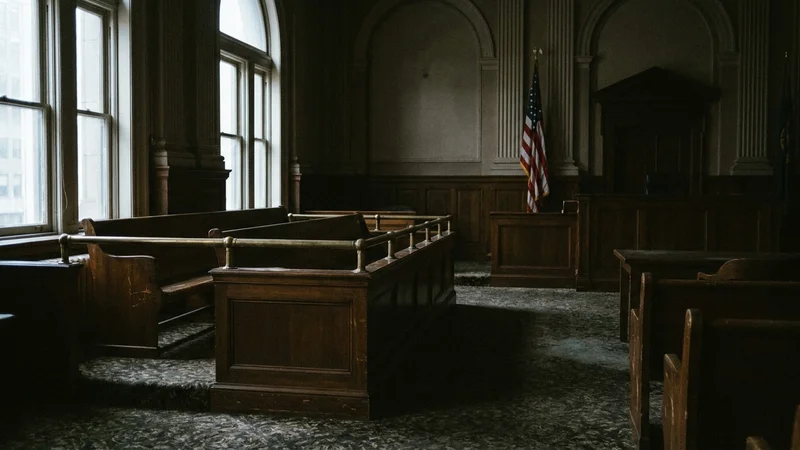
Washington’s concentration of shipyard, paper mill, and industrial asbestos exposure has produced an active mesothelioma litigation record. Verdicts, default judgments, a federal bench trial, and two significant appellate rulings in 2024 and 2025 have each shifted the landscape for Washington asbestos claims.
Major Washington Mesothelioma Verdicts
| Amount | Case | Year | Docket | Status |
|---|---|---|---|---|
| $13.5M verdict | Conner v. Union Carbide / Elementis predecessors (King County) | 2025 | Unconfirmed by neutral source | Entered, not final |
| $16,219,398.25 default judgment | Kotzerke v. Asbestos Corporation Limited (Pierce County) | 2025 | No. 23-2-05287 | Entered, not final; defendant in bankruptcy |
| $13.5M verdict | Budd v. Kaiser Gypsum Co. (King County) | 2020 verdict / 2022 affirmed | No. 81918-6-I (Court of Appeals) | Affirmed on appeal |
| No liability | Perkins v. United States (W.D. Wash.) | 2024 | No. 3:22-cv-05701-RJB | Defense verdict, entered |
| $5.5M judgment reversed | Little v. Hardie-Tynes Co., Inc. (WA App. Div. One) | 2025 | No. 86318-5-I (Court of Appeals) | Reversed, petition for review pending (No. 105018-6) |
Conner v. Union Carbide / Elementis Predecessors
A King County jury awarded $13.5 million to the estate and family of Robert Conner, a former electrician and yard worker at the Longview Fibre paper mill in Longview, Washington. Conner worked at the mill and was exposed to asbestos there between the 1960s and 1980. He was diagnosed with mesothelioma in December 2023 and died in March 2024.
The lawsuit named Union Carbide, which sold raw asbestos, and predecessors of Elementis Chemicals, which delivered asbestos to the mill. Longview Fibre itself was not a defendant. The total verdict of $13.5 million is confirmed by neutral local press, including TDN (The Daily News, Longview) and The Daily Chronicle. The verdict is entered and has not been affirmed on appeal. No neutral court record source confirmed a docket number for this case at the time of publication.
Kotzerke v. Asbestos Corporation Limited
Pierce County Superior Court entered a $16,219,398.25 default judgment in 2025 against Asbestos Corporation Limited, a Canadian asbestos supplier, in case No. 23-2-05287. This is a default judgment, not a jury verdict. Judge Tateasha Davis imposed roughly $68,000 in monetary sanctions before entering default after the defendant’s repeated discovery violations.
Steven “Steve” Kotzerke died in 2022 of asbestos-related lung cancer following industrial asbestos exposure between 1960 and 1978. The total judgment amount and the default nature of the award are confirmed by a BusinessWire press release carried by Yahoo Finance. Asbestos Corporation Limited has since filed for bankruptcy in the Southern District of New York (No. 25-10934), which may affect collection of any eventual judgment.
Budd v. Kaiser Gypsum Co., Inc.
In 2020, a King County jury awarded approximately $13.5 million to Raymond Budd for mesothelioma caused by asbestos-containing Kaiser Gypsum joint compound used at his family’s drywall business from 1962 to 1972.
The Washington Court of Appeals, Division One, affirmed on February 22, 2022, in No. 81918-6-I (reported at 21 Wash.App.2d 56, 505 P.3d 120), rejecting all nine of Kaiser’s appellate arguments. Those arguments included challenges to causation, medical causation, and COVID-era jury selection protocols. This is the most legally settled outcome in the current Washington record, confirmed at Justia and Washington Courts.
Perkins v. United States
On December 27, 2024, the U.S. District Court for the Western District of Washington issued a no-liability ruling in Perkins v. United States (No. 3:22-cv-05701-RJB) in a Federal Tort Claims Act bench trial before Judge Robert J. Bryan. Harang Joseph Perkins brought the case as personal representative of Geraldine Rabb Perkins, who died June 6, 2020 of sarcomatoid malignant mesothelioma. The suit alleged take-home and environmental asbestos exposure from her husband’s work as a Navy Machinist Mate at Puget Sound Naval Shipyard from 1968 to 1974.
The court rejected causation under Washington’s substantial-factor test, excluded the plaintiff’s experts as unreliable, and found the alleged exposure immeasurably low and not above background. The ruling narrows the path for future FTCA take-home claims against the Navy in Washington state. It does not affect product-manufacturer claims by Puget Sound Naval Shipyard workers or their family members, which follow a separate legal theory.
2025 Appellate Developments
Two Washington appellate decisions in 2025 directly shape how mesothelioma cases proceed in this state.
Cockrum v. C.H. Murphy/Clark-Ullman, Inc.
On May 29, 2025, the Washington Supreme Court decided Cockrum v. C.H. Murphy/Clark-Ullman, Inc. (No. 102881-4) in a 7-2 decision. Jeffrey Cockrum developed mesothelioma after decades of asbestos exposure while working at Alcoa’s Wenatchee Works aluminum plant from 1967 to 1997. The trial court had dismissed his claim under the workers’ compensation exclusivity bar. The Court of Appeals affirmed that dismissal on February 12, 2024. The Supreme Court then reversed the Court of Appeals and remanded.
The court established a “virtual certainty” standard for the deliberate injury exception under RCW 51.24.020: employers lose workers’ compensation immunity for latent occupational diseases if they had actual knowledge that disease was “virtually certain” to occur to their employees. The opinion explicitly overruled Walston v. Boeing Co. (2014), calling that prior decision “demonstrably incorrect and harmful.” Justice Raquel Montoya-Lewis authored the majority; Justice Barbara Madsen dissented. The decision opens a narrow but meaningful path for mesothelioma plaintiffs whose employers knowingly exposed them to asbestos.
Little v. Hardie-Tynes Co., Inc.
On August 25, 2025, the Washington Court of Appeals, Division One, issued a published opinion in No. 86318-5-I reversing a $5,500,892 judgment for Clifton “Cliff” Little, a former Navy worker who developed mesothelioma after asbestos exposure at sea and at a naval shipyard. The defendant, referred to in court filings as Hardie-Tynes Co. Inc. (or Hardie-Tyres Co., Inc. in some secondary sources), had acquired the assets of an earlier predecessor entity in 1997.
The court held that under Washington’s product-line successor liability doctrine, a successor must actually manufacture or sell the same defective product line to inherit predecessor tort liability. Because the successor entity did not sell asbestos-containing products, it did not qualify for product-line liability. A Petition for Review (No. 105018-6) is pending before the Washington Supreme Court. If granted, the Supreme Court’s disposition could restore or further narrow product-line successor liability in Washington asbestos cases.
Punitive Damages in Washington
Washington does not allow punitive damages at common law unless expressly authorized by statute. No Washington statute authorizes punitive damages in asbestos personal injury or wrongful death cases. Every Washington asbestos verdict and judgment is compensatory, covering economic damages, non-economic damages, and loss of consortium. This is a meaningful distinction when comparing Washington verdict figures against states where punitive damages are available and can multiply a compensatory award several times over.
Washington’s Filing Deadline
Washington has a three-year statute of limitations for personal injury claims under RCW 4.16.080(2). Courts apply the discovery rule, starting that three-year clock at the date of mesothelioma diagnosis. Wrongful death claims also carry a three-year period, running from the date of death under the same statute.
Washington’s product liability statute (RCW 7.72.060) sets a separate 12-year rebuttable presumption tied to a product’s “useful safe life”: if harm occurred more than 12 years after the product was delivered, there is a presumption that its useful safe life had expired. That 12-year provision is a rebuttable defense, not a hard limit on when claims can be filed, and it does not shorten the three-year personal injury limitations period. Both statutes are confirmed at the Washington State Legislature’s official site.
These figures represent reported outcomes at the time of publication. Verdicts listed as “entered” have not been affirmed on appeal, and a defendant in bankruptcy (Asbestos Corporation Limited) may limit collection. Individual case results depend on specific facts including exposure history, medical documentation, and the defendants involved. Prior results do not guarantee a similar outcome.
Settlements and Trust-Fund Claims
Most Washington mesothelioma claims resolve before trial through negotiated settlements or asbestos bankruptcy trust fund claims. Many companies that manufactured or distributed asbestos-containing products have filed for bankruptcy and established trust funds to compensate injured workers and their families. Washington workers with exposure at paper mills, shipyards, aluminum plants, and construction sites may have claims against multiple trusts. Settlement and trust fund outcomes are generally confidential and not reported in neutral press, so public records of Washington mesothelioma outcomes skew toward verdicts and appellate decisions.
References
TDN (The Daily News, Longview WA). Jury Awards $13.5M, Conner v. Union Carbide coverage.
https://tdn.com/news/local/health/article_53227bdf-cc83-4d40-974d-e9c11262b0ff.html
BusinessWire. $16 Million Awarded in Asbestos-Related Death in Washington State, Kotzerke v. Asbestos Corporation Limited.
https://www.businesswire.com/news/home/20250319192766/en/%2416-Million-Awarded-in-Asbestos-Related-Death-in-Washington-State
Justia (Washington Court of Appeals, Division I). Budd v. Kaiser Gypsum Co., Inc., No. 81918-6-I.
https://law.justia.com/cases/washington/court-of-appeals-division-i/2022/81918-6.html
Washington State Supreme Court. Cockrum v. C.H. Murphy/Clark-Ullman, Inc., No. 102881-4.
https://www.courts.wa.gov/opinions/pdf/1028814.pdf
K&L Gates. Recent Appellate Opinion on Product-Line Successor Liability in Asbestos Cases (Little v. Hardie-Tynes).
https://www.klgates.com/Recent-Appellate-Opinion-Offers-Litigants-Reason-to-Revisit-the-Application-Of-Product-Line-Successor-Liability-in-Asbestos-Cases-9-24-2025
Product Law Perspective (Husch Blackwell LLP). Washington Court Finds No Take-Home Exposure in Asbestos Bench Trial (Perkins v. United States).
https://www.productlawperspective.com/2025/01/washington-court-finds-no-take-home-exposure-in-asbestos-bench-trial/
Washington State Legislature. RCW 4.16.080, Actions limited to three years.
https://app.leg.wa.gov/rcw/default.aspx?cite=4.16.080
Washington State Legislature. RCW 7.72.060, Useful safe life, Presumption.
https://app.leg.wa.gov/rcw/default.aspx?cite=7.72.060
CDC. Mesothelioma Incidence Data, CDC/SHARP.
https://stacks.cdc.gov/view/cdc/208529
Reader Q&A
Frequently Asked Questions
What was the Washington Longview Fibre verdict?
A King County jury awarded $13.5 million to the estate and family of Robert Conner, a former electrician at the Longview Fibre paper mill in Longview, Washington. Conner was exposed to asbestos at the mill between the 1960s and 1980, was diagnosed with mesothelioma in December 2023, and died in March 2024. The defendants were Union Carbide and predecessors of Elementis Chemicals, not Longview Fibre itself. The total is confirmed by TDN and The Daily Chronicle.
Was the Kotzerke $16.2 million award a jury verdict?
No. The Kotzerke award is a default judgment entered by Pierce County Superior Court in 2025 in case No. 23-2-05287. The court entered default against Asbestos Corporation Limited after the defendant’s repeated discovery violations. The judgment includes roughly $68,000 in prior sanctions. Asbestos Corporation Limited has since filed for bankruptcy, which may affect enforcement of the judgment.
Who was the judge in Perkins v. United States?
Judge Robert J. Bryan of the U.S. District Court for the Western District of Washington presided over the bench trial in Perkins v. United States (No. 3:22-cv-05701-RJB). The docket suffix “RJB” corresponds to Judge Bryan’s initials. He issued the no-liability ruling on December 27, 2024.
What is the Washington mesothelioma statute of limitations?
Washington has a three-year statute of limitations for personal injury and wrongful death claims under RCW 4.16.080(2). For mesothelioma, courts apply the discovery rule and start the three-year period at the date of diagnosis. Wrongful death claims run three years from the date of death.
What did Cockrum v. C.H. Murphy/Clark-Ullman decide?
On May 29, 2025, the Washington Supreme Court (No. 102881-4) reversed the Court of Appeals, which had affirmed the trial court’s dismissal of Jeffrey Cockrum’s claim. The Supreme Court established a “virtual certainty” standard for the deliberate injury exception under RCW 51.24.020, allowing mesothelioma plaintiffs to sue employers outside workers’ compensation when employers had actual knowledge that disease was virtually certain to occur. The opinion explicitly overruled Walston v. Boeing Co. (2014).
Are punitive damages available in Washington asbestos cases?
No. Washington does not allow punitive damages at common law unless expressly authorized by statute, and no statute authorizes them in asbestos tort cases. All Washington asbestos awards are compensatory, covering economic damages, non-economic damages, and loss of consortium.