Deadlines
Filing Deadlines in North Carolina
North Carolina sets a statute of limitations on mesothelioma lawsuits. The clock starts at diagnosis, not exposure.
Missing these deadlines can permanently bar a family's right to compensation.
When the Clock Starts
In North Carolina, the statute of limitations begins on the date of diagnosis, not the date of asbestos exposure. This is called the "discovery rule."
Mesothelioma has a latency period of 20 to 50 years. Without the discovery rule, most patients would lose their right to file before they even knew they were sick.
The clock starts when:
- A physician provides a formal mesothelioma diagnosis
- Symptoms reasonably indicated the disease was present
Personal Injury Claims in North Carolina
North Carolina allows 3 years from diagnosis to file a personal injury claim. These claims are filed by the patient and typically seek recovery for medical expenses (past and future treatment), lost wages, pain and suffering, and loss of quality of life, meaning the impact of the disease on daily activities, relationships, and ability to work.
Wrongful Death Claims in North Carolina
North Carolina allows 2 years from the date of death to file a wrongful death claim. These claims can be filed by:
- Surviving spouse
- Children (including adult children)
- Parents (in some cases)
- Estate representative
Wrongful death claims can recover compensation for:
- Medical expenses incurred before death
- Funeral and burial costs
- Loss of financial support
- Loss of companionship and guidance
Exposure Record
Asbestos Exposure Sites in North Carolina
North Carolina has 23 cities with documented asbestos exposure sites and 43 liable parties on record. Workers in these areas may have grounds for mesothelioma claims.
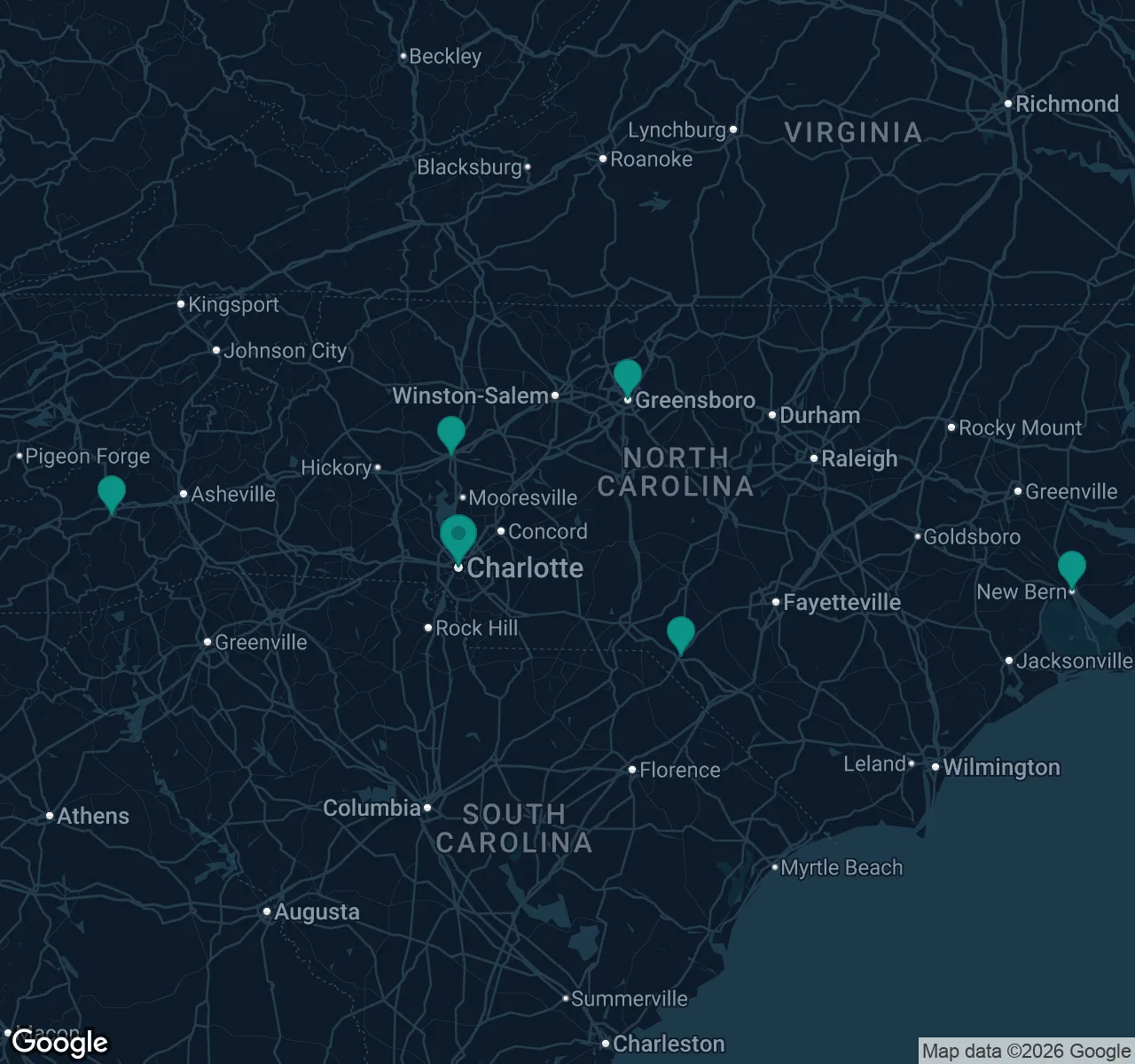
Select a city to view specific exposure sites, companies, and facilities with known asbestos exposure history.
North Carolina has 3 cancer centers specializing in mesothelioma treatment. For a complete list of documented asbestos exposure sites in North Carolina, see our exposure database.
Compensation
Types of Compensation in North Carolina
Families in North Carolina affected by mesothelioma may qualify for multiple forms of compensation. Most cases involve a combination of trust fund claims and litigation.
Lawsuits and Settlements
Personal injury or wrongful death lawsuits can be filed against companies responsible for asbestos exposure. Most cases settle before trial, with average mesothelioma settlements ranging from amounts that vary widely by case. Total compensation can be significantly higher when combining multiple sources. North Carolina courts generally allow expedited scheduling for mesothelioma cases.
Asbestos Trust Funds
Over 60 companies have filed bankruptcy due to asbestos litigation, creating trust funds totaling $37 billion, according to RAND Corporation, for people harmed by asbestos exposure. These claims are separate from lawsuits and can be filed regardless of whether a company is still operating. Trust fund claims have their own deadlines and requirements.
Learn about trust fund claims →CDC Data
North Carolina Mesothelioma in Context (CDC, 1999 to 2022)
Federal CDC records track mesothelioma deaths and incidence for every state. Here's how North Carolina compares.
Source: CDC mortality and incidence data, 1999 to 2022.
Asbestos Exposure History in North Carolina
Textile mills, shipyards, and power plants drove most of the state's asbestos exposure. The North Carolina Shipbuilding Company in Wilmington employed over 20,000 workers during World War II to construct 243 ships. Burlington Textile Mill, Cannon Textile Mill, and Cone Mills processed asbestos fibers directly. Power plants like Buck Steam Plant, Cliffside Steam Plant, and Carolina Power & Light plants used asbestos for insulation and machinery.
The state's exposure history also includes naturally occurring asbestos in western counties. Zonolite Inc. processed contaminated vermiculite from Libby, Montana until 1987. North Carolina recognized asbestosis as a compensable disease as early as 1935. Carolina Asbestos Company in Davidson was another major exposure source.
Additional sources include military bases like Fort Bragg and Camp Lejeune, chemical plants like Celanese Fiber Plant, and paper mills like Champion and Weyerhauser. Workers in textiles, shipbuilding, power generation, and mining at places like Foot Mineral Mine all faced high risks.
Exposure has been documented at 26 sites spanning six counties, including Wilmington, Davidson, Fayetteville, and Burlington. Over 1,000 residents have died from asbestos-related diseases. Contamination lingers in older buildings and mine sites.
Representation
Choosing a North Carolina Mesothelioma Lawyer
Mesothelioma litigation is a focused practice area. Not every personal injury attorney has the exposure databases, product identification resources, or trial experience these cases require. Our guide to choosing a mesothelioma law firm covers this in detail.
A few things to look at when narrowing a shortlist. Attorneys who concentrate on mesothelioma and asbestos cases typically maintain databases of products, manufacturers, and job sites that most general personal injury firms don't have. A firm's past settlements and verdicts in asbestos cases say more about depth than general trial experience. Familiarity with North Carolina procedures, judges, and filing requirements shortens the learning curve, especially in an expedited docket. And most mesothelioma attorneys work on contingency, so the family pays nothing unless compensation is recovered.
Learn more about mesothelioma lawyer costs and how contingency fees work.

Talk to a Mesothelioma Attorney About Your North Carolina Case
Aaron Heckaman
Bailey Cowan Heckaman PLLC

Aaron Heckaman is a Houston-based mesothelioma trial lawyer with Bailey Cowan Heckaman PLLC, recognized by America's Top 100 Attorneys. He is not a referral service. He explains how these cases work, names the companies likely responsible for your loved one's exposure, and what your family could recover in North Carolina. No fees unless you recover compensation.
Sponsored by Bailey Cowan Heckaman PLLC. 1360 Post Oak Blvd., Suite 2300, Houston, TX 77056. Sponsored placement, independently vetted. Full disclosure
Attorney Advertising. Aaron Heckaman, Bailey Cowan Heckaman PLLC, 1360 Post Oak Blvd., Suite 2300, Houston, TX 77056, is responsible for the content of this advertisement. Prior results do not guarantee a similar outcome. Each case is different. No attorney-client relationship is formed by using this site. Bailey Cowan Heckaman PLLC is licensed in Texas. Matters in other jurisdictions are handled in association with attorneys licensed in those states. No aspect of this advertisement has been approved by the Supreme Court of New Jersey.
Speak with a MesoWatch Advocate
Independent Mesothelioma Support
Advocacy. Research. Hope.
MesoWatch is an independent mesothelioma advocacy and journalism organization. Our advocates can answer questions about treatment, exposure history, trust funds, and connect you to the right resources for your situation.
MesoWatch is an independent advocacy and journalism organization. For legal advice, talk with a licensed attorney.