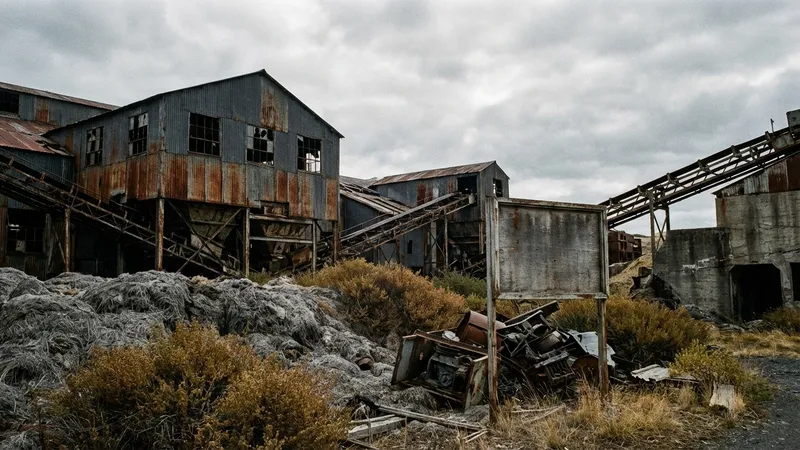
A new investigative series from The Tyee reveals the untold health legacy of Cassiar, a remote asbestos mining town in northern British Columbia where residents say they were never warned about the risks of living surrounded by the carcinogen.
A Town Built on Asbestos
40 Years of Mining
The Cassiar mine operated from 1953 to 1992, producing over 100,000 tons of chrysotile asbestos per year at its peak. During four decades of operations, more than 50,000 people moved in and out of the remote community of approximately 1,500 residents.
The town existed solely to serve the mine. When it closed, the town was dismantled.
Green Dust Everywhere
Former residents recall a massive tailings pile rising over 300 feet high that loomed over the entire community. Green asbestos dust settled over everything.
Children were told to “eat between the green” when playing in the snow. Kids’ soccer games sent clouds of asbestos dust into the air. The company promoted the message that chrysotile asbestos, the long, flexible fibers mined at Cassiar, was “safer” than other types.
“Never once did I ever, ever hear that asbestos was bad for you or caused cancer,” one former resident told The Tyee. Her father, who worked in the mill, died of mesothelioma within a year of the family leaving Cassiar in 1971.
The Lost Health Data
University Study Never Followed Up
In 1977 and 1983, University of British Columbia researchers performed tests on more than 150 Cassiar residents, including chest X-rays and physical examinations. Subjects were divided into groups: long-term employees, recent employees, and townsite residents.
The research confirmed that higher asbestos exposure correlated with greater likelihood of symptoms like coughing, wheezing, and breathlessness.
But researchers never tracked what happened to these people over time.
50,000 People Scattered
When the mine closed in 1992, residents dispersed across Canada and beyond. No health registry was created. No follow-up studies were conducted. The exposed population simply vanished into the general population, their health outcomes untracked.
| Timeline | Event |
|---|---|
| 1953 | Mine opens |
| 1970s-80s | UBC conducts health studies |
| 1992 | Mine closes, town dismantled |
| 2026 | Still no systematic health tracking |
Where Are the Claims?
Only Two on Record
WorkSafeBC told The Tyee it has received only two asbestos-related claims from Cassiar, both in the 1980s. The agency says it has no “recent claims associated with the Cassiar mine.”
But Lee Loftus, former WorkSafeBC vice-chair, told The Tyee he has personally helped about nine former Cassiar workers with compensation claims, claims he assumed were filed and accepted.
The discrepancy raises questions about whether affected workers know they can file claims or are being properly tracked in the system.
BC’s Ongoing Asbestos Problem
WorkSafeBC accepts an average of 55 asbestos-related claims every year. Asbestos remains the leading cause of workplace illness and death in British Columbia.
| BC Asbestos Statistics | Number |
|---|---|
| Average annual claims | 55 |
| Leading cause of workplace death | Yes |
| Cassiar claims on record | 2 |
Mesothelioma typically develops 20-50 years after asbestos exposure. Many people exposed at Cassiar in the 1970s and 1980s may only now be developing disease, if they even know to connect their illness to their time in the mining town.
Environmental Contamination Remains
One of BC’s Most Contaminated Sites
In 2024, a BC mining watchdog listed the Cassiar asbestos mine among the province’s most contaminated sites. The tailings and mining infrastructure remain, decades after the town was demolished.
Former residents who return to the area must navigate contaminated ground that still poses exposure risks.
What This Means for Former Residents
If You Lived or Worked in Cassiar
Former Cassiar residents should:
- Document your time there: Dates, locations, job duties if you worked at the mine
- Inform your doctor: Include Cassiar in your medical history, especially for respiratory symptoms
- Know the symptoms: Persistent cough, shortness of breath, chest pain (though symptoms typically appear decades after exposure)
- Explore compensation options: Workers’ compensation claims may still be possible depending on your situation
For Family Members
Secondary exposure affected families too. Spouses who washed work clothes and children who played in asbestos-laden snow may have been exposed. Document family connections to Cassiar for medical records.
The Bigger Picture
Canada’s Asbestos Legacy
Cassiar wasn’t alone. Canada was once the world’s largest asbestos exporter, and the federal government promoted the mineral’s “safe use” for decades. The country didn’t fully ban asbestos until 2018.
| Canadian Asbestos History | Year |
|---|---|
| Peak asbestos production | 1970s-80s |
| Cassiar mine closure | 1992 |
| Federal asbestos ban | 2018 |
Communities like Cassiar represent a hidden population of exposed individuals whose health outcomes have never been systematically tracked.
Related Reading
- Mesothelioma Latency Period
- Chrysotile vs. Amphibole Asbestos
- Secondary Asbestos Exposure
- Mining Industry Asbestos Exposure
What was Cassiar?▼
Cassiar was a remote asbestos mining town in northern British Columbia that operated from 1953 to 1992. Over 40 years, more than 50,000 people cycled through the community of about 1,500. The town was completely dismantled when the mine closed.
Were residents warned about asbestos risks?▼
Former residents say they received no warnings about health risks. One resident whose father died of mesothelioma said she “never once” heard that asbestos was dangerous. The company promoted the message that Cassiar’s chrysotile asbestos was “safer” than other types.
Why are there so few compensation claims?▼
WorkSafeBC has only two Cassiar claims on record, despite 50,000 people passing through over 40 years. The population scattered when the mine closed, no health registry was created, and many may not know to connect current illness to decades-old exposure.
What should former Cassiar residents do?▼
Document your time in Cassiar, inform your doctor about potential asbestos exposure, watch for symptoms (cough, shortness of breath, chest pain), and explore compensation options. Symptoms typically appear 20-50 years after exposure.