$1.56B Verdict Against J&J in Talc Mesothelioma Case
Maryland jury orders J&J to pay $1.56 billion after finding the company concealed asbestos risks in talc baby powder. J&J plans appeal.

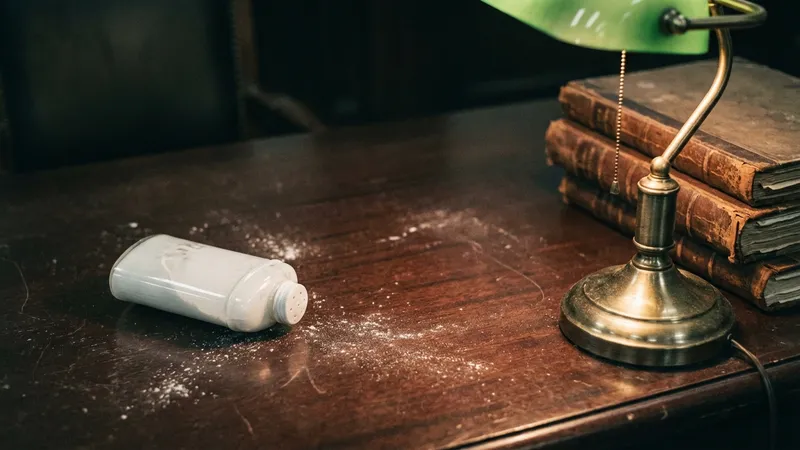
A Baltimore City Circuit Court jury ordered Johnson and Johnson and its affiliates to pay $1.56 billion to a woman who developed peritoneal mesothelioma after decades of using the company’s talc-based baby powder. The December 22, 2025, verdict is the largest single-plaintiff award in the ongoing talc litigation against J&J.
The jury found that J&J failed to warn consumers about asbestos contamination in its talc products and actively concealed the known risks.
The Verdict Breakdown
The $1.56 billion award consists of three components: $1 billion in punitive damages against Johnson and Johnson, $500 million in punitive damages against Pecos River Talc LLC (a J&J-affiliated entity formed to handle talc liabilities), and $59.84 million in compensatory damages covering medical costs and pain and suffering.
The case, identified as Craft v. Ahold Delhaize US Inc. (Case No. 24-X-000005), was tried in Baltimore City. The plaintiff, Cherie Craft, presented evidence that asbestos fibers in J&J’s talc products caused her peritoneal mesothelioma, a cancer of the abdominal lining.
The punitive damages, which account for more than 96% of the total award, reflect the jury’s finding that J&J’s conduct went beyond negligence. Jurors concluded the company knew about asbestos contamination and deliberately chose not to disclose it.
A Pattern of Verdicts
The Baltimore award is part of an accelerating series of talc verdicts against J&J:
- October 2025: A California jury awarded $966 million to a family after a mesothelioma death linked to talc use.
- October 2025: A Florida jury awarded $20 million in a mesothelioma case.
- December 12, 2025: Two women in Los Angeles with ovarian cancer received a combined $40 million verdict.
- February 2026: A Pennsylvania jury awarded $250,000 in an ovarian cancer case where the plaintiff died in 2019 and her children continued the lawsuit.
The pattern spans multiple jurisdictions, cancer types, and jury compositions. In January 2026, retired U.S. District Judge Freda Wolfson, serving as a court-appointed special master, issued a report and recommendation that plaintiffs’ scientific experts should be allowed to testify about the link between talc and cancer. The recommendation, which U.S. District Judge Michael Shipp has yet to adopt in full, could shape Daubert rulings across the more than 67,000 cases pending in the federal MDL.
J&J’s Response
Johnson and Johnson stated it would appeal the Baltimore verdict. The company maintains that its talc products do not contain asbestos and do not cause cancer, citing studies and pointing to the FDA’s position that talc is not classified as a carcinogen.
J&J has previously attempted to resolve talc litigation through a bankruptcy restructuring strategy, using a subsidiary to absorb liability and file for Chapter 11 protection. That approach, sometimes called the “Texas two-step,” has faced legal challenges and judicial skepticism. The most recent attempt, by J&J subsidiary Red River Talc LLC, was dismissed by the U.S. Bankruptcy Court for the Southern District of Texas on March 31, 2025. Following that dismissal, J&J announced it would return to the tort system to litigate claims individually.
The company continues to defend individual cases at trial while the appeals process plays out.
This article reports on a jury verdict and J&J’s stated intent to appeal. Verdicts can be reduced or overturned on appeal. The award amount may change through post-trial motions or appellate review. Prior results do not guarantee a similar outcome in any other case.
The Broader Talc Litigation
More than 67,000 talc lawsuits are pending in the federal MDL against J&J, with tens of thousands more in state courts nationwide. The cases involve two primary cancer types: mesothelioma (linked to asbestos fibers in talc) and ovarian cancer (linked to talc application in the genital area).
In 2023, the World Health Organization’s International Agency for Research on Cancer assessed that talc exposure “probably” increases cancer risk, particularly for ovarian cancer. That assessment added scientific weight to claims that had been mounting in courtrooms for years.
J&J discontinued its talc-based baby powder in North America in 2020, switching to a cornstarch formula. The company said the decision was driven by changing consumer preferences, not safety concerns.
References
Reuters. (2025-12-23). J&J vows appeal after US jury hits it with record $1.5 billion talc cancer award.
https://www.reuters.com/business/healthcare-pharmaceuticals/jj-vows-appeal-after-us-jury-hits-it-with-record-15-billion-talc-cancer-award-2025-12-23/
Reuters. (2025-10-07). $966 Million Talc Verdict Against Johnson & Johnson.
https://www.insurancejournal.com/news/national/2025/12/23/852104.htm
Reuters. (2026-01-22). Judge Allows Experts in 67,500 Talc Cases.
https://www.insurancejournal.com/news/national/2025/12/23/852104.htm
Reader Q&A
Frequently Asked Questions
What is peritoneal mesothelioma?
How could talc baby powder contain asbestos?
How many talc lawsuits are pending against J&J?
Can the $1.56 billion verdict be reduced on appeal?
What are the verdicts for mesothelioma?
Mesothelioma verdicts vary widely depending on case circumstances, but trial awards average $20.7 million according to Mealey’s Litigation Report (2024), significantly higher than settlements which typically range from $1 million to $2 million. Recent high-profile verdicts include a $1.5 billion award by a Maryland jury against Johnson & Johnson in 2026 for talc-based baby powder exposure causing peritoneal mesothelioma, and a $51 million verdict upheld in February 2026 against Avon for mesothelioma caused by talc products. Juries may award both compensatory damages (for medical costs, lost income, and pain and suffering) and punitive damages intended to punish corporate negligence and deter future wrongdoing. Only about 5% of mesothelioma lawsuits reach a jury verdict; most resolve through settlement negotiations. Actual compensation depends on factors including exposure history, disease type, treatment costs, and evidence of corporate knowledge or concealment of asbestos risks.
What is the average payout for a mesothelioma settlement?
No government or academic body publishes a verified average settlement figure for mesothelioma cases. What’s confirmed from recent jury verdicts: $1.56 billion (Craft v. J&J, Baltimore, December 2025), $966 million (California, October 2025), $20 million (Florida, October 2025), and $40 million combined for two ovarian cancer plaintiffs (Los Angeles, December 2025). Individual outcomes vary enormously by exposure history, disease type, and jurisdiction, and most cases resolve through settlement rather than trial. Prior results do not guarantee a similar outcome in any other case.
Is mesothelioma one of the worst cancers?
Mesothelioma ranks among the deadliest cancers due to its low 5-year survival rate of 7.2-12% across stages, lower than most others except pancreatic cancer at 7.3%. Localized pleural mesothelioma, the most common type affecting over 75-80% of people with the disease, has a 20% 5-year survival rate, dropping to 8% for distant spread. Median life expectancy after diagnosis ranges from 12-21 months with treatment, often shorter without it, reflecting its aggressive nature linked to asbestos exposure. Factors like stage at diagnosis and treatment access influence individual outcomes.