New Jersey Mesothelioma Verdicts and Settlements
Key New Jersey mesothelioma cases including Lanzo v. J&J, Barden v. J&J (reversed 2023), and Fowler v. Union Carbide ($2.38M, reinstated 2022).

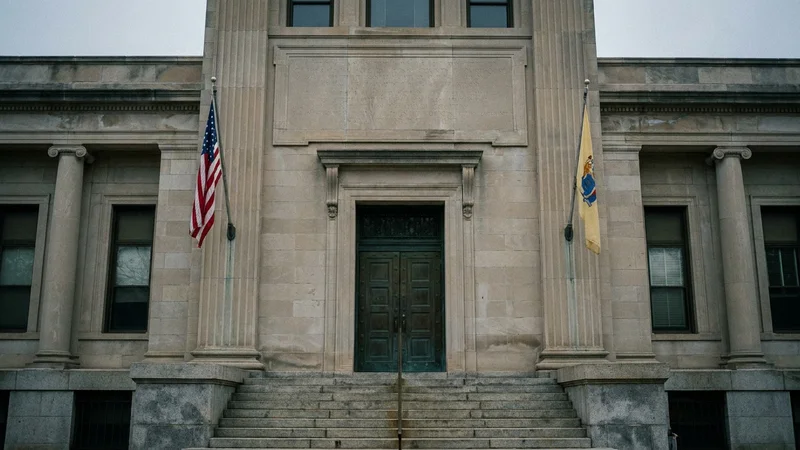
New Jersey’s asbestos litigation runs through the state’s Multicounty Litigation program, with most filings assigned to Middlesex County Superior Court. Several of the largest reported talc and asbestos verdicts in the state have been disturbed on appeal, while a smaller verdict reached the New Jersey Supreme Court and was reinstated in 2022. The pattern across published opinions is one of close appellate scrutiny of expert testimony and jury instructions in mesothelioma cases.
For the broader context behind these cases, see New Jersey mesothelioma statistics.
Major New Jersey Mesothelioma Verdicts
| Amount | Case | Year | Docket | Status |
|---|---|---|---|---|
| $117M | Lanzo v. Johnson and Johnson / Imerys Talc America | 2018 | A-5711-17 (App. Div.); L-7385-16 (trial) | Reversed April 28, 2021; no retrial reported as of 2026 |
| ~$223.8M total ($37.3M comp + $186.5M punitive) | Barden et al. v. Johnson and Johnson (consolidated) | 2019-2020 | A-0047-20 through A-0050-20 (App. Div.); MID-L-1809-17 (lead trial) | Entire judgment reversed October 3, 2023; no retrial reported as of 2026 |
| $2.38M | Fowler v. Union Carbide Corporation | January 2019 | A-5-21 (NJ Supreme Court); A-4007-18 (App. Div.); MID-L-4820-11AS (trial) | Reinstated by NJ Supreme Court June 30, 2022; currently standing |
Lanzo v. Johnson and Johnson Consumer Inc. and Imerys Talc America
In April 2018, a Middlesex County jury awarded Stephen Lanzo III and his wife Kendra $117 million in a case alleging that asbestos-contaminated Johnson’s Baby Powder caused Lanzo’s mesothelioma. The award included $37 million in compensatory damages, $30 million to Stephen Lanzo III for pain and suffering and $7 million to Kendra Lanzo for loss of consortium, and $80 million in punitive damages, split $55 million against Johnson and Johnson Consumer Inc. and $25 million against Imerys Talc America. Cyprus Amax Minerals and the Johnson and Johnson parent entity were dismissed before the verdict.
On April 28, 2021, the New Jersey Appellate Division reversed the verdict in a published opinion (467 N.J.Super. 476, Docket A-5711-17) and remanded the matter for new, separate trials against Johnson and Johnson Consumer Inc. and Imerys. The appellate panel held that the trial court failed its gatekeeping obligation under New Jersey’s Accutane standard by admitting unreliable expert testimony linking non-asbestiform cleavage fragments to mesothelioma causation. The court also ruled that an adverse-inference instruction issued against Imerys for talc-sample spoliation prejudiced Johnson and Johnson Consumer Inc., requiring severance of the defendants for retrial. As of 2026, no retrial, settlement, or new verdict has been reported.
Barden et al. v. Johnson and Johnson (Consolidated)
In September 2019, a Middlesex County jury awarded $37.3 million in compensatory damages to four consolidated plaintiffs, Douglas Barden, David Etheridge, D’Angela McNeill-George, and William Ronning, against Johnson and Johnson and Brenntag North America in related talc-asbestos matters (lead trial docket MID-L-1809-17). In February 2020, the same jury returned $750 million in punitive damages. The trial court applied the New Jersey Punitive Damages Act 5x cap under N.J.S.A. 2A:15-5.14, reducing the punitive award to $186.5 million (five times the $37.3 million compensatory figure). The total judgment, as widely reported in neutral press including Insurance Journal, was approximately $223.8 million, the $37.3 million compensatory award plus the $186.5 million capped punitive award.
On October 3, 2023, the New Jersey Appellate Division reversed the entire Barden judgment in consolidated dockets A-0047-20 through A-0050-20, vacating both the $37.3 million compensatory award and the $186.5 million reduced punitive award and remanding for a new trial. The panel held that the trial court admitted unreliable expert testimony on asbestos causation and exposure, including methodologically disputed differential-diagnosis opinions. With liability reversed, the punitive-phase challenges were treated as moot. Rehearing was denied. As of 2026, no retrial, settlement, or New Jersey Supreme Court certification has been reported.
Fowler v. Union Carbide Corporation
On January 22, 2019, a Middlesex County jury returned a verdict of $2,380,000 in compensatory damages for Thomasenia L. Fowler, administrator of the estate of Willis Edenfield, in a case tried beginning December 3, 2018 (trial docket MID-L-4820-11AS). The award included approximately $2.1 million for pain and suffering, $150,000 for loss of consortium, and $130,000 in special damages. Edenfield worked at the Bloomfield, New Jersey plant under successive employers from 1954 to 1994, Rubber and Asbestos Corp. (1954-1962), PPG Industries (1962-1971), and National Starch and Chemical Co. (1971-1995), and later died of pleural mesothelioma. Trial evidence showed that Union Carbide delivered approximately 56,000 pounds of Calidria-brand asbestos to the facility between 1969 and 1984, a period of 15 years. The jury declined to award punitive damages.
The Fowler verdict followed an unusual appellate path. On May 26, 2021, the New Jersey Appellate Division (Docket A-4007-18) vacated the verdict and remanded for a new trial, finding errors in jury instructions on the duty to warn and causation. The New Jersey Supreme Court reversed the Appellate Division on June 30, 2022 (Docket A-5-21) and reinstated the $2.38 million verdict. The Supreme Court held that an asbestos manufacturer’s duty to warn cannot be discharged by warning only the employer, the duty runs to the employee directly. The verdict is currently standing.
Why Middlesex County
New Jersey concentrates its asbestos litigation in a single consolidated docket. Approximately 92% of New Jersey asbestos matters are handled through the statewide Asbestos Multicounty Litigation program in Middlesex County Superior Court, Civil Division, in New Brunswick, according to the New Jersey Courts’ own case information page. Judge Ana C. Viscomi presides over the docket. Agatha N. Dzikiewicz serves as Special Adjudicator. More than 1,300 asbestos claims are pending in the consolidated litigation, though that figure is undated on the court’s published page.
The concentration creates consistent judicial oversight and a common record of expert-testimony gatekeeping, which the Lanzo and Barden reversals illustrate. Both appellate reversals turned on the admissibility of expert causation testimony under New Jersey’s Kemp/Accutane framework for scientific reliability.
New Jersey’s Punitive Damages Cap
New Jersey caps punitive damages under N.J.S.A. 2A:15-5.14 at five times the compensatory award or $350,000, whichever is greater. Clear and convincing evidence is required. Juries are not told about the cap; trial courts apply it post-verdict. The Barden case illustrates the operation of the cap: the $750 million punitive verdict was reduced to $186.5 million, five times the $37.3 million compensatory award. Because the entire Barden judgment was later vacated on appeal, the cap reduction has no continuing legal effect in that case, but the statute itself remains in force for future verdicts.
These figures are reported jury outcomes, not final recoveries. The Lanzo verdict was reversed in 2021 and the Barden judgment was reversed in full in 2023; both remain in post-reversal posture as of 2026. The Fowler verdict is currently standing after the New Jersey Supreme Court reinstated it in 2022. Individual case results depend on specific facts including exposure history, medical documentation, and the defendants involved. Prior results do not guarantee a similar outcome.
New Jersey’s Filing Deadline
New Jersey’s statute of limitations for asbestos personal-injury claims is two years, running from the date of diagnosis or reasonable discovery under N.J.S.A. 2A:14-2(a). The discovery rule is applied with awareness of the long latency of asbestos-related diseases, including mesothelioma, which can take decades to manifest. Wrongful-death claims must be filed within two years of the date of death under N.J.S.A. 2A:31-3. Meeting these deadlines requires prompt action after a diagnosis; waiting can permanently bar a claim.
How Most New Jersey Cases Resolve
Many New Jersey mesothelioma cases resolve before or alongside litigation through asbestos bankruptcy trust funds. Dozens of former asbestos manufacturers and distributors established trusts through bankruptcy proceedings. Claims against those trusts follow separate procedures and timelines from court litigation and are not reflected in the jury verdicts above. See New Jersey asbestos trust funds for workers for a breakdown of available trusts and eligibility criteria. Negotiated settlements are also common and are generally not publicly disclosed, so the verdicts above represent only the visible portion of New Jersey mesothelioma recoveries.
References
New Jersey Courts. New Jersey Courts Asbestos Multicounty Litigation Case Information.
https://www.njcourts.gov/multicounty-litigation/asbestos/case-information
New Jersey Courts. New Jersey Courts Asbestos MCL Judges and Staff.
https://www.njcourts.gov/multicounty-litigation/asbestos/judges-staff
Justia. Lanzo v. Cyprus Amax Minerals Co., 467 N.J.Super. 476 (App. Div. 2021), Docket A-5711-17.
https://law.justia.com/cases/new-jersey/appellate-division-published/2021/a5711-17.html
New Jersey Courts. Barden et al. consolidated appellate opinion, Dockets A-0047-20 through A-0050-20 (Oct. 3, 2023).
https://www.njcourts.gov/system/files/court-opinions/2023/a0047-20a0048-20a0049-20a0050-20.pdf
Justia. Fowler v. Union Carbide Corp., A-5-21 (NJ Supreme Court, June 30, 2022).
https://law.justia.com/cases/new-jersey/supreme-court/2022/a-5-21.html
Justia. N.J.S.A. 2A:14-2 (Two-Year Personal Injury Limitations Period).
https://law.justia.com/codes/new-jersey/title-2a/section-2a-14-2/
Justia. N.J.S.A. 2A:31-3 (Two-Year Wrongful Death Limitations Period).
https://law.justia.com/codes/new-jersey/title-2a/section-2a-31-3/
Justia. N.J.S.A. 2A:15-5.14 (New Jersey Punitive Damages Cap).
https://law.justia.com/codes/new-jersey/title-2a/section-2a-15-5-14/
Reader Q&A
Frequently Asked Questions
What was the outcome of Lanzo v. Johnson and Johnson?
A Middlesex County jury awarded Stephen Lanzo III and his wife Kendra $117 million in April 2018, comprising $37 million in compensatory damages and $80 million in punitive damages. The New Jersey Appellate Division reversed the verdict on April 28, 2021 (Docket A-5711-17), holding that the trial court admitted unreliable expert testimony on asbestos causation and that an adverse-inference instruction against Imerys prejudiced Johnson and Johnson Consumer Inc. The case was remanded for new, separate trials. No retrial or new verdict has been reported as of 2026.
What is the current status of the Barden consolidated talc verdict?
The entire Barden judgment has been reversed. A Middlesex County jury awarded $37.3 million in compensatory damages in September 2019 and added $750 million in punitive damages in February 2020. The trial court reduced the punitive award to $186.5 million under the New Jersey 5x cap, making the total judgment approximately $223.8 million. On October 3, 2023, the New Jersey Appellate Division reversed the entire judgment in consolidated dockets A-0047-20 through A-0050-20 and remanded for a new trial. Rehearing was denied, and as of 2026 no retrial, settlement, or New Jersey Supreme Court certification has been reported.
What happened in Fowler v. Union Carbide on appeal?
The jury returned a $2.38 million compensatory verdict on January 22, 2019. The New Jersey Appellate Division vacated the verdict on May 26, 2021 (Docket A-4007-18) over jury-instruction errors on duty to warn and causation. The New Jersey Supreme Court reversed the Appellate Division on June 30, 2022 (Docket A-5-21) and reinstated the $2.38 million verdict, holding that an asbestos manufacturer’s duty to warn runs to employees directly, not only to their employer. The verdict is currently standing.
What is the statute of limitations for mesothelioma claims in New Jersey?
New Jersey provides two years from the date of diagnosis or reasonable discovery to file an asbestos personal-injury claim under N.J.S.A. 2A:14-2(a). Wrongful-death claims carry a two-year deadline running from the date of death under N.J.S.A. 2A:31-3. Both deadlines are firm; missing them ordinarily bars the claim entirely.
Where are most New Jersey asbestos cases tried?
Approximately 92% of New Jersey asbestos filings are assigned to Middlesex County Superior Court in New Brunswick through the state’s Asbestos Multicounty Litigation program. Judge Ana C. Viscomi presides over the docket, with Agatha N. Dzikiewicz serving as Special Adjudicator. More than 1,300 claims are pending in the consolidated docket.
Can family members file a New Jersey mesothelioma case after a loved one has died?
Yes. New Jersey recognizes wrongful-death claims under N.J.S.A. 2A:31-3, with a two-year filing deadline running from the date of death. An estate administrator or qualifying family member can bring a wrongful-death action alongside or separately from a survival claim on behalf of the decedent’s estate. The Fowler v. Union Carbide case is an example: Thomasenia Fowler, as administrator of Willis Edenfield’s estate, brought the claim after Edenfield died of pleural mesothelioma.