New Jersey Mesothelioma by the Numbers
New Jersey mesothelioma data: 114 diagnoses in 2021, 2,037 deaths 1999-2017, age-adjusted rate of 1.0 per 100,000. CDC and state court data.

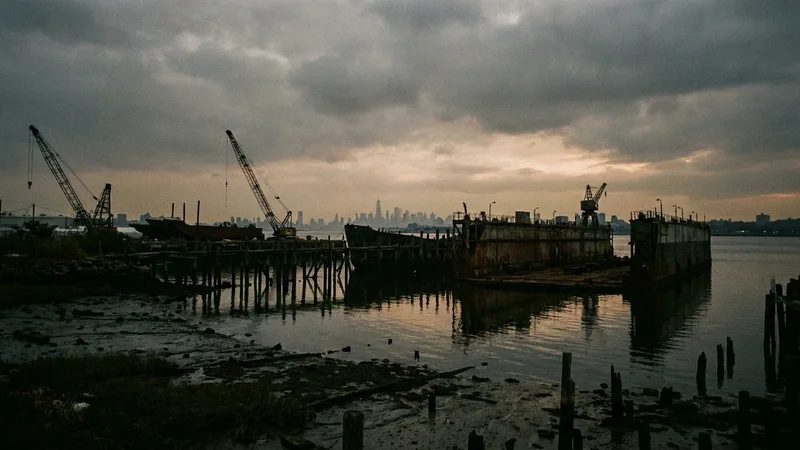
New Jersey’s mesothelioma burden reflects more than a century of industrial asbestos use along the Hudson, the Raritan, and the Delaware. The state’s age-adjusted incidence rate of 1.0 per 100,000 sits above the national average of roughly 0.6 to 0.8 per 100,000, driven by shipyards, refineries, and asbestos product manufacturing that ran from World War I through the late twentieth century.
The 114 new diagnoses recorded in 2021 are consistent with the state’s long-running pattern. Between 1999 and 2017, CDC WONDER recorded 2,037 mesothelioma deaths in New Jersey, a toll that reflects the state’s century-long concentration of shipbuilding, refining, and asbestos product manufacturing.
State Rankings
For a full comparison of all 50 states, see our mesothelioma rates by state rankings.
| Metric | New Jersey | National |
|---|---|---|
| Mesothelioma rate (per 100K) | 1.0 (above average) | 0.6 to 0.8 |
| New diagnoses (2021) | 114 | ~3,000 annually |
| Mesothelioma deaths (1999-2017) | 2,037 (CDC WONDER) | ~45,000 |
| Statute of limitations (personal injury) | 2 years from diagnosis | Varies by state |
| Primary litigation venue | Middlesex County (MCL) | Varies by state |
Where Exposure Happened
New Jersey’s asbestos exposure sites cluster around four industrial sectors: shipbuilding along the Hudson, petroleum refining along the Arthur Kill, asbestos product manufacturing in Somerset County, and heavy industrial construction statewide.
Federal Shipbuilding and Drydock in Kearny
Federal Shipbuilding and Drydock in Kearny was one of the largest East Coast shipyards during and after World War II. Its boilers, turbines, pumps, valves, and oil coolers all used asbestos insulation. Thousands of shipfitters, pipefitters, welders, and electricians cycled through the yard during wartime construction and postwar repair work. That exposure pattern mirrors the Brooklyn Navy Yard across the river in New York and the Philadelphia Navy Yard downstream on the Delaware.
The Johns-Manville Plant in Manville
The Johns-Manville plant in Manville, New Jersey manufactured asbestos insulation, pipe covering, brake linings, and asbestos cement from the early twentieth century onward. The town took its name from the company. Plant workers, their families, and residents living nearby faced both occupational and take-home exposure for decades before the company’s 1982 bankruptcy.
Exxon Bayway Refinery in Linden
The Exxon Bayway refinery in Linden has been in operation since 1909. Asbestos insulation was used throughout the facility on pipes, valves, and high-heat equipment. A 1981 NIOSH Health Hazard Evaluation was conducted at Bayway after five asbestos-related cases were identified among refinery workers, documenting the presence of asbestos-containing insulation in multiple process units.
The Asbestos Dump Superfund Site in Millington
The Asbestos Dump Superfund site in Millington, Morris County was added to the EPA’s National Priorities List in 1983. Asbestos Ltd. operated the site from 1927 through 1975, with National Gypsum conducting waste disposal operations there from 1970 to 1975. The site is one of several federal cleanup locations in New Jersey tied to historical asbestos product manufacturing and disposal.
Who Is Most at Risk
- Shipyard workers at Federal Shipbuilding in Kearny and related East Coast yards
- Refinery workers at Bayway, Paulsboro, and other Arthur Kill and Delaware River facilities
- Plant workers and residents near the Johns-Manville facility in Manville
- Pipefitters, insulators, and boilermakers across industrial and commercial construction
- Construction tradespeople working in pre-1980 buildings statewide
- Family members of workers who carried asbestos dust home on clothing
Because mesothelioma has a 20 to 60 year latency, most people diagnosed today were exposed between the 1950s and the 1980s. High-risk occupations continue to account for a disproportionate share of cases. See our guide to mesothelioma risk by occupation.
New Jersey has a two-year statute of limitations for asbestos personal injury claims, running from diagnosis or reasonable discovery under N.J. Stat. Section 2A:14-2. Wrongful death claims must be filed within two years of the date of death under N.J. Stat. Section 2A:31-3.
How New Jersey Handles Asbestos Cases
New Jersey concentrates its asbestos litigation in Middlesex County through the state’s Multicounty Litigation program. The New Jersey Courts publish a statewide asbestos trial list, and most filings are assigned to Middlesex County Superior Court regardless of where the exposure occurred.
That centralized docket shapes how New Jersey cases are tried. Judges are experienced with asbestos issues, motion practice is predictable, and trials are scheduled on a coordinated calendar. For a closer look at outcomes, see New Jersey mesothelioma verdicts and settlements and New Jersey asbestos trust funds.
For comparison with neighboring industrial states, see Pennsylvania mesothelioma statistics and New York mesothelioma statistics. For an overview of current treatment options, see the 2026 mesothelioma treatment landscape.
References
Centers for Disease Control and Prevention. CDC USCS Mesothelioma Report.
https://www.cdc.gov/united-states-cancer-statistics/publications/mesothelioma.html
Centers for Disease Control and Prevention. CDC WONDER Mortality Database.
https://wonder.cdc.gov/
NIOSH. NIOSH Health Hazard Evaluation, Exxon Bayway Refinery.
https://www.cdc.gov/niosh/hhe/reports/pdfs/81-372-1727.pdf
New Jersey Courts. New Jersey Courts Asbestos Multicounty Litigation.
https://www.njcourts.gov/multicounty-litigation/asbestos/case-information
Reader Q&A
Frequently Asked Questions
How does New Jersey's mesothelioma rate compare to the national average?
New Jersey’s age-adjusted mesothelioma incidence rate is 1.0 per 100,000, above the U.S. national average of roughly 0.6 to 0.8 per 100,000. The elevated rate reflects the state’s long history of shipbuilding, petroleum refining, and asbestos product manufacturing.
What is the statute of limitations for mesothelioma in New Jersey?
New Jersey has a two-year statute of limitations for asbestos personal injury claims, running from the date of diagnosis or reasonable discovery under N.J. Stat. Section 2A:14-2. Wrongful death claims must be filed within two years of the date of death under N.J. Stat. Section 2A:31-3.
Where are New Jersey asbestos cases filed?
Most New Jersey asbestos cases are handled through the Multicounty Litigation program in Middlesex County Superior Court. The New Jersey Courts publish a statewide trial list covering asbestos cases filed across the state.
Why is New Jersey's asbestos burden so concentrated in certain places?
Kearny, Manville, Linden, and the Morris County cleanup sites each anchor a distinct exposure pathway: shipbuilding, asbestos product manufacturing, petroleum refining, and industrial dumping. These sectors operated for decades, often overlapping in the same worker populations.
Are mesothelioma cases still being diagnosed in New Jersey?
Yes. Because mesothelioma has a latency period of 20 to 60 years, people exposed in the 1950s through the 1980s are still receiving diagnoses. The 114 new cases recorded in 2021 reflect exposures that often occurred decades earlier.
What famous person died from mesothelioma?
Steve McQueen, a prominent actor known for films like The Great Escape and The Magnificent Seven, died from pleural mesothelioma in 1980 at age 50. His exposure is linked to U.S. Marine service, shipyard work, and possible movie set insulation. Other celebrities who died from mesothelioma include musician Warren Zevon (2003), actor Ed Lauter (2013), and NFL player Merlin Olsen. Paleontologist Stephen Jay Gould survived peritoneal mesothelioma for 20 years before dying from unrelated lung cancer in 2002.
How did Steve McQueen get mesothelioma?
Steve McQueen was exposed to asbestos through multiple occupational and military sources over several decades. His primary exposure occurred during his service in the U.S. Marine Corps from 1947 to 1950, when he worked aboard naval ships and in shipyards, including removing asbestos lagging from pipes at Camp Lejeune. After his military service, he encountered additional asbestos exposure on movie soundstages where insulation contained the mineral, while wearing flame-resistant racing suits made with asbestos, and while working on race car and motorcycle brakes. McQueen did not develop symptoms until 1978, nearly 30 years after his initial military exposure, reflecting the typical latency period of 20 to 50 years between asbestos exposure and mesothelioma diagnosis. He was diagnosed with pleural mesothelioma in December 1979 and died in November 1980 at age 50.
What's the longest someone has lived with mesothelioma?
Paul Kraus holds the record as the longest-known survivor of mesothelioma, living 27 years after his 1997 diagnosis with peritoneal mesothelioma until his death in 2024 or 2025. Average survival for people with mesothelioma is 12 to 21 months with treatment. Some people with advanced pleural mesothelioma have survived over 10 years with multiple therapies , and 23% lived 3+ years in a 2023 trial combining immunotherapy and chemotherapy. Peritoneal cases often show better outcomes, with up to 52% 5-year survival after cytoreductive surgery and HIPEC.