Massachusetts Mesothelioma by the Numbers
Massachusetts CDC data on mesothelioma: 2,004 diagnoses and 1,642 deaths from 1999 to 2020, plus shipyard and textile mill exposure history.

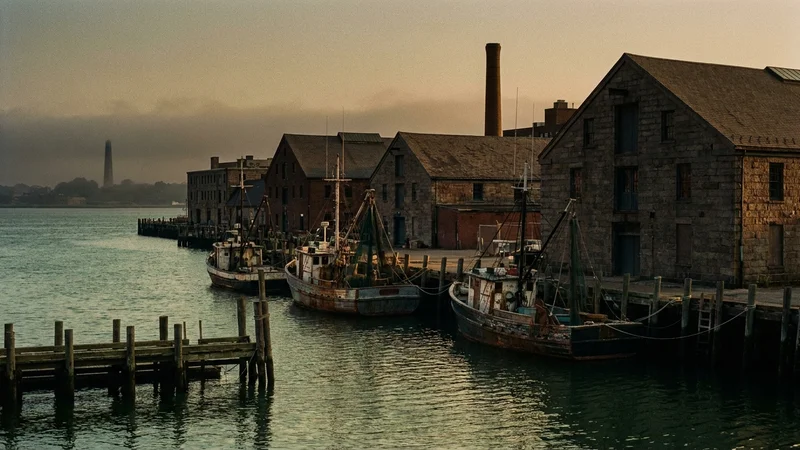
Massachusetts sits above the national average for mesothelioma. Per CDC data covering 2018 to 2022, the state’s rate is approximately 0.8 per 100,000, compared with a national average of roughly 0.6 per 100,000. The state recorded 2,004 mesothelioma diagnoses and 1,642 mesothelioma deaths between 1999 and 2020.
The reason is industrial. Massachusetts built ships, insulated mills, and ran paper plants along the Merrimack River, and every one of those industries relied on asbestos. Workers at Fore River in Quincy, Charlestown Navy Yard in Boston, and textile mills in Lowell, Lawrence, Fall River, and New Bedford inhaled asbestos fibers across decades of daily work. Those exposures are producing diagnoses now, 30 to 50 years later.
State Rankings
For a full comparison of all 50 states, see our mesothelioma rates by state rankings.
| Metric | Massachusetts | National |
|---|---|---|
| Mesothelioma rate (per 100K, 2018-2022) | ~0.8 | ~0.6 |
| Diagnoses (1999-2020) | 2,004 | ~55,000 |
| Mesothelioma deaths (1999-2020) | 1,642 | ~30,000 |
| Statute of limitations (PI) | 3 years from diagnosis | Varies by state |
Where Exposure Happened
Massachusetts’s asbestos burden traces to four primary sectors.
Fore River Shipyard in Quincy
Fore River Shipyard on Quincy’s waterfront was one of the most significant shipbuilding operations in the Northeast. Founded in Braintree in 1884, relocated to Quincy in 1901, and active through the 1980s (the last ship launched in 1982, with the yard closing in 1986), Fore River employed more than 15,000 workers during World War I and reached a peak of more than 32,000 workers in 1943 at the height of WWII production. General Dynamics later operated the yard, building nuclear submarines, naval vessels, Apollo tracking ships, and LNG tankers there.
Asbestos was embedded throughout the ships: pipe insulation, boiler lagging, gaskets, turbine wrapping, fireproofing cements, electrical equipment, and fireproof bulkheads. Shipyard workers, insulators, pipefitters, boilermakers, and riveters faced the highest exposure, producing elevated mesothelioma rates in the Quincy and South Shore region.
Charlestown Navy Yard in Boston
The Charlestown Navy Yard, also known as Boston Naval Shipyard, operated from 1801 to 1974 and employed roughly 50,000 workers during World War II. Like the Philadelphia Navy Yard and the Brooklyn Navy Yard in New York, Charlestown built and repaired warships in conditions where asbestos was built into pipe covering, boiler insulation, fireproofing, and gaskets. Below-deck work in enclosed compartments created particularly concentrated exposure.
Textile and Paper Mills Along the Merrimack
The textile mills of Lowell, Lawrence, Fall River, and New Bedford ran on steam, and steam ran through asbestos-insulated pipes. Paper mills along the Merrimack River shared the same exposure profile. Mill workers handled asbestos gaskets, insulation, and steam fittings across long careers. Latency periods of 20 to 60 years mean many workers from the 1950s through the 1970s are receiving diagnoses today.
Pre-1980 Construction Trades
Pre-1980 commercial and public buildings throughout Massachusetts were constructed with asbestos-containing materials. Insulation, floor tiles, roofing, and fireproofing all contained asbestos. Construction tradespeople, especially insulators, pipefitters, and electricians, faced daily exposure.
Who Is Most at Risk
- Shipyard workers at Fore River in Quincy and Charlestown Navy Yard in Boston
- Textile mill workers in Lowell, Lawrence, Fall River, and New Bedford
- Paper mill workers along the Merrimack River corridor
- Pipefitters and insulators in industrial and commercial construction
- Boilermakers at power plants and industrial facilities
- Construction tradespeople working in pre-1980 buildings
The EPA has flagged Superfund sites with asbestos contamination in the state, including Blackburn and Union Privileges in Walpole.
Massachusetts has a three-year statute of limitations for personal injury claims under MGL Chapter 260, Section 2A, running from the date of diagnosis under the discovery rule. Wrongful death claims under MGL Chapter 229, Section 2 are also subject to a three-year limit and are derivative of the underlying personal injury claim.
Legal Options for Massachusetts Workers
For an overview of all current treatment options, see the 2026 mesothelioma treatment landscape.
Massachusetts’s asbestos trust fund claims are relevant for workers across the shipbuilding, textile, paper, and construction industries. The companies that manufactured asbestos-containing products used in these facilities have established bankruptcy trusts that continue to accept claims.
Verdicts and settlements in Massachusetts reflect the state’s industrial profile, including the $42.6 million Lovell v. Johnson & Johnson talc verdict in Suffolk County and the $8 million Paluzzi v. Johnson & Johnson verdict in Suffolk County.
References
Centers for Disease Control and Prevention. CDC USCS Mesothelioma Report.
https://www.cdc.gov/united-states-cancer-statistics/publications/mesothelioma.html
Centers for Disease Control and Prevention. CDC WONDER Mortality Database.
https://wonder.cdc.gov/
Reader Q&A
Frequently Asked Questions
Why does Massachusetts have an above-average mesothelioma rate?
Massachusetts’s shipbuilding operations at Fore River in Quincy and Charlestown Navy Yard in Boston, combined with the textile and paper mill economy of Lowell, Lawrence, Fall River, and New Bedford, created widespread asbestos exposure across the 20th century. The concentration and duration of that exposure is driving the state’s above-average mesothelioma rate, approximately 0.8 per 100,000 against a national figure of roughly 0.6 per 100,000 per recent CDC data.
What is the statute of limitations for mesothelioma in Massachusetts?
Massachusetts has a three-year statute of limitations for personal injury claims under MGL Chapter 260, Section 2A. The clock starts at diagnosis under the discovery rule, which is critical given the 20 to 50 year latency of mesothelioma. Wrongful death claims are also subject to a three-year limit.
Which Massachusetts regions have the most exposure history?
The South Shore around Quincy (Fore River Shipyard), Boston and Charlestown (Navy Yard), and the Merrimack Valley and South Coast textile and paper mill cities (Lowell, Lawrence, Fall River, New Bedford) all have documented industrial asbestos exposure that continues to produce mesothelioma diagnoses.
Are mesothelioma cases still being diagnosed in Massachusetts?
Yes. Because mesothelioma has a latency period of 20 to 60 years, people exposed at Fore River, Charlestown, and the textile mills from the 1940s through the 1980s are still receiving diagnoses. Massachusetts continues to report cases above the national average.
What famous person died from mesothelioma?
Steve McQueen, a prominent actor known for films like The Great Escape and The Magnificent Seven, died from pleural mesothelioma in 1980 at age 50. His exposure is linked to U.S. Marine service, shipyard work, and possible movie set insulation. Other celebrities who died from mesothelioma include musician Warren Zevon (2003), actor Ed Lauter (2013), and NFL player Merlin Olsen. Paleontologist Stephen Jay Gould survived peritoneal mesothelioma for 20 years before dying from unrelated lung cancer in 2002.
What trade is most exposed to asbestos?
Construction workers remain the trade most heavily exposed to asbestos today, according to CDC data, due to ongoing use in materials like roofing, flooring, and insulation during building, renovation, and demolition. Historically, this group along with pipefitters, insulators, shipyard workers, and millwrights faced the highest risks from handling asbestos-containing products such as gaskets, pipes, and fireproofing. People with mesothelioma from these trades have pursued claims against manufacturers, with shipyard workers involved in nearly 30% of cases.
Which state has the most asbestos?
California has the most asbestos of any U.S. state, with naturally occurring asbestos deposits in 42 of its 58 counties and a total of 290 documented natural asbestos occurrences. The state’s geology, combined with its history of mining operations, construction projects, and military installations, has created widespread exposure risks. Between 1999 and 2022, California recorded 7,736 mesothelioma diagnoses, more than any other state. Other states with significant asbestos presence include Pennsylvania, North Carolina, and several western states with naturally occurring deposits in mountainous regions.