$8M Verdict: J&J Talc Mesothelioma Case in Massachusetts
Suffolk County jury awards $8 million to Janice Paluzzi, 84, who developed mesothelioma after using J&J Baby Powder for 20+ years.

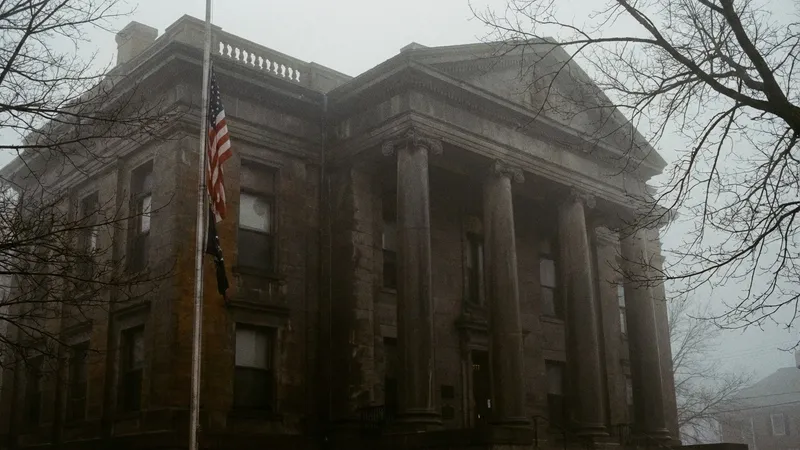
A Suffolk County jury has awarded $8 million to Janice Paluzzi, an 84-year-old Massachusetts woman who developed mesothelioma after using Johnson & Johnson’s talcum powder products for more than two decades.
The June 2025 verdict marks another loss for J&J in its ongoing talc litigation, where the company faces over 61,000 lawsuits alleging its Baby Powder and Shower to Shower products contained cancer-causing asbestos.
Verdict Breakdown
The jury awarded Paluzzi:
Paluzzi’s legal team had argued for $25 million in damages. The jury found J&J liable for negligence and determined that a design defect in the company’s talc products significantly contributed to her mesothelioma diagnosis.
The Case
Paluzzi, a mother of seven who raised her children in single-bathroom homes for 20 years, used Johnson’s Baby Powder and Shower to Shower on herself and her children throughout that time. She was diagnosed with mesothelioma in 2021.
At trial, J&J argued that Paluzzi’s cancer more likely stemmed from asbestos exposure through three of her sons, who worked in building services and maintenance at Boston’s John Hancock Building. The jury rejected this defense.
What the jury found: J&J liable for negligence and design defect, but not for inadequate warnings or breach of implied warranty of merchantability.
Pattern of Verdicts
The Paluzzi verdict follows a series of massive talc judgments against J&J:
- $1.56 billion to Cherie Craft (2025)
- $966 million to Mae Moore’s family (2025)
- $42.6 million to the Lovell family, Massachusetts (2025)
- $40 million in California ovarian cancer verdict (2025)
J&J stopped selling talc-based Baby Powder in the United States in 2020, switching to a cornstarch formula. The company discontinued talc-based products globally in 2023.
Legal Representation
Paluzzi was represented by Ben Braly, Anthony Bianco, and Aaron Chapman of Dean Omar Branham Shirley, along with Brian Kenney of Early, Lucarelli, Sweeney & Meisienkothen (ELSM), and Amy Carter of the Carter Law Group.
The case is Janice Paluzzi v. Johnson & Johnson, Civil Action No. 21-2109, Suffolk County Superior Court.
Reader Q&A
Frequently Asked Questions
What was the Paluzzi v. Johnson & Johnson verdict?
A Suffolk County jury awarded $8 million to Janice Paluzzi in June 2025, finding that J&J’s talc-based products caused her mesothelioma. The verdict included $5 million for past pain and suffering and $3 million for future pain and suffering. The jury found J&J liable for negligence and design defect.
How was Janice Paluzzi exposed to asbestos through talc?
Paluzzi used Johnson & Johnson’s Baby Powder and Shower to Shower on herself and her seven children for more than 20 years while raising them in single-bathroom homes. Talc mined from deposits near asbestos veins can contain asbestos fibers, and multiple trials have presented evidence that J&J’s talc suppliers mined from contaminated deposits.
What did J&J argue at trial?
J&J argued that Paluzzi’s mesothelioma was more likely caused by asbestos exposure through three of her sons, who worked in building services and maintenance at Boston’s John Hancock Building. The jury rejected this defense and found J&J liable for negligence and design defect. However, the jury did not find J&J liable for inadequate warnings or breach of implied warranty.
Who represented Janice Paluzzi?
Paluzzi was represented by Ben Braly, Anthony Bianco, and Aaron Chapman of Dean Omar Branham Shirley LLP, along with Brian Kenney of Early, Lucarelli, Sweeney & Meisienkothen (ELSM), and Amy Carter of the Carter Law Group. Her legal team had requested $25 million in damages at trial.
What are the four types of trials?
In India’s Criminal Procedure Code (CrPC), the four types of trials are sessions trials (for offenses punishable by death, life imprisonment, or over 7 years), warrant trials (for offenses with imprisonment over 2 years), summons trials (for offenses punishable by up to 2 years), and summary trials (for minor cases disposed quickly under Sections 260-265 CrPC). Sessions trials occur in Sessions Courts after commitment from a magistrate, while warrant and summons trials begin via FIR or complaint to a magistrate. Summary trials simplify procedures for small cases to expedite resolution.
What is the definition of trial in law?
A trial in law is a formal judicial proceeding where parties to a dispute present evidence and arguments before a judge, jury, or other tribunal to resolve issues of fact or law. It can be a jury trial, where a panel of peers determines the outcome, or a bench trial (also called a court trial), where a judge alone decides both facts and law. In civil cases like asbestos litigation relevant to mesothelioma, trials examine claims such as liability for exposure, with the fact-finder issuing a verdict or judgment.
What if a juror falls asleep?
A judge has discretion in how to respond when a juror falls asleep during trial. Options include waking the juror and having testimony repeated, dismissing the juror and seating an alternate, or declaring a mistrial. Momentary dozing typically does not constitute juror misconduct, but sleeping through multiple days of testimony can affect a juror’s ability to serve fairly. If a defendant or trial lawyer believes a sleeping juror compromised the trial’s fairness, they can raise the issue by presenting evidence (often through testimony from other jurors) that the juror slept and missed critical information that likely affected the verdict. Courts are hesitant to overturn verdicts based solely on a juror falling asleep, particularly if both sides agreed to the jury selection during pretrial proceedings.
What are the 5 stages of a trial?
The 5 stages of a trial, as outlined in common civil and criminal processes, are pre-trial preparation, jury selection, opening statements, presentation of evidence, and closing arguments followed by verdict. Pre-trial preparation includes filing complaints, discovery, and motions, while jury selection (voir dire) ensures an impartial panel. Opening statements provide case overviews, evidence presentation involves witnesses and cross-examinations (plaintiff or prosecution first), and closing arguments precede jury instructions and deliberation. Variations exist, such as 8 stages in some U.S. District Court civil trials. These stages apply to mesothelioma litigation, where people with mesothelioma present evidence of asbestos exposure against manufacturers.