Massachusetts Mesothelioma Verdicts and Settlements
Massachusetts mesothelioma verdicts, including the $83M Lapointe v. AMACO Middlesex Superior verdict and the $42.6M Lovell talc verdict.

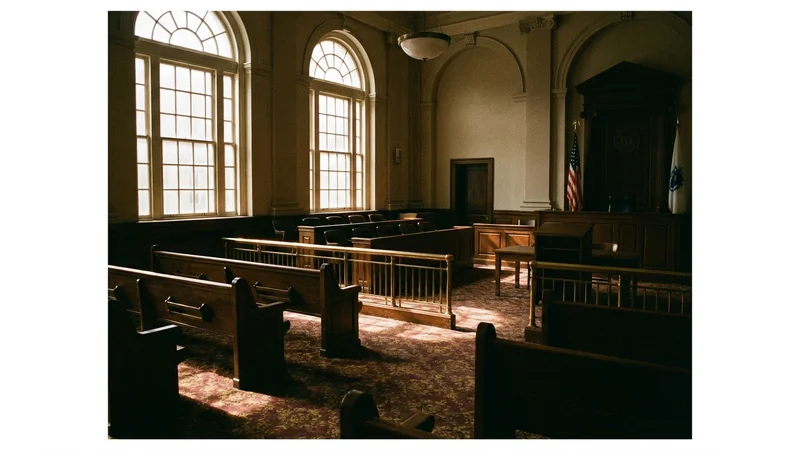
In September 2025, a Middlesex County jury returned an $83 million verdict against AMACO in Lapointe, the largest reported asbestos verdict in Massachusetts history. Two earlier 2025 talc cases, Lovell and Paluzzi, added $50.6 million more. A 2017 Suffolk County verdict in Sylvestre v. New England Insulation set a regional record at the time and remains one of the largest asbestos awards in New England. All four verdicts are still subject to post-trial motions or potential appeals as of mid-2026; none has been reduced or affirmed by an appellate court.
Major Massachusetts Mesothelioma Verdicts
| Amount | Case | Year | Docket | Status |
|---|---|---|---|---|
| $83,000,000 | Lapointe v. American Art Clay Co. (AMACO) | 2025 | No. 2181CV06597 (Middlesex Superior) | Entered; post-trial motions and appeal announced by defendant |
| $42,608,300 | Lovell v. Johnson & Johnson | 2025 | Civil Action No. 21-2086 (Suffolk Superior) | Entered; appeal announced by defendant |
| $8,000,000 | Paluzzi v. Johnson & Johnson | 2025 | Civil Action No. 21-2109 (Suffolk Superior) | Entered; retrial after 2024 mistrial |
| $7,550,000 | Sylvestre v. New England Insulation | 2017 | Docket unconfirmed (Suffolk Superior) | Entered; no appeal status confirmed |
Lapointe v. American Art Clay Company, $83,000,000
On September 18, 2025, a Middlesex County Superior Court jury awarded $83 million against American Art Clay Company (AMACO) in Docket No. 2181CV06597. The breakdown: $10 million for Judith Lapointe’s pain and suffering, $13 million for husband Michael Lapointe’s loss of consortium, and $60 million in punitive damages after the jury found AMACO’s conduct was malicious, willful, wanton, or reckless. Neutral press reported this as the largest asbestos verdict in Massachusetts history.
Judith Lapointe died of mesothelioma in November 2021. Multiple neutral sources confirm her exposure came through her mother’s use of AMACO pottery clay, a bystander or secondary exposure scenario spanning the 1950s through the 1990s, not Judith operating her own ceramics business.
Plaintiff counsel: Sam Iola and Rachel Gross (Iola Gross Forbes-King); Michael P. Joyce and Rafael Colmenares (Law Offices of Michael P. Joyce); Joe Belluck (Belluck Law). Defense counsel: Robert Boston, Emily Burke, and Vincent DePalo (Smith Duggan Cornell and Gollub). AMACO announced on September 19, 2025 that it would file post-trial motions and pursue an appeal if necessary. No appellate ruling or reduction has been confirmed as of mid-2026.
Lovell v. Johnson & Johnson, $42,608,300
On July 29, 2025, a Suffolk County Superior Court jury awarded $42,608,300 in Civil Action No. 21-2086. The jury found Johnson and Johnson liable for negligence and breach of warranty and concluded that asbestos in J&J’s talc baby powder caused Paul Lovell’s mesothelioma.
Damage breakdown: $15 million past pain and suffering, $9 million future pain and suffering, $608,300 past medical expenses, $2 million future medical expenses, $5 million past loss of consortium (Kathryn Lovell), and $11 million future loss of consortium.
Paul Lovell, 69, was diagnosed with mesothelioma in 2021 after approximately 40 years of using J&J baby powder. He had no occupational asbestos exposure. Plaintiff counsel: Aaron Chapman and Danny Kraft (Dean Omar Branham Shirley LLP); Leslie-Anne Taylor (Thornton Law Firm). Defense counsel: Morty Dubin (Kirkland and Ellis). J&J announced intent to appeal on July 29, 2025, characterizing the verdict as “junk science.” No appellate ruling is confirmed as of mid-2026.
Paluzzi v. Johnson & Johnson, $8,000,000
On June 24, 2025, a Suffolk County Superior Court jury awarded $8 million in Civil Action No. 21-2109, $5 million for past pain and suffering and $3 million for future pain and suffering. This was a retrial; a prior 2024 proceeding ended in a mistrial per Insurance Journal.
The jury found J&J liable for design defect as a substantial factor causing Janice Paluzzi’s mesothelioma. The jury did not find breach of the implied warranty of merchantability or negligent failure to warn. Paluzzi, 84, was diagnosed with pleural mesothelioma in July 2021 and attributed her exposure to over 70 years of daily use of J&J baby powder and Shower to Shower. She alleged no occupational asbestos exposure; J&J contested the claim. Plaintiff counsel: Ben Braly and Aaron Chapman (Dean Omar Branham Shirley). Defense counsel: Tara Blake (Kirkland and Ellis); Bruce Hurley (King and Spalding). As of mid-2026, no confirmed appellate activity has been reported.
Sylvestre v. New England Insulation, $7,550,000
In September 2017, a Suffolk County Superior Court jury returned a $7.55 million verdict against New England Insulation Co. of Canton, Massachusetts. Plaintiff Gerald Sylvestre worked at the Merrimack Power Station in Bow, New Hampshire, and alleged exposure to Kaylo brand asbestos insulation distributed and installed by New England Insulation during approximately 1968 to 1976. He was diagnosed with pleural mesothelioma in 2015. At the time, contemporaneous press described the verdict as the largest asbestos damage award in New England history; Lapointe and Lovell have since surpassed it.
Plaintiff counsel: Andrew Wainwright (Thornton Law Firm) and Gary Paul (Waters and Kraus). The docket number was not confirmed in any neutral source reviewed. The itemized damage breakdown appearing in firm-adjacent sources has not been independently verified by neutral press. No appeal status has been confirmed.
Massachusetts Shipyard and Industrial Context
Massachusetts has a documented industrial asbestos history tied to two major WWII-era shipyards. Charlestown Navy Yard (Boston Naval Shipyard) reached a peak workforce of 50,128 employees in 1943, according to the National Park Service. Fore River Shipyard in Quincy, operated by Bethlehem Steel, peaked at approximately 32,000 workers in 1943, including roughly 1,200 women. Both yards used asbestos in pipe covering, boiler lagging, gaskets, turbine wrapping, and fireproofing throughout that era, and veteran shipyard workers have brought mesothelioma claims in Massachusetts courts for decades.
Industrial asbestos exposure in Massachusetts also traces to textile and paper mills in Lowell, Lawrence, Fall River, and New Bedford, where workers handled asbestos gaskets, insulation, and steam line materials over long careers. Construction tradespeople, particularly pipefitters, insulators, and electricians working in pre-1980 commercial and public buildings, have also been represented in Massachusetts asbestos litigation.
How Most Massachusetts Cases Settle
Most Massachusetts mesothelioma cases resolve through negotiated settlements rather than jury verdicts. Asbestos bankruptcy trust funds, established when major manufacturers filed for Chapter 11, accept claims independently of ongoing litigation. Claimants with mesothelioma can often file against multiple trusts if exposure involved products from more than one company. Trust fund claims and settlements are generally confidential, so published verdict figures represent only the fraction of cases that reached a jury.
Every verdict listed on this page reflects the jury’s initial award. Post-trial motions and appellate proceedings can reduce, reverse, or vacate a verdict before any payment is made. No verdict on this page has been affirmed on appeal or collected in full as of mid-2026. Prior case results do not guarantee a similar outcome in any other case.
Massachusetts Deadlines and the Repose Trap
Massachusetts sets a three-year statute of limitations for personal injury mesothelioma claims under MGL Chapter 260, Section 2A. The discovery rule applies: the clock starts at diagnosis, not at the time of asbestos exposure, which may have ended decades earlier.
Wrongful death claims fall under MGL Chapter 229, Section 2, which also provides a three-year window, running from the date of death or from when the representative knew or reasonably should have known of the factual basis for the claim. Under Fabiano v. Philip Morris USA Inc., Nos. SJC-13282 and SJC-13346, 211 N.E.3d 1048 (Mass. 2023), wrongful death actions are derivative: if the decedent’s personal injury limitations period had already expired before death without a timely filing, the wrongful death claim is also barred.
A separate six-year statute of repose under MGL Chapter 260, Section 2B bars tort claims arising from deficiency or neglect in the design, planning, construction, or general administration of improvements to real property. The Supreme Judicial Court applied this bar to latent asbestos mesothelioma claims in Stearns v. Metropolitan Life Insurance Co., 481 Mass. 529 (2019) (SJC-12544), holding that the repose clock runs from substantial completion or opening to use, with no tolling for latency. This deadline bars claims against architects, engineers, contractors, and construction administrators even when the disease manifested decades after the relevant construction work. Critically, the repose statute does not apply to products liability claims against manufacturers or suppliers of asbestos-containing materials; those claims remain governed by the three-year limitations period under Section 2A.
References
Insurance Journal. Jury awards $83M over asbestos exposure in art-clay products (Lapointe v. AMACO).
https://www.insurancejournal.com/news/east/2025/09/22/840091.htm
The Texas Lawbook. Boston Jury Awards Couple $42M in Johnson and Johnson Asbestos Trial (Lovell v. J&J).
https://texaslawbook.net/boston-jury-awards-couple-42m-in-johnson-johnson-asbestos-trial/
Insurance Journal. Massachusetts Talc Trial Results in $8M Plaintiff Verdict (Paluzzi v. J&J).
https://www.insurancejournal.com/news/east/2025/06/20/828609.htm
GlobeNewswire. Mesothelioma Victim Receives Record Asbestos Verdict in New England (Sylvestre v. New England Insulation).
https://www.globenewswire.com/news-release/2017/09/21/1125991/0/en/Mesothelioma-Victim-Receives-Record-Asbestos-Verdict-in-New-England.html
Massachusetts General Court. MGL Chapter 260, Section 2A: Tort, Contract, Personal Injury Actions.
https://malegislature.gov/Laws/GeneralLaws/PartIII/TitleV/Chapter260/Section2a
Massachusetts General Court. MGL Chapter 229, Section 2: Wrongful Death.
https://malegislature.gov/Laws/GeneralLaws/PartIII/TitleII/Chapter229/Section2
Massachusetts General Court. MGL Chapter 260, Section 2B: Statute of Repose for Real Property Improvements.
https://malegislature.gov/Laws/GeneralLaws/PartIII/TitleV/Chapter260/Section2B
National Park Service. The Boston Navy Yard During World War II.
https://www.nps.gov/articles/the-boston-navy-yard-during-world-war-ii.htm
Reader Q&A
Frequently Asked Questions
What was the largest mesothelioma verdict in Massachusetts history?
The $83 million verdict in Lapointe v. American Art Clay Company (AMACO), Docket No. 2181CV06597, returned by a Middlesex County Superior Court jury on September 18, 2025, is the largest reported asbestos verdict in Massachusetts history. It includes $60 million in punitive damages, $10 million for pain and suffering, and $13 million for loss of consortium. AMACO announced intent to appeal; no appellate ruling has been entered as of mid-2026.
What is the Massachusetts statute of limitations for mesothelioma claims?
Three years from diagnosis for personal injury claims under MGL Chapter 260, Section 2A, using the discovery rule. Wrongful death claims under MGL Chapter 229, Section 2 carry the same three-year limit and are derivative of the personal injury claim, if the personal injury period expired before death without a timely filing, the wrongful death claim is also barred under Fabiano v. Philip Morris (Mass. 2023). A separate six-year statute of repose under MGL Chapter 260, Section 2B bars latent claims against architects, engineers, and contractors (Stearns v. MetLife, SJC-12544, 2019), but not against product manufacturers.
Does the Massachusetts statute of repose affect mesothelioma claims?
It can, depending on who the defendants are. MGL Chapter 260, Section 2B imposes a six-year repose period for claims arising from design, planning, construction, or general administration of improvements to real property. The Massachusetts SJC held in Stearns v. MetLife (2019) that this bars latent asbestos mesothelioma claims against architects, engineers, contractors, and construction administrators, even when disease appeared decades later. It does not apply to products liability claims against manufacturers or suppliers of asbestos-containing materials, which are governed by the standard three-year limitations period.
What kinds of asbestos exposure have driven Massachusetts mesothelioma cases?
Massachusetts cases have centered on shipyard work (Charlestown Navy Yard, which peaked at 50,128 workers in 1943, and Fore River Shipyard in Quincy, which peaked at about 32,000), textile and paper mill work in Lowell, Lawrence, Fall River, and New Bedford, construction trades (pipefitters, insulators, electricians), and consumer product exposure, as seen in the 2025 talc cases involving Johnson and Johnson baby powder.
Are mesothelioma settlements and verdicts public in Massachusetts?
Jury verdicts become part of the public court record and are often covered by legal press. Settlements, by contrast, are almost always private, confidentiality clauses are standard in asbestos settlement agreements. The verdicts on this page represent the small share of cases that reached a jury; the vast majority of Massachusetts mesothelioma cases resolve confidentially.
Can family members file after a mesothelioma patient has died?
Yes, under MGL Chapter 229, Section 2, a legal representative can file a wrongful death action within three years of the decedent’s death, or within three years of when the representative knew or should have known the factual basis for the claim. However, under the Massachusetts SJC’s ruling in Fabiano v. Philip Morris (2023), the wrongful death claim is derivative: if the patient’s own personal injury limitations period had already run before death, the wrongful death action is also barred. Early consultation with counsel after diagnosis, not after death, is important to preserve all options.