Oregon Mesothelioma by the Numbers
Oregon ranks among the top seven states for mesothelioma mortality in women. CDC data, Portland shipyards, and the exposure sites driving Oregon cases.

Oregon sits alongside Washington State at the top of the Pacific Northwest mesothelioma tier. A 2022 CDC Morbidity and Mortality Weekly Report placed Oregon in a group of seven states with age-adjusted mesothelioma death rates for women aged 25 and older that exceeded 6.0 per million, compared to a national rate of 4.59. The other states in that top tier are Louisiana, Maine, Minnesota, Montana, Washington, and Wisconsin.
The reason is shipbuilding. Portland was home to one of the largest emergency wartime shipyard complexes in the country, and the Kaiser-run Swan Island yard built 147 T-2 tankers for the U.S. Navy between 1942 and 1945. Those ships, and the work of repairing them for decades afterward, carried asbestos insulation, gaskets, and pipe covering from dozens of manufacturers.
State Rankings in Context
For a full comparison of all 50 states, see our mesothelioma rates by state rankings.
| Metric | Oregon | National |
|---|---|---|
| Female age-adjusted death rate (per million, 1999-2020) | >6.0 | 4.59 |
| CDC top-tier state grouping | Yes (1 of 7) | N/A |
| Statute of limitations (personal injury) | 2 years from diagnosis | Varies by state |
| Primary exposure sectors | Shipyards, pulp and paper, construction | Varies |
The CDC analysis highlighted mesothelioma mortality in women specifically because the traditional occupational pathway, men in heavy industry, has long been well documented. Rising female rates point to secondary exposure pathways, from family members carrying fibers home on work clothes to women who worked in affected industries themselves.
Where Exposure Happened
Oregon’s mesothelioma burden traces to three primary sectors.
Portland Shipyards
Swan Island, a flat industrial peninsula in the Willamette River north of downtown Portland, became the heart of Oregon’s wartime shipbuilding effort. Kaiser’s Oregon Shipbuilding Corporation operated the Swan Island yard from 1942 through 1945 and launched 147 T-2 tankers. Kaiser’s three Pacific Northwest yards collectively employed roughly 10,000 men and 2,000 women. After the war, the Port of Portland acquired Swan Island for ship repair, and later operators including Dillingham Ship Repair continued the work.
Asbestos was used in virtually every system on these vessels: pipe insulation, boiler lagging, engine gaskets, bulkhead panels, decking, and cement products. Workers cutting, fitting, and removing those materials inhaled fibers daily. Richard D. Long, a Dillingham shipyard laborer from 1972 to 1985, is the plaintiff in the $34.2 million Portland verdict against John Crane handed down in September 2025. His exposure profile is typical of the hundreds of tradespeople who worked at Swan Island during and after the war.
Similar exposure patterns shaped worker health at Puget Sound Naval Shipyard in Washington and at the Philadelphia Navy Yard on the East Coast.
Pulp, Paper, and Lumber Mills
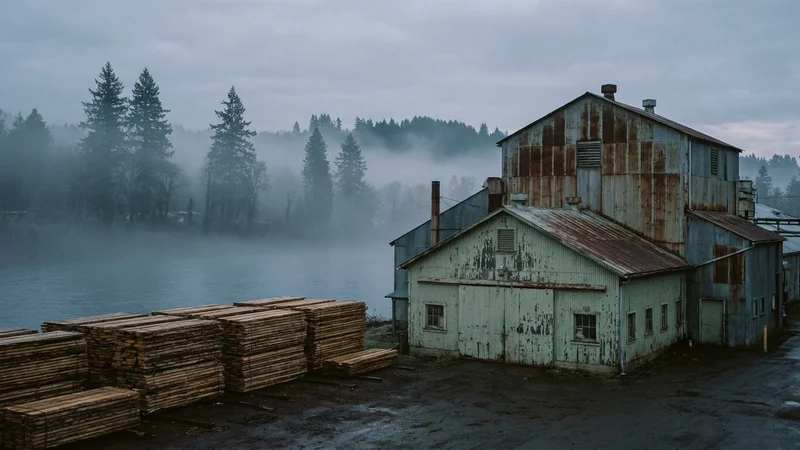
Oregon’s timber economy ran on boilers, dryers, and steam systems insulated with asbestos-containing materials. Mill maintenance workers, millwrights, and pipefitters serviced equipment where asbestos was present, often under conditions of poor ventilation and no respiratory protection. Washington’s paper mills documented a similar exposure pathway in the Conner King County verdict referenced in the Washington verdicts record.
Construction and Gypsum Products
Pre-1980 commercial and residential construction in Oregon used asbestos-containing wallboard, joint compound, floor tiles, and pipe insulation. The 2016 Hoff verdict in Multnomah County found Kaiser Gypsum liable for mesothelioma in a Beaverton carpenter whose exposure came from sanding asbestos-containing joint compound in the 1970s.
Who Is Most at Risk
- Shipyard workers at Kaiser’s Oregon Shipbuilding, Albina, Willamette Iron and Steel, and Dillingham Ship Repair
- Pipefitters, insulators, and boilermakers across Oregon’s industrial corridor
- Pulp and paper mill workers, including millwrights and maintenance crews
- Carpenters and drywall finishers who worked with asbestos-containing joint compound and wallboard before 1980
- Construction tradespeople on pre-1980 commercial and public buildings
- Family members of exposed workers (secondary, take-home exposure)
Oregon has a two-year statute of limitations for mesothelioma personal injury claims, running from the date of diagnosis. Wrongful death claims also run two years from the date of death. Because mesothelioma often takes 20 to 60 years to develop after asbestos exposure, people diagnosed today may trace their exposure back to work performed in the 1960s or 1970s.
Legal Options for Oregon Workers
For an overview of current treatment options, see the 2026 mesothelioma treatment landscape.
Oregon’s asbestos trust fund claims are particularly relevant for shipyard, mill, and construction workers, because the product manufacturers that supplied these industries have established bankruptcy trusts that continue to accept claims.
Verdicts and settlements in Oregon reflect the state’s shipyard and construction exposure history, with significant awards in cases tied to John Crane gaskets, Kaiser Gypsum joint compound, and Johnson & Johnson talc.
References
Centers for Disease Control and Prevention. CDC MMWR: Malignant Mesothelioma Mortality Among Women Aged ≥25 Years.
https://www.cdc.gov/mmwr/volumes/71/wr/mm7119a1.htm
Centers for Disease Control and Prevention. CDC WONDER Mortality Database.
https://wonder.cdc.gov/
Centers for Disease Control and Prevention. CDC USCS Mesothelioma Report.
https://www.cdc.gov/united-states-cancer-statistics/publications/mesothelioma.html
Oregon Encyclopedia. Kaiser Shipyards.
https://www.oregonencyclopedia.org/articles/kaiser_shipyards/
Reader Q&A
Frequently Asked Questions
Why does Oregon have such a high mesothelioma rate for women?
The CDC’s 2022 analysis placed Oregon in the top tier of seven states for female mesothelioma mortality. Researchers have pointed to a combination of occupational exposure in shipyards and mills and secondary take-home exposure from family members in those industries. Oregon’s wartime shipbuilding workforce included roughly 2,000 women across Kaiser’s three Pacific Northwest yards, and women later entered construction and manufacturing trades where asbestos was still present.
What is the statute of limitations for mesothelioma in Oregon?
Oregon has a two-year statute of limitations for mesothelioma personal injury claims, running from the date of diagnosis. Wrongful death claims must be filed within two years of the date of death. This is shorter than Washington’s three-year limit next door, making early legal consultation particularly important.
Are Oregon mesothelioma cases still being diagnosed?
Yes. Because mesothelioma has a latency period of 20 to 60 years, people exposed to asbestos in shipyards and mills in the 1960s and 1970s are still being diagnosed today. Oregon’s rate remains elevated despite the decline of the industries that caused the exposure.
What was built at Swan Island?
Kaiser’s Oregon Shipbuilding Corporation built 147 T-2 tankers, also called T2-SE-A1 fleet oilers, at Swan Island between 1942 and 1945. Liberty and Victory ships were built at other Kaiser yards, not at Swan Island. Post-war, the site was used for ship repair by the Port of Portland, Dillingham, and other operators.
Which Oregon counties have the most mesothelioma cases?
The CDC does not publish county-level age-adjusted rates for Oregon in its public mesothelioma reports. Based on the state’s industrial history, Multnomah County (Portland, Swan Island shipyards), Washington County (Beaverton construction workforce), and counties along the Columbia River and the coast, where pulp, paper, and lumber mills operated, account for a disproportionate share of documented exposure.
What do I do if I bought a house with asbestos in Oregon?
If you discover asbestos in your Oregon home, test suspected materials through an accredited inspector, as required by the Oregon Department of Environmental Quality (DEQ) before renovations or demolitions. Intact, non-friable asbestos-containing materials pose little risk if undisturbed, but hire a DEQ-licensed asbestos abatement contractor for safe removal of friable materials using wet methods, containment, and proper disposal at permitted sites. Homeowners may perform limited non-friable abatement in their primary residence but must follow DEQ notifications, work practices, and Oregon Administrative Rules (OAR 340-248) for handling and transport. Check DEQ’s list of licensed contractors and disposal locations for compliance.
What is the 3 5 7 rule for asbestos sampling?
The 3-5-7 rule, from EPA’s Asbestos Hazard Emergency Response Act (AHERA) under 40 CFR 763.86, sets minimum bulk samples for friable surfacing materials (like acoustic ceilings or spray-on fireproofing) in homogeneous areas: 3 samples for <1,000 sq ft, 5 for 1,000-5,000 sq ft, and 7 for >5,000 sq ft. Samples must be randomly distributed, with the area deemed asbestos-containing if ≥1% asbestos by weight in any sample. The EPA Pink Book recommends 9 samples per area for higher confidence, though 3-5-7 is the regulatory minimum. This applies to U.S. inspections; other materials like joint compound require separate protocols, often 3 samples. People with mesothelioma often trace exposure to undetected asbestos in such materials.
Which state has the most asbestos?
California has the most asbestos of any U.S. state, with naturally occurring asbestos deposits in 42 of its 58 counties and a total of 290 documented natural asbestos occurrences. The state’s geology, combined with its history of mining operations, construction projects, and military installations, has created widespread exposure risks. Between 1999 and 2022, California recorded 7,736 mesothelioma diagnoses, more than any other state. Other states with significant asbestos presence include Pennsylvania, North Carolina, and several western states with naturally occurring deposits in mountainous regions.