Oregon Mesothelioma Verdicts and Settlements
Key Oregon mesothelioma verdicts, from the $34.2M John Crane Portland shipyard case to the $260M J&J talc award and the Hoff and Sprague decisions.

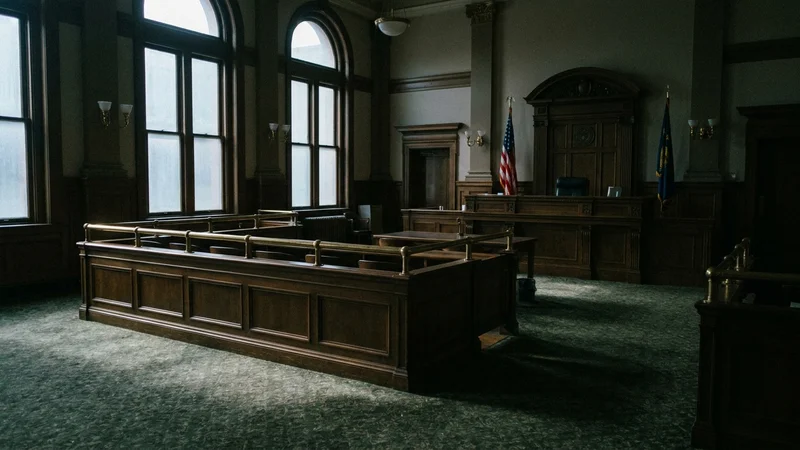
Oregon’s industrial history, Portland shipyards, pulp and paper mills, and the construction trades, produced decades of asbestos exposure. That history also produced an active litigation record, with juries in Multnomah County returning significant verdicts against gasket manufacturers, gypsum-board producers, and talcum-powder companies.
Major Oregon Mesothelioma Verdicts
| Amount | Case | Year | Docket | Status |
|---|---|---|---|---|
| $34.2M | Long v. 3M Co. et al. (John Crane), Multnomah County | 2025 | 23CV27457 | Entered; no post-judgment motion or appeal confirmed as of June 2026 |
| $260M | Lee v. Johnson & Johnson, Multnomah County | 2024 | 23CV400369 | Vacated Sep 2024; new trial ordered; plaintiff indicated intent to appeal |
| $8.75M | Hoff v. Kaiser Gypsum, Multnomah County (affirmed as Hoff v. Certainteed Corp., A162891) | 2016 | A162891 (Court of Appeals) | Upheld on appeal |
| $5.7M | Sprague v. John Crane Inc., Multnomah County | 2017 | 15CV14771 | Upheld; post-trial punitive challenge denied |
Long v. 3M Company et al., $34.2 Million (2025)
In September 2025, a Multnomah County jury awarded $34.2 million to Richard D. Long in Long v. 3M Company et al., Case No. 23CV27457. Long, 71, worked as a shipyard laborer at the Dillingham yard on Swan Island from 1972 to 1985 as a member of Laborers Union Local 296, handling John Crane asbestos gaskets and packing in vessel engine rooms.
Long was diagnosed with biphasic pleural mesothelioma in 2023. A prior trial in June 2025 ended in a mistrial after four days of deliberation; the retrial produced the $34.2 million verdict on September 5, 2025. According to plaintiff’s counsel’s press release distributed via BusinessWire, the jury apportioned approximately 30% of fault to John Crane among multiple defendants and found the conduct of three nonparties was also a substantial factor. Non-economic damages totaled $33 million. Mark Linder and Lenny Sandoval of Dean Omar Branham Shirley LLP, along with Devin Robinson of the Law Offices of Devin Robinson, represented the plaintiff. No post-judgment motions or appellate filings were confirmed in sources reviewed as of June 2026.
Lee v. Johnson & Johnson, $260 Million Verdict, Vacated (2024)
In June 2024, a Multnomah County jury returned a $260 million verdict in Lee v. Johnson & Johnson, Case No. 23CV400369. Kyung H. Lee of Beaverton was diagnosed with mesothelioma in 2023. The complaint alleged she used Johnson & Johnson Baby Powder for more than 30 years and that the company knew its talc-based products contained asbestos. The jury awarded $60 million in compensatory damages and $200 million in punitive damages, assigning 99.9% of fault to Johnson & Johnson (0.01% to LLT Management LLC).
Judge Katharine von ter Stegge vacated the verdict on September 13, 2024, and ordered a new trial. Plaintiff’s counsel indicated an intent to appeal the vacatur ruling. As of June 2026, no new trial date is confirmed and no appellate ruling has been issued. The case sits alongside J&J’s broader effort to route talc claims through bankruptcy subsidiaries, a strategy that has faced repeated setbacks in federal court.
Hoff v. Kaiser Gypsum, $8.75 Million (2016, Affirmed on Appeal)
A Multnomah County jury awarded $8.75 million to David Hoff, a carpenter, and his wife Patricia in 2016. Hoff was exposed to asbestos while sanding Kaiser Gypsum joint compound on Portland-area construction sites during the 1970s. He was diagnosed with mesothelioma in 2015. Kaiser Gypsum stopped producing asbestos-containing joint compound in 1975. Per contemporaneous press reporting (Insurance Journal), Hoff was 65 at the time of the verdict. Other co-defendants reportedly settled confidentially during trial, though that detail appears only in plaintiff firm sources and has not been independently confirmed in neutral press.
The jury allocated 35% of fault to Kaiser Gypsum and awarded $750,000 for medical expenses, $4 million for David Hoff’s pain and suffering, and $4 million for Patricia Hoff’s loss of consortium. The Oregon Court of Appeals unanimously upheld the verdict. The case appears on appeal as Hoff v. Certainteed Corp., docket A162891.
Sprague v. John Crane Inc., $5.74 Million (2017, Punitive Damages Upheld)
In 2017, a Multnomah County jury awarded $5,743,853 in Sprague v. John Crane Inc., Case No. 15CV14771. Robert Sprague, a retired pipefitter, was found to have been exposed to John Crane asbestos-containing products. The jury unanimously found John Crane negligent, found its products defective in design, and found it failed to warn. The verdict broke down as $1.93 million in non-economic damages, $813,853 in economic damages, and $3 million in punitive damages.
Judge Stephen K. Bushong presided. After trial, John Crane challenged the punitive damages award; the court denied the challenge and upheld the full $5,743,853 verdict. Jennifer Alesio of Brayton Purcell LLP served as trial counsel for the plaintiff.
Multi-Defendant Structure and Oregon’s Litigation Landscape
Oregon mesothelioma cases are typically multi-defendant. A shipyard worker may name the manufacturers of gaskets, packing, pipe insulation, pump equipment, valve components, and boiler systems in a single complaint. A carpenter may name producers of joint compound, wallboard, pipe covering, and floor tiles. Recovery from any one defendant depends on that defendant’s share of the total fault the jury assigns. Defendants who went through bankruptcy before trial are typically addressed through asbestos trust fund claims filed separately, so a case may combine a civil judgment against solvent defendants with concurrent trust fund submissions against bankrupt ones.
Multnomah County, the venue for every case documented here, has a well-established trial bar with experience in complex multi-defendant asbestos litigation, and courts there frequently grant expedited scheduling in mesothelioma cases because of the severity of the diagnosis.
A jury verdict is not the same as a final judgment. Verdicts can be reduced, vacated, or reversed on post-trial motion or appeal, as the Lee case illustrates. Settlement amounts are almost always confidential. The figures on this page reflect publicly reported outcomes at the time of reporting and may not reflect the final payment received by any plaintiff.
Oregon’s Filing Deadline
Oregon has an asbestos-specific statute of limitations that controls over the general products-liability period. The key statutes:
ORS § 30.907 sets a two-year window for personal injury claims arising from asbestos-related disease. The clock runs from the date a plaintiff first discovered, or in the exercise of reasonable care should have discovered, the disease and the cause thereof. This statute governs asbestos claims and overrides the general two-year products-liability period in ORS § 30.905; ORS §§ 30.907 and 30.908 carve asbestos claims out of § 30.905 entirely.
ORS § 30.020 governs wrongful death claims. A wrongful death action must be filed within three years after the injury causing the death is discovered or reasonably should have been discovered by the decedent, personal representative, or beneficiary. It also cannot be filed later than three years after the date of death.
For comparison, Washington applies its general three-year personal injury statute of limitations, RCW 4.16.080, to mesothelioma claims. Washington has no separate asbestos-specific limitations statute equivalent to ORS § 30.907; its three-year period derives from the general civil limitations statute.
Because latency between first exposure and diagnosis can be 20 to 50 years, pinning the discovery date, and confirming which products and defendants caused the exposure, requires immediate investigation after diagnosis. Waiting even a few months after a mesothelioma diagnosis can affect the ability to gather evidence from witnesses and worksites that no longer exist.
Trusts, Settlements, and Multi-Defendant Recovery
The verdicts above represent a fraction of Oregon compensation. Most mesothelioma claims resolve through one of three paths before trial: direct settlement with solvent defendants, claims against asbestos bankruptcy trusts, or a combination of both. More than 60 manufacturers and distributors have established asbestos trusts through the federal bankruptcy process, and Oregon workers, particularly those who worked at Swan Island, in the paper mills, or in the building trades, appear in the records of multiple trusts. Trust fund claims are filed separately from any lawsuit and process on their own timelines, typically three to 12 months.
References
BusinessWire. Portland Jury Holds John Crane Inc. Liable in $34.2M Mesothelioma Verdict for Shipyard Worker.
https://www.businesswire.com/news/home/20250908096988/en/Portland-Jury-Holds-John-Crane-Inc.-Liable-in-$34.2M-Mesothelioma-Verdict-for-Shipyard-Worker
Reuters via US News. J&J gets $260 million talc verdict overturned in Oregon; new trial ordered.
https://www.usnews.com/news/top-news/articles/2024-09-16/j-j-gets-260-million-talc-verdict-overturned-in-oregon-new-trial-ordered
Insurance Journal. Jury Awards $8.75 Million in Asbestos Lawsuit.
https://www.insurancejournal.com/news/west/2016/06/06/411012.htm
Mealey's (LexisNexis). Oregon Judge Rejects Punitive Damage Challenge, Upholds $5.7M Asbestos Verdict.
https://www.mealeys.com/mealeys/articles/1630523/oregon-judge-rejects-punitive-damage-challenge-upholds-5-7m-asbestos-verdict
Oregon Legislative Assembly. ORS Chapter 30, Actions and Suits in Particular Cases.
https://www.oregonlegislature.gov/bills_laws/ors/ors030.html
Washington State Legislature. RCW 4.16.080, Actions limited to three years.
https://app.leg.wa.gov/rcw/default.aspx?cite=4.16.080
Reader Q&A
Frequently Asked Questions
What is the largest mesothelioma verdict in Oregon?
The $260 million Lee verdict against Johnson & Johnson in June 2024 was the largest reported mesothelioma verdict in Oregon when the jury returned it, but the trial judge vacated it in September 2024 and ordered a new trial. The $34.2 million September 2025 verdict in Long v. 3M Company et al. against John Crane is the largest standing Oregon verdict in a shipyard asbestos case.
Are Oregon shipyard cases handled differently from other mesothelioma cases?
Oregon shipyard cases are multi-defendant by necessity. Workers at Swan Island and other Portland yards handled asbestos products from many manufacturers, which means more defendants and more potential trust fund claims than a single-source exposure case. That breadth can increase total recovery across all channels.
How long does an Oregon mesothelioma case typically take?
Most pre-trial settlements resolve within 12 to 18 months. Trust fund claims typically process in three to 12 months. Oregon courts frequently grant expedited scheduling for mesothelioma cases given the severity of the diagnosis and the limited life expectancy of many plaintiffs.
Can I still file a claim if the shipyard or mill where I was exposed is closed?
Yes. Mesothelioma claims target the manufacturers of asbestos-containing products, not the employer or the worksite owner. Many of those manufacturers established bankruptcy trust funds that continue to accept and pay claims regardless of whether the workplace still exists.
What happens to an Oregon mesothelioma case if the plaintiff dies before trial?
Under ORS § 30.020, a personal representative may pursue or continue a wrongful death claim. The three-year wrongful death period runs from the date the injury causing the death was discovered or reasonably should have been discovered. Families who lose a loved one before case resolution should consult with counsel immediately to confirm that filing deadlines are preserved.
Does Oregon have a cap on mesothelioma damages?
Oregon does not cap compensatory damages in mesothelioma cases. The $33 million non-economic component in the Long verdict and the $4 million per-plaintiff non-economic awards in Hoff reflect that. Punitive damages are available for conduct found to be reckless or outrageous, as in Sprague, and Oregon courts will review whether punitive awards satisfy constitutional proportionality limits, but there is no fixed statutory ceiling.