Shipyard Workers and Asbestos Risks
Shipyard workers faced extreme asbestos exposure from ship insulation, construction, and repair. Learn about exposure sources and legal options.

Overview
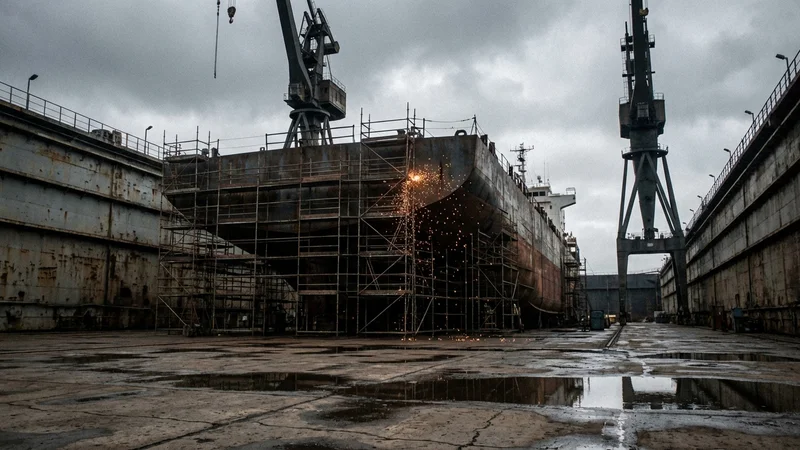
Shipyard workers, including all trades involved in building, repairing, and maintaining ships, faced some of the highest asbestos exposure levels in American industry. Ships were constructed with hundreds of different asbestos-containing products, and shipyard workers encountered these materials daily.
During World War II, American shipyards employed over 4.5 million workers building the wartime fleet. These workers, many now in their 80s and 90s, are still being diagnosed with mesothelioma from exposures 60-80 years ago.
Asbestos Throughout Ships
| Ship Area | Asbestos Products | Exposure Level |
|---|---|---|
| Engine rooms | Pipe insulation, boiler lagging, gaskets | Extreme |
| Boiler rooms | Thermal insulation, refractory | Extreme |
| Bulkheads | Fire barriers, spray insulation | Very High |
| Crew quarters | Wall panels, deck tiles, ceiling tiles | High |
| Electrical | Wire insulation, panel boards | Moderate |
Shipyard Trades at Risk
Why Shipyard Exposure Was So Severe
Confined Spaces
Ship construction and repair occurred in enclosed spaces, holds, engine rooms, and compartments, where asbestos fibers accumulated to dangerous levels. Workers breathed contaminated air for entire shifts.
Multiple Trades Working Together
Shipyards concentrated dozens of trades in small areas. When insulators applied spray insulation, nearby pipefitters, welders, and other workers were exposed.
No Protection
Until the 1970s, shipyard workers received no respiratory protection or warnings about asbestos dangers, despite manufacturers’ knowledge of the risks.
Even workers who never directly handled asbestos products received significant exposure just from working in shipyard environments where asbestos was constantly being installed, removed, and disturbed.
Major U.S. Shipyards
Workers at historic East Coast yards like Bath Iron Works in Maine, Newport News Shipbuilding in Virginia, the Brooklyn Navy Yard in New York, Philadelphia Naval Shipyard in Pennsylvania, and Norfolk Naval Shipyard in Virginia faced intensive asbestos exposure between 1940 and 1980. So did crews at Gulf Coast facilities like Ingalls Shipbuilding in Pascagoula, Mississippi, and at West Coast yards including Mare Island Naval Shipyard and Hunters Point Naval Shipyard in California. Johns Manville and Owens Corning insulation ran through nearly every ship built or overhauled at these yards.
Related Industries
Health Consequences
Shipyard workers show elevated rates of mesothelioma, a cancer of the chest or abdominal lining; asbestosis, a progressive scarring of the lungs; lung cancer multiplied by inhaled fibers; and pleural disease that produces thickening and plaques on the lining around the lungs.
Legal Options
Shipyard workers diagnosed with mesothelioma typically pursue several tracks in parallel. Major manufacturers whose products went into ships, including Johns Manville, Owens Corning, W.R. Grace, and Pittsburgh Corning, established asbestos trust funds through bankruptcy reorganization.
Maritime-specific remedies run alongside trust claims. These include Jones Act claims for maritime workers, LHWCA claims under the Longshore and Harbor Workers’ Compensation Act, and premises-liability claims against shipyard owners. Other tracks include product-liability suits against solvent equipment manufacturers, VA benefits for veterans and civilian Navy Yard workers, and workers’ compensation through a former employer. Because shipyard workers used products from dozens of manufacturers, a trial lawyer can help identify all responsible parties.