Merchant Marines and Asbestos Exposure
Merchant mariners faced extensive asbestos exposure from ship insulation, engine rooms, and living quarters. Learn about exposure sources and legal options.

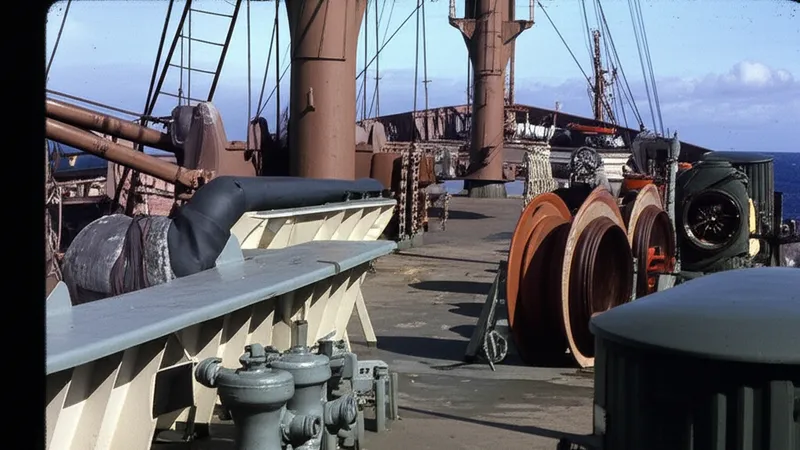
Overview
Merchant marines, civilian sailors who crew commercial vessels, faced continuous asbestos exposure while living and working aboard ships. Ships were constructed with hundreds of asbestos-containing products, and merchant mariners were exposed to these materials for months at a time during voyages.
Unlike shore-based workers who could leave contaminated areas, merchant marines lived aboard ships where asbestos was present in engine rooms, sleeping quarters, mess halls, and throughout the vessel.
Asbestos on Commercial Ships
| Ship Area | Asbestos Materials | Exposure Level |
|---|---|---|
| Engine room | Boiler insulation, pipe lagging, gaskets | Extreme |
| Boiler room | Thermal insulation, refractory materials | Extreme |
| Crew quarters | Wall panels, floor tiles, ceiling materials | High |
| Galley/mess | Oven insulation, fire barriers | Moderate |
| Cargo holds | Bulkhead insulation, deck materials | Moderate |
How Merchant Marines Were Exposed
Shipboard Positions at Risk
Engine department:
- Marine engineers, Machinery operation and repair
- Oilers, Engine room maintenance
- Wipers, Cleaning and general maintenance
Deck department:
- Able seamen, Ship maintenance
- Bosun, Deck crew supervisor
- Ordinary seamen, General duties
Steward department:
- Cooks, Galley work near insulated equipment
- Stewards, Crew quarter maintenance
Extended Exposure
Merchant marines faced unique circumstances that concentrated exposure across every hour of a voyage. Trips lasting weeks or months left no escape from contaminated air, confined sleeping quarters held asbestos in walls and ceilings, work and living happened in the same spaces 24 hours a day, and poor ventilation in engine rooms and passageways trapped fibers against the overheads.
Merchant marines qualify as “seamen” under the Jones Act, which provides special legal rights including the ability to sue employers for negligence in providing an unsafe vessel.
Related Occupations
Maritime workers with similar exposure:
- Shipyard workers, Ship construction/repair
- Longshoremen, Port workers
- Boilermakers, Marine boiler work
Related Industries
Health Consequences
Merchant marines face elevated risk of mesothelioma, a cancer of the chest or abdominal lining; asbestosis, a progressive scarring of the lungs; lung cancer multiplied by exposure; and pleural disease that thickens the lining around the lungs.
Legal Options
Merchant marines diagnosed with mesothelioma have several strong legal options. The Jones Act, passed in 1920, gives mariners the right to sue vessel owners for negligence, maintenance and cure for medical and living expenses, and unseaworthiness claims against defective vessels. Mariners also file claims against asbestos trust funds from insulation and equipment manufacturers like Johns Manville and Owens Corning, third-party lawsuits against solvent product makers, and VA benefits for those who served in the military merchant marine.
The Jones Act gives merchant marines more favorable legal rights than standard workers’ compensation. A maritime trial lawyer can identify the full set of recoveries.