Pennsylvania Asbestos Exposure Legacy
How Bethlehem Steel, Philadelphia Navy Yard, and Pittsburgh mills exposed generations of Pennsylvania workers to asbestos.

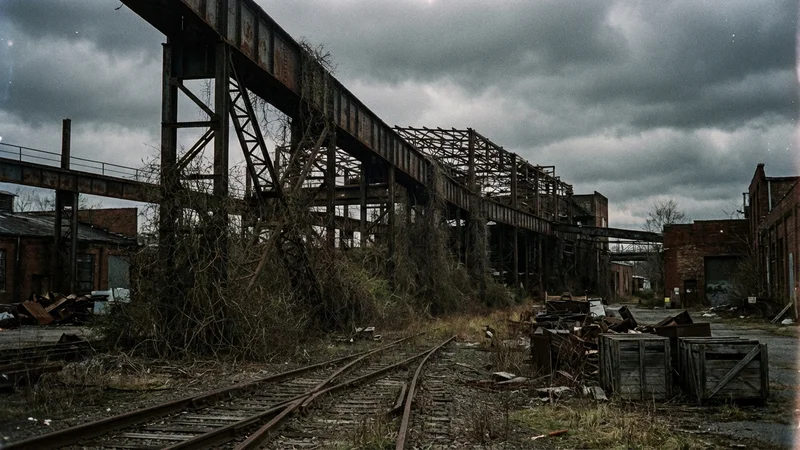
Pennsylvania’s position as the state with the second highest per capita mesothelioma rate in the country traces to two industrial corridors that defined the state’s economy for more than a century: the steel mills of the Lehigh Valley and western Pennsylvania, and the shipbuilding operations along the Delaware River.
The workers who poured the steel, built the ships, and maintained the machinery are the ones receiving diagnoses now, decades after the furnaces cooled and the shipyards closed. Their exposure was not incidental. It was embedded in every shift.
The Steel Corridor
Bethlehem Steel
Bethlehem Steel’s complex in the Lehigh Valley was among the most significant industrial operations in American history. At its peak, the company employed more than 30,000 workers at its Pennsylvania facilities. The plant produced structural steel, armor plate, and forgings for everything from bridges to battleships.
Asbestos was integral to steelmaking. Blast furnaces and open-hearth furnaces operated at extreme temperatures, and asbestos insulation lined the structures, pipes, and equipment surrounding them. Workers who maintained the insulation stripped and replaced asbestos-containing materials as part of routine operations. Rolling mills, the massive machines that shaped molten steel into beams, plates, and rails, used asbestos brake pads, gaskets, and insulation, and millwrights and maintenance crews serviced this equipment daily.
Pipe systems added another exposure pathway. Steam lines, hydraulic systems, and cooling water pipes throughout the complex were insulated with asbestos, and pipefitters cut, fit, and replaced this insulation for decades. Fireproofing finished the picture: asbestos-containing fireproofing materials were applied to structural steel, walls, and ceilings across the facility.
Pittsburgh Steel Mills
The steel corridor along the Monongahela and Ohio rivers contained dozens of mills operated by U.S. Steel, Jones & Laughlin, and other producers. The exposure profile mirrored Bethlehem Steel: furnace insulation, pipe covering, gaskets, brake systems, and fireproofing. Pittsburgh’s steel belt was part of a larger industrial corridor that stretched west through Cleveland’s Rust Belt mills, Gary, Indiana, and into Chicago’s Southeast Side, all of which used the same asbestos insulation products from the same manufacturers.
Workers at Pittsburgh-area mills faced the same concentrated exposure as their Lehigh Valley counterparts. The combination of extreme heat, enclosed working environments, and decades-long careers created conditions for heavy asbestos fiber inhalation.
The Philadelphia Navy Yard
The Philadelphia Naval Shipyard was the largest naval shipbuilding facility on the East Coast and one of the busiest in the country. During World War II, the yard employed more than 40,000 workers building and repairing destroyers, aircraft carriers, and other warships.
Shipyard workers faced some of the most concentrated asbestos exposure of any occupation. Asbestos was used throughout every vessel.
Pipe insulation ran through every ship. Naval vessels contained miles of piping for steam, water, and fuel, and every pipe was insulated with asbestos-containing material. Laggers and pipefitters installed and replaced this insulation in confined spaces throughout the hull. Boiler rooms were the most concentrated exposure zones. Boilers and their associated systems were heavily insulated with asbestos, and boilermakers who worked on them inhaled fibers during installation, maintenance, and repair.
Fireproofing and gaskets spread the exposure across trades. Asbestos was sprayed on bulkheads, decks, and structural members as fireproofing, exposing workers in adjacent areas during application and whenever the material was disturbed. Valves, pumps, and flanges throughout the ship used asbestos gaskets, and mechanics replaced these components regularly, releasing fibers with each repair.
Below-deck work in enclosed compartments created particularly concentrated exposure. Ventilation was limited, and multiple trades often worked in the same confined space, generating cumulative airborne fiber levels that far exceeded what would later be recognized as safe limits. The same below-deck conditions existed at the Brooklyn Navy Yard, Jacksonville’s naval shipyards, and Savannah’s shipbuilding operations, where East Coast Navy workers faced identical hazards.
Manufacturing and Construction
Beyond steel and shipbuilding, Pennsylvania’s manufacturing sector created thousands of additional exposure points. Oil refineries along the Delaware River and in Butler County used asbestos in piping, insulation, and process equipment. Beaver County’s chemical plants used asbestos in reactor vessels, pipe systems, and fireproofing. Coal-fired power stations across the state used asbestos in boilers, turbines, and steam distribution systems. And pre-1980 commercial and public buildings throughout the state were constructed with asbestos-containing insulation, floor tiles, roofing, and fireproofing.
Take-Home Exposure
Pennsylvania’s industrial workers carried asbestos fibers home on their clothing. Spouses who laundered work clothes and children who greeted their parents at the door were exposed to the same material accumulating in workers’ lungs.
Pennsylvania courts have recognized take-home exposure as a valid basis for claims. The Virginia Supreme Court’s 2026 ruling that shipyard employers owed a duty of care to workers’ families reinforced the legal foundation for these claims across the mid-Atlantic. Families affected by secondhand exposure may have both lawsuit and trust fund options.
If you or a family member worked at Bethlehem Steel, the Philadelphia Navy Yard, a Pittsburgh-area steel mill, or any of the state’s industrial facilities, an experienced mesothelioma attorney can help reconstruct the exposure history. Employment records, union documents, and product databases can identify which asbestos-containing products were used at specific facilities.
For legal outcomes from cases involving these exposure sites, see verdicts and settlements.
References
Agency for Toxic Substances and Disease Registry. ATSDR National Asbestos Exposure Site Map.
https://www.atsdr.cdc.gov/asbestos/sites/national_map/
Centers for Disease Control and Prevention. CDC WONDER Multiple Cause of Death (ICD-10 C45, Pennsylvania).
https://wonder.cdc.gov/mcd-icd10.html
U.S. Bankruptcy Court, S.D.N.Y.. In re Bethlehem Steel Corp., Chapter 11 opinion (S.D.N.Y., filing Oct 15 2001).
https://www.nysb.uscourts.gov/sites/default/files/opinions/86004_34_opinion.pdf
U.S. Securities and Exchange Commission. Bethlehem Steel Chapter 11 SEC Disclosure (Form 8-K Exhibit 99.2).
https://www.sec.gov/Archives/edgar/data/11860/000090951803000717/jd9-23ex99_2.htm
Department of the Navy. Navy BRAC Environmental Restoration: Former Philadelphia Naval Shipyard.
https://www.bracpmo.navy.mil/brac_bases/northeast/former_naval_shipyard_philadelphia.html
Pennsylvania Department of Environmental Protection. Pennsylvania DEP Asbestos Program.
https://www.dep.pa.gov/Business/Air/Pages/Asbestos.aspx
Reader Q&A
Frequently Asked Questions
Was Bethlehem Steel an asbestos exposure site?
Yes. Bethlehem Steel’s Lehigh Valley complex used asbestos extensively in furnace insulation, pipe covering, rolling mill components, gaskets, and fireproofing. Workers who maintained and operated equipment at the facility were exposed to asbestos fibers throughout their careers.
Which Pittsburgh-area steel mills used asbestos?
Virtually all of them. Mills operated by U.S. Steel, Jones and Laughlin, and other producers along the Monongahela and Ohio rivers used asbestos in furnace insulation, pipe covering, gaskets, brake systems, and fireproofing. The material was standard in the industry through the 1970s.
Can I file a claim if the mill or shipyard is closed?
Yes. Most asbestos claims target the manufacturers of the asbestos-containing products, not the employer. Many of these manufacturers have established bankruptcy trust funds. An attorney can identify which trusts apply based on the specific products used at your workplace.
Do shipyards still use asbestos?
Asbestos is no longer used in new shipbuilding due to health risks and regulations, with U.S. government-subsidized ships requiring elimination of asbestos lagging and insulation since 1978. However, older ships in modern shipyards contain legacy asbestos, often encapsulated, posing exposure risks during maintenance or decommissioning. Asbestos is not fully banned in U.S. shipyards, and over 65% of global vessels still have it despite a 2002 international ban on new installations. OSHA sets standards to limit exposures, but risks persist for workers handling pre-1980s materials.
What happened to Dravo Corporation?
Dravo Corporation, founded in 1891 in Pittsburgh as a shipbuilding and construction firm, expanded during World War II with shipyards in Pittsburgh and Wilmington, Delaware, producing vessels like Landing Ship Tanks and earning the first Army-Navy “E” Award in 1942. Postwar, it shifted to construction, marine transportation, and lime production while facing economic challenges in the 1970s and 1980s that led to sales of subsidiaries, including Dravo Engineering Companies in 1988. The company went public in 1936 and was acquired by Carmeuse, a mining firm, in 1998 for $192 million. Workers at its shipyards from the 1920s to 1980s faced asbestos exposure risks during insulation and shipbuilding.
What is Pittsburgh Corning asbestos?
Pittsburgh Corning asbestos refers to asbestos-containing products manufactured by Pittsburgh Corning Corporation, primarily between 1962 and 1972, under the Unibestos brand. The company’s main products included pipe insulation, insulation blocks, cement, and thermal papers made with amosite asbestos imported from South Africa. Unibestos products contained up to 90% amosite asbestos, one of the deadliest varieties, and were designed to withstand high temperatures in industrial settings like refineries, power stations, and shipyards. Workers in nearly 2,000 high-risk professions, including insulators, plumbers, electricians, and HVAC workers, faced exposure through installation, maintenance, repair, and demolition of these products. Pittsburgh Corning filed for bankruptcy in 2000 due to thousands of lawsuits related to asbestos exposure and established the PCC Asbestos Personal Injury Settlement Trust to compensate people with mesothelioma and other asbestos-related diseases.
Is Pittsburgh still a steel city?
Pittsburgh earned its “Steel City” nickname due to its historical dominance in U.S. steel production, accounting for 60% of national output at its peak and one-third by the 1920s. No steel mills operate within city limits today, as the industry collapsed in the late 20th century amid deindustrialization, layoffs, and a shift to healthcare, education, technology, and services. Pittsburgh-based firms like U.S. Steel maintain mills in the metropolitan area, and the moniker persists culturally despite the economic pivot since the 1990s.