Florida Shipyard Asbestos: Jacksonville & Tampa
How Jacksonville shipyards, Pensacola NAS, and Tampa ship repair exposed Florida workers to asbestos, with 5,619 documented cases statewide.

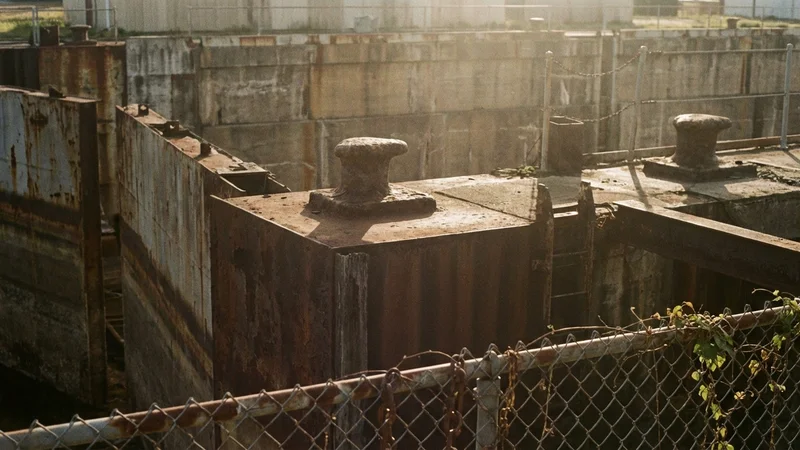
Florida’s position as the state with the second-highest total mesothelioma cases in the country traces to two overlapping forces: a coastline lined with naval shipyards and ship repair facilities, and a network of military installations that stretched from Pensacola to Key West.
The workers who built the ships, maintained the aircraft, and kept the bases running are the ones receiving diagnoses now, decades after their last exposure. Their work was not incidental to asbestos. It was surrounded by it.
Jacksonville: Shipyards and Naval Operations
Jacksonville’s position on the St. Johns River and its proximity to the Atlantic made it a center for naval operations and commercial shipping throughout the 20th century. The city’s shipyard operations, including facilities supporting Naval Station Mayport, employed thousands of workers in environments saturated with asbestos.
Building and repairing naval vessels required asbestos at every stage. Pipe insulation, boiler lagging, fireproofing, gaskets, electrical insulation, and deck covering all contained asbestos, and workers in enclosed below-deck compartments breathed fiber-laden air throughout their shifts.
The same conditions existed at East Coast shipyards from the Philadelphia Navy Yard to Savannah’s shipbuilding operations, where identical asbestos products from the same manufacturers were standard.
Every steam pipe, hot water line, and process pipe on a naval vessel was insulated with asbestos-containing material, and pipefitters who cut, fit, and replaced that insulation had direct, daily contact with fibers.
The most concentrated exposure occurred in boiler rooms and engine spaces, where asbestos insulation covered virtually every surface and workers stripped and reapplied insulation as part of routine maintenance.
Jacksonville’s commercial port facilities also exposed longshoremen and dock workers to asbestos during cargo handling, warehouse operations, and ship maintenance.
Pensacola Naval Air Station
Pensacola NAS, established in 1914, is one of the oldest naval air stations in the country. The base’s hangars, maintenance facilities, barracks, and power systems used asbestos throughout their construction and ongoing maintenance.
Aircraft maintenance workers were exposed to asbestos in brake pads, gaskets, heat shields, and insulation used in both aircraft and ground support equipment. The base’s infrastructure, including steam distribution systems, electrical conduits, and building insulation, contained asbestos in materials installed from the 1930s through the 1970s.
At Pensacola NAS, civilian workers faced the same exposure as military personnel. Maintenance crews, electricians, plumbers, and construction workers who kept the base operational handled asbestos-containing materials as part of their daily work. For a breakdown of how mesothelioma risk varies by military branch, including the Navy’s disproportionately high exposure rates, see our veterans analysis.
Patrick Air Force Base
Patrick AFB (now Patrick Space Force Base) on Florida’s east coast served as the launch support facility for Cape Canaveral operations. The base’s infrastructure, including power systems, communications facilities, and support buildings, used asbestos insulation and fireproofing throughout the Cold War era.
Workers who built and maintained the base’s facilities were exposed to asbestos in pipe insulation, floor tiles, ceiling materials, roofing products, and electrical components.
Tampa and the Gulf Coast
Tampa’s ship repair industry operated alongside the city’s commercial port, creating a separate corridor of asbestos exposure on Florida’s Gulf Coast. Ship repair workers faced the same concentrated exposure as their counterparts in Jacksonville, with asbestos present in insulation, pipe covering, and fireproofing throughout the vessels they serviced.
The Gulf Coast’s power generation infrastructure added another layer. Coal-fired and oil-fired plants in the Tampa Bay area used asbestos insulation on boilers, turbines, and steam distribution systems. Boilermakers, pipefitters, and insulators who built and maintained these plants were exposed throughout their careers.
Tampa’s phosphate processing industry, centered in Hillsborough and Polk counties, also used asbestos in processing equipment, insulation, and facility infrastructure. Workers in the phosphate industry face an overlapping set of occupational health risks that compounds the asbestos exposure history.
Construction Across the State
Florida’s population boom from the 1950s onward created a construction industry that employed hundreds of thousands of tradespeople. Asbestos was a standard building material through the early 1980s, present in:
- Drywall joint compound applied by finishers on nearly every commercial and residential project
- Floor tiles and mastic installed in offices, schools, hospitals, and homes
- Roofing materials on commercial and industrial buildings
- Insulation in walls, attics, and mechanical systems
- Fireproofing sprayed on structural steel in high-rise buildings
Construction workers who cut, sanded, drilled, and installed these materials released asbestos fibers into the air on every job site.
Take-Home Exposure
Like workers in other industrial states, Florida’s shipyard workers, military base personnel, and construction tradespeople carried asbestos fibers home on their clothing. Spouses who laundered work clothes and children who greeted their parents at the door were exposed to the same material that was accumulating in workers’ lungs.
Florida courts have recognized take-home exposure claims. The state’s $18 million secondhand brake dust verdict demonstrated that family members can hold manufacturers accountable for exposure that occurred outside the workplace.
The Virginia Supreme Court’s 2026 ruling that shipyard employers owed a duty of care to workers’ household members further strengthened the legal framework for these claims.
If you or a family member worked at a Jacksonville shipyard, Florida military base, Tampa ship repair facility, or in the construction trades before the 1980s, an experienced mesothelioma attorney can help reconstruct the exposure history.
Employment records, military service records, union documents, and product databases can identify which asbestos-containing products were present at specific facilities.
References
Agency for Toxic Substances and Disease Registry. ATSDR National Asbestos Exposure Site Map.
https://www.atsdr.cdc.gov/asbestos/sites/national_map/
Centers for Disease Control and Prevention. CDC WONDER Multiple Cause of Death (ICD-10 C45, Florida).
https://wonder.cdc.gov/mcd-icd10.html
U.S. Environmental Protection Agency. EPA Superfund Site Profile: Naval Station Mayport (Site ID 0401220).
https://cumulis.epa.gov/supercpad/cursites/csitinfo.cfm?id=0401220
U.S. Environmental Protection Agency. EPA Superfund Site Profile: Naval Air Station Jacksonville (Site ID 0401232).
https://cumulis.epa.gov/supercpad/cursites/csitinfo.cfm?id=0401232
Agency for Toxic Substances and Disease Registry. ATSDR Public Health Assessment, NAS Jacksonville.
https://www.atsdr.cdc.gov/HAC/pha/NASJacksonville/NASJacksonvillePHA061604.pdf
U.S. National Archives. Researching Asbestos aboard US Naval Vessels.
https://www.archives.gov/research/military/navy/guided-topics/asbestos
Reader Q&A
Frequently Asked Questions
Which Florida shipyards used asbestos?
All major Florida shipyards used asbestos extensively. Jacksonville’s naval shipyard operations, Tampa’s ship repair facilities, and Pensacola’s naval aviation maintenance all relied on asbestos for insulation, pipe covering, fireproofing, gaskets, and boiler lagging. The material was standard in shipbuilding and repair through the 1970s.
Were military personnel at Florida bases exposed to asbestos?
Yes. Military personnel at Pensacola NAS, Patrick AFB, Homestead Air Reserve Base, and other Florida installations were exposed to asbestos in base infrastructure, maintenance operations, and aircraft components. Both military members and civilian workers at these bases faced occupational exposure.
What construction trades had the highest exposure in Florida?
Insulators, pipefitters, drywall finishers, floor tile installers, roofers, and demolition workers had the most direct asbestos exposure. Electricians, plumbers, and general laborers on the same job sites also inhaled fibers during cutting, sanding, and demolition activities.
Can I file a claim if the shipyard or base is still operating?
Yes. Mesothelioma claims target the manufacturers of the asbestos-containing products used at these facilities, not the facility itself. Many of these manufacturers have established bankruptcy trust funds. An attorney can identify which trusts apply based on the specific products used during your employment.
How much does it cost to remove asbestos in Tampa?
Asbestos removal costs in Tampa average $2,239 and range from $462 to $6,000, depending on the amount of material, location, and project size. Interior removal typically runs $5 to $20 per square foot, while exterior work like roofs costs $50 to $150 per square foot.
Walls and drywall average $8 to $13.50 per square foot, and attic insulation $11 to $25 per square foot. Whole-home remediation often exceeds $5,700, with labor at $75 to $200 per hour per crew member and additional fees for inspection ($250 to $850) or disposal.
Local Tampa costs vary by these factors, as noted in service listings.
What is the 3 5 7 rule for asbestos sampling?
The 3-5-7 rule, from EPA’s Asbestos Hazard Emergency Response Act (AHERA) under 40 CFR 763.86, sets minimum bulk samples for friable surfacing materials (like acoustic ceilings or spray-on fireproofing) in homogeneous areas: 3 samples for <1,000 sq ft, 5 for 1,000-5,000 sq ft, and 7 for >5,000 sq ft.
Samples must be randomly distributed, with the area deemed asbestos-containing if ≥1% asbestos by weight in any sample. The EPA Pink Book recommends 9 samples per area for higher confidence, though 3-5-7 is the regulatory minimum.
This applies to U.S. inspections. Other materials like joint compound require separate protocols, often 3 samples. People with mesothelioma often trace exposure to undetected asbestos in such materials.
Can you remove asbestos yourself in Florida?
In Florida, anyone removing asbestos must be licensed by the state, which requires accredited training, an exam, and biennial renewal. Unlicensed removal is prohibited and can result in penalties.
While no federal law bans homeowners from asbestos removal, Florida regulations under the Department of Environmental Protection (Chapter 62-257, Florida Administrative Code) mandate licensed professionals for demolition or renovation involving asbestos-containing materials. Improper handling by untrained individuals risks releasing fibers linked to mesothelioma and other diseases, and professionals cannot enter sites with prior mishandling.