Cleveland's Asbestos Exposure Legacy
How Republic Steel, LTV Steel, and auto plants across Cleveland and Toledo exposed generations of Ohio workers to asbestos.

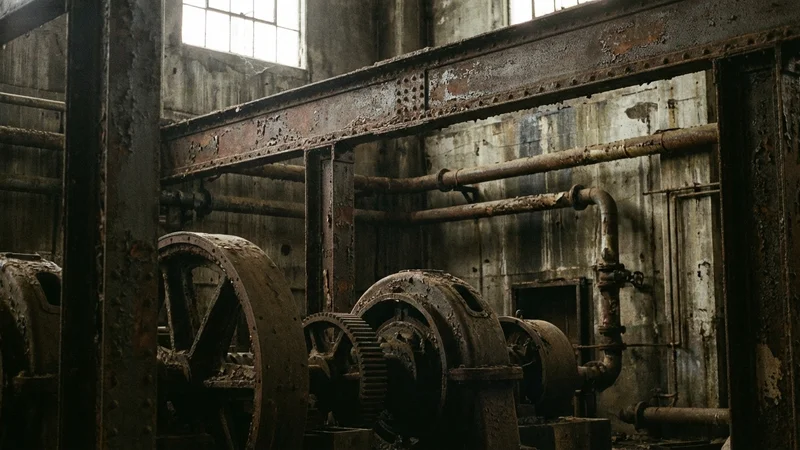
For most of the 20th century, the industrial corridor stretching from Cleveland through Youngstown to Toledo defined Ohio’s economy. Steel mills lined the Cuyahoga River and the Mahoning Valley. Auto plants assembled vehicles and parts across Toledo and Cleveland. Power plants and chemical facilities filled the spaces in between.
Asbestos was embedded in all of it. The insulation that wrapped blast furnace pipes, the brake pads rolling off assembly lines, the gaskets inside every power plant boiler. Workers handled these materials for decades, often without respirators or warnings.
The mills and plants are largely gone. The diagnoses are not. With latency periods of 20 to 50 years, mesothelioma cases continue to emerge from exposures that occurred in the 1960s, 1970s, and 1980s.
The Cleveland Steel Corridor
Republic Steel
Republic Steel was one of the largest steelmakers in America. Its Cleveland operations stretched along the Cuyahoga River through the Flats and into the industrial neighborhoods south of downtown. By the late 1930s, Republic’s Cleveland district employed more than 10,000 workers in its mills along the river, according to the Encyclopedia of Cleveland History maintained by Case Western Reserve University. Republic’s mills were part of a Rust Belt steel corridor that extended from Pittsburgh through Youngstown and Cleveland to Gary, Indiana and Chicago’s southeast side, all using the same asbestos insulation products from the same manufacturers.
Inside the mills, asbestos was everywhere. It insulated the blast furnaces that operated at temperatures above 2,000 degrees. It wrapped the pipes carrying steam between buildings. It lined the ladles that poured molten metal. It protected the soaking pits and the electrical systems that powered the rolling mills.
Insulators, pipefitters, millwrights, and electricians handled asbestos materials directly. But production workers on the floor breathed the same fiber-laden air, shift after shift, year after year. Republic merged with LTV Corporation in 1984.
LTV Steel
LTV Steel inherited Republic’s Cleveland operations and combined them with the former Jones and Laughlin facilities. The merged company operated one of the largest integrated steel operations in the Midwest, running blast furnaces, basic oxygen furnaces, and rolling mills along the Cuyahoga River.
LTV’s workers faced the same asbestos exposure as their predecessors at Republic. Maintenance shutdowns were particularly dangerous. During these periods, workers tore out old asbestos insulation and installed new material, filling work areas with fiber dust. The LTV Corporation and 48 of its subsidiaries filed voluntary Chapter 11 petitions on December 29, 2000 in the U.S. Bankruptcy Court for the Northern District of Ohio, an event documented in LTV’s contemporaneous SEC disclosures and the bankruptcy court’s later opinions. The filing ended steel production in Cleveland.
Youngstown Sheet and Tube
The Mahoning Valley formed Ohio’s second major steel corridor. Youngstown Sheet and Tube was once the second-largest steel producer in the country, operating mills in Youngstown, Campbell, and Struthers. The company employed more than 10,000 workers at its peak.
The mills used asbestos in the same applications as their Cleveland counterparts: furnace insulation, pipe covering, gaskets, electrical systems, and fireproofing. In September 1977, Youngstown Sheet and Tube’s parent company closed the Campbell Works in a mass layoff that contemporaneous Youngstown news coverage dubbed “Black Monday.” Thousands of jobs were eliminated, marking the beginning of the Mahoning Valley’s deindustrialization.
The workers who lost their jobs that day had already been exposed to asbestos for years or decades. Many would not learn the health consequences until the 2000s and beyond.
Toledo Auto Plants
Toledo was Ohio’s auto manufacturing center. Jeep, originally Willys-Overland, built vehicles there from 1908 onward. The company’s Toledo complex employed thousands of workers through multiple ownership changes, from Willys to Kaiser to AMC to Chrysler.
Asbestos appeared throughout automotive manufacturing. Brake linings, clutch facings, gaskets, and heat shields all contained asbestos fibers. Workers who fabricated, assembled, tested, and inspected these components handled asbestos materials throughout their shifts. The same products and processes were used at Detroit’s Ford, GM, and Chrysler plants, where brake and clutch production created identical exposure conditions for hundreds of thousands of workers.
General Motors operated the Powertrain plant in Toledo, producing transmissions and drivetrain components. Ford and Chrysler also ran facilities in the region. In each plant, the same pattern repeated: asbestos components were manufactured, handled, and installed without adequate protection.
Beyond the assembly line, mechanics who serviced vehicles with asbestos brakes and clutches faced decades of additional exposure. Every brake job released asbestos dust into the shop air.
Power Plants and Shipyards
Ohio’s coal-fired power plants used asbestos extensively in boiler insulation, pipe lagging, and turbine systems. FirstEnergy (formerly Ohio Edison), American Electric Power, and Dayton Power and Light operated generating stations across the state where boilermakers and maintenance workers were routinely exposed.
Cleveland’s lakefront also supported shipbuilding and repair operations. The American Ship Building Company operated yards along the Cuyahoga River where workers constructed and repaired Great Lakes freighters. Ship construction and repair involved heavy asbestos use in engine rooms, boiler rooms, and throughout vessel insulation systems.
Take-Home Exposure
The danger extended beyond the plant gates. Workers carried asbestos fibers home on their clothing, hair, and skin. Spouses who laundered work clothes, children who greeted their parents at the door, all breathed the same fibers that were accumulating in the workers’ lungs.
A Cuyahoga County jury awarded $27.5 million in a secondhand exposure case, recognizing the liability of companies whose products exposed not just workers but their families. This verdict confirmed that Ohio courts hold manufacturers accountable for take-home exposure. The Virginia Supreme Court’s 2026 ruling affirming a duty of care for shipyard take-home exposure further strengthened the legal basis for these claims nationally.
If you or a family member worked at any of the Cleveland steel mills, Youngstown Valley operations, Toledo auto plants, or Ohio power stations, an experienced mesothelioma attorney can help reconstruct the exposure history using employment records, union documents, co-worker testimony, and product databases. Many of these sites are connected to asbestos trust funds that still accept claims.
What Remains
The steel mills along the Cuyahoga River are gone. Youngstown Sheet and Tube’s Campbell Works is a vacant lot. Many of Toledo’s auto plants have been retooled or demolished. But the asbestos fibers deposited in the lungs of workers and their families remain.
Ohio records approximately 110 new mesothelioma cases per year. The state’s documented industrial asbestos exposure spans steel, auto, power-generation, and chemical sectors, with site-level records held across ATSDR, EPA Region 5, OSHA inspection databases, and state environmental agencies. For those receiving a diagnosis today, the 2026 treatment landscape includes immunotherapy and surgical options that continue to improve outcomes. For the families of workers who built Ohio’s industrial economy, the legacy is measured in diagnoses that arrive decades after the last shift.
References
Agency for Toxic Substances and Disease Registry. ATSDR National Asbestos Exposure Site Map.
https://www.atsdr.cdc.gov/asbestos/sites/national_map/
Centers for Disease Control and Prevention. CDC WONDER Multiple Cause of Death (ICD-10 C45, Ohio).
https://wonder.cdc.gov/mcd-icd10.html
Encyclopedia of Cleveland History, Case Western Reserve University. Republic Steel Corporation.
https://case.edu/ech/articles/r/republic-steel-corp
U.S. Securities and Exchange Commission. LTV Corporation Form 8-K (Chapter 11 commencement, Dec 29 2000).
https://www.sec.gov/Archives/edgar/data/60731/000095015205002835/l13099ae8vk.htm
U.S. Bankruptcy Court, N.D. Ohio. In re LTV Steel Co., U.S. Bankruptcy Court, Northern District of Ohio (Case No. 00-43866).
https://www.ohnb.uscourts.gov/sites/default/files/inactive-opinions/op-20050902-ltv-steel-administrative-claimants-committee-motion-approve-filing-action-against.pdf
Ohio History Connection. Ohio History Connection: Steel Industry.
https://ohiohistorycentral.org/
Centers for Disease Control and Prevention. Mesothelioma Mortality by State, CDC USCS.
https://www.cdc.gov/united-states-cancer-statistics/publications/mesothelioma.html
Reader Q&A
Frequently Asked Questions
Which Cleveland steel mills used asbestos?
All of the major Cleveland steel operations used asbestos extensively. Republic Steel, LTV Steel (formerly Jones and Laughlin), and their associated facilities used it in furnace insulation, pipe covering, gaskets, fireproofing, and electrical systems. Workers in maintenance, insulation, pipefitting, and production were all exposed.
Did Toledo auto plants use asbestos?
Yes. Jeep/Willys-Overland, General Motors Powertrain, and other auto manufacturers in Toledo used asbestos in brake linings, clutch facings, gaskets, and heat shields. Workers who manufactured, assembled, and tested these components were exposed throughout their shifts.
Can families of Ohio industrial workers file mesothelioma claims?
Yes. Both direct exposure claims and take-home exposure claims are recognized in Ohio courts. Workers who were directly exposed and family members who inhaled fibers from contaminated clothing may have legal options, including trust fund claims and lawsuits.
How long after working in a steel mill can mesothelioma develop?
Mesothelioma typically develops 20 to 50 years after asbestos exposure. A worker exposed at Republic Steel in the 1970s could receive a diagnosis in the 2020s or later. The long latency period means new cases continue to emerge from exposures that occurred decades ago.
Are there asbestos trust funds for Ohio steel and auto workers?
Yes. Many of the companies that manufactured or supplied asbestos products to Ohio steel mills and auto plants have established bankruptcy trust funds. An experienced attorney can identify which trusts apply to a specific worker’s exposure history.
Can I look up if my house has asbestos?
Visual inspection alone cannot confirm asbestos in your home, as asbestos fibers are invisible to the naked eye. However, you can look for risk indicators such as the age of your home (built before the 1980s), common locations like textured ceilings, vinyl floor tiles, pipe insulation, and building records that may document asbestos use. The only definitive way to identify asbestos is through professional laboratory testing, where a certified inspector collects material samples and sends them to a lab for analysis using methods like Polarized Light Microscopy or Transmission Electron Microscopy. The U.S. Environmental Protection Agency recommends testing if building materials are damaged or you plan to remodel, as disturbing materials can release fibers into the air. Do not attempt to collect samples yourself, as improper handling can release asbestos fibers.
How much does it cost to remove asbestos in Ohio?
Asbestos removal in Ohio costs an average of $2,192, with most homeowners paying between $1,421 and $2,964. Interior removal typically ranges from $5 to $20 per square foot, while exterior work such as roof removal costs $50 to $120 per square foot. The final cost depends on the size of the affected area, asbestos type, location within the home, and accessibility. Professional testing and inspection before removal costs $250 to $800. Disposal fees add $10 to $50 per cubic yard and are highly regulated in Ohio.
When did Ohio ban asbestos?
Ohio has no statewide ban on the use of asbestos. The U.S. EPA issued a partial ban in 1989 on the manufacture, import, processing, and distribution of certain asbestos-containing products, along with new uses after August 25, 1989; this rule remains in effect. In March 2024, the EPA finalized a ban on ongoing uses of chrysotile asbestos, the last type permitted in the U.S. Ohio EPA regulates asbestos emissions from demolition and renovation under Ohio Administrative Code 3745-20, but does not prohibit asbestos use outright. No evidence shows Ohio enacting a comprehensive asbestos ban as of 2026.