St. Louis Manufacturing: A Century of Asbestos Exposure
How manufacturing, lead smelting, and railroads exposed generations of St. Louis workers and families to asbestos.

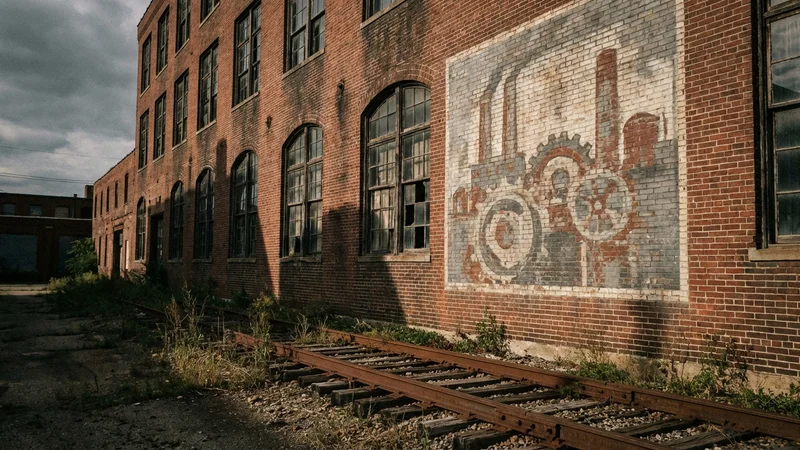
For more than a century, St. Louis was one of the largest manufacturing cities in the United States, a peer to Chicago in the Midwest industrial corridor. The factories, chemical plants, breweries, rail yards, and smelters that built the city’s economy also filled its workplaces with asbestos. The material insulated everything from blast furnaces to brewing equipment, and the workers who maintained these systems breathed fiber-laden dust for decades before the risks were acknowledged.
The factories are closed or converted. The rail yards have shrunk. But the diagnoses continue, arriving 30 to 50 years after the last shift, in workers now in their 70s and 80s, and sometimes in their families.
Manufacturing and Chemical Plants
St. Louis’s manufacturing sector was enormous. The city produced automobiles, chemicals, electrical equipment, building materials, and consumer goods at hundreds of facilities spread across the metropolitan area. Asbestos was a standard industrial material throughout the 20th century, used to insulate boilers, pipes, machinery, and electrical systems in virtually every plant.
Mallinckrodt Chemical Works
The Mallinckrodt Chemical Works operated in downtown St. Louis from the 1860s, producing pharmaceuticals, fine chemicals, and during World War II and the Cold War, processing uranium for the federal government’s nuclear weapons program. The facility used asbestos insulation throughout its chemical processing areas, exposing workers to both radioactive materials and asbestos fibers.
Mallinckrodt workers, maintenance crews, and laborers who worked in or near the facility faced overlapping exposures. The uranium processing legacy has drawn the most public attention, but the asbestos exposure at Mallinckrodt was extensive and affected workers across multiple decades.
Anheuser-Busch
The Anheuser-Busch brewery complex in south St. Louis was one of the largest brewing operations in the world. Brewing requires sustained heat for pasteurization, fermentation, and bottling, and asbestos insulated the boilers, steam pipes, and equipment that maintained those temperatures.
Maintenance workers, pipefitters, and boilermakers at the brewery complex handled asbestos materials during routine upkeep and equipment overhauls. The scale of the operation, spanning dozens of buildings and employing thousands of workers, created widespread exposure over many decades.
Automotive and Parts Manufacturing
St. Louis was home to General Motors, Ford, and Chrysler assembly plants, along with dozens of smaller parts manufacturers. Asbestos appeared in brake pads, clutch facings, gaskets, and insulation materials throughout the automotive supply chain. Assembly workers, mechanics, and maintenance crews at these plants handled asbestos-containing components daily.
The Chrysler plant in Fenton and the GM plant in Wentzville used asbestos products in both vehicle components and facility insulation. Workers at these facilities, along with the auto mechanics who later serviced the vehicles, were exposed to asbestos fibers over extended periods.
Lead Smelting
Missouri’s lead belt produced more lead than any other region in the country, and the smelting operations that processed it relied heavily on asbestos. The Doe Run Company’s Herculaneum smelter, located along the Mississippi River south of St. Louis, operated for more than a century before closing in 2013.
Inside the smelter, asbestos insulated the furnaces, flues, and equipment that operated at extreme temperatures. Workers who maintained this insulation, replaced it during shutdowns, and worked near it during operations breathed asbestos fibers alongside lead dust and other industrial contaminants.
Additional smelting and metal processing facilities in Jefferson County and the St. Louis metropolitan area created similar exposure patterns for their workers. The overlap of lead dust and asbestos exposure at Missouri smelters mirrors the combined toxic exposures seen at steel operations in Indiana and Ohio, where workers faced multiple industrial carcinogens simultaneously.
Railroads
St. Louis was a major railroad hub, and the rail yards that supported the city’s freight and passenger traffic employed thousands of workers. The Missouri Pacific Railroad, Burlington Northern, and Union Pacific all operated maintenance facilities in the St. Louis area.
Railroad workers handled asbestos in:
- Brake linings on locomotives and freight cars
- Gaskets and packing in engine components
- Pipe insulation in steam locomotives and rail buildings
- Fireproofing materials in maintenance shops and stations
Mechanics, boilermakers, and car repair workers faced the heaviest exposure, but brakemen, conductors, and yard workers who spent time in and around rolling stock were also affected. Railroad workers can file claims under the Federal Employers Liability Act (FELA), a separate legal pathway from state personal injury claims.
Power Plants
Coal-fired power plants along the Missouri and Mississippi rivers used asbestos extensively to insulate boilers, turbines, steam pipes, and electrical systems. The Labadie Energy Center in Franklin County and the Sioux Energy Center in St. Charles County were among the largest generating facilities in the region.
Power plant workers who installed, repaired, and removed insulation during maintenance outages were exposed to concentrated levels of airborne asbestos. Outage crews from around the region traveled to these plants for scheduled shutdowns, broadening the population of exposed workers beyond the permanent plant staff.
Take-Home Exposure
The danger extended beyond the factory gates. Workers carried asbestos fibers home on their clothing, hair, and skin. Spouses who laundered work clothes and children who came into contact with contaminated garments breathed the same fibers that were affecting the workers themselves.
Missouri courts have recognized this exposure pathway. Several Missouri asbestos verdicts have addressed secondary exposure claims, and the state’s five-year statute of limitations provides families additional time to pursue these cases. In January 2026, the Virginia Supreme Court ruled that employers owe a duty of care to household members exposed through contaminated work clothing, a precedent that could strengthen take-home claims filed in Missouri courts.
If you or a family member worked at any St. Louis manufacturing plant, smelter, rail yard, or power plant, an experienced mesothelioma attorney can help reconstruct the exposure history using employment records, union documents, co-worker testimony, and product databases. Many of these sites are connected to asbestos trust funds that still accept claims.
What Remains
St. Louis’s manufacturing sector has largely moved on. Many of the plants have been demolished or repurposed. The Herculaneum smelter closed in 2013. The Mallinckrodt site is an EPA Superfund location.
What remains are the asbestos fibers deposited in the lungs of workers and their families decades ago. With latency periods of 20 to 60 years, mesothelioma diagnoses continue to emerge from exposures that occurred in the 1960s, 1970s, and 1980s. For people receiving a diagnosis now, the 2026 mesothelioma treatment landscape includes immunotherapy combinations and surgical approaches that have improved outcomes compared to a decade ago.
Missouri has extensive documented industrial asbestos exposure. St. Louis filings increased 21% in 2023, a sign that the state’s industrial legacy is still producing new cases. For the families of workers who built St. Louis’s manufacturing economy, the consequences are still unfolding.
References
Agency for Toxic Substances and Disease Registry. ATSDR National Asbestos Exposure Site Map.
https://www.atsdr.cdc.gov/asbestos/sites/national_map/
Centers for Disease Control and Prevention. CDC WONDER Multiple Cause of Death (ICD-10 C45, Missouri).
https://wonder.cdc.gov/mcd-icd10.html
U.S. Environmental Protection Agency. EPA Superfund Site Profile: St. Louis Airport Site (SLAPS, Site ID 0700229).
https://cumulis.epa.gov/supercpad/cursites/csitinfo.cfm?id=0700229
U.S. Environmental Protection Agency. EPA Superfund Site Profile: West Lake Landfill (Site ID 0701599).
https://cumulis.epa.gov/supercpad/cursites/csitinfo.cfm?id=0701599
U.S. Army Corps of Engineers. St. Louis Downtown Site (SLDS) Mallinckrodt FUSRAP Project.
https://www.mvs.usace.army.mil/Missions/FUSRAP/St-Louis-Downtown-Site-SLDS/
Agency for Toxic Substances and Disease Registry. Health Consultation: Former Zonolite Company, St. Louis, Missouri.
https://www.atsdr.cdc.gov/media/pdfs/2024/07/FormerZonoliteStLouisHC081606.pdf
Missouri DNR. Missouri Department of Natural Resources.
https://dnr.mo.gov/
Reader Q&A
Frequently Asked Questions
Which St. Louis workplaces used asbestos?
Asbestos was used in virtually every major industrial facility in St. Louis, including Anheuser-Busch, Mallinckrodt Chemical Works, General Motors, Ford, Chrysler, and the city’s railroad yards. Manufacturing plants, chemical facilities, breweries, power plants, and construction sites all used asbestos in insulation, gaskets, fireproofing, and equipment.
Can families of manufacturing workers file mesothelioma claims?
Yes. Both direct exposure claims and take-home exposure claims are recognized in Missouri courts. Workers who were directly exposed and family members who inhaled fibers from contaminated clothing may have legal options, including trust fund claims and lawsuits.
How long after working in a factory can mesothelioma develop?
Mesothelioma typically develops 20 to 60 years after asbestos exposure. A worker exposed at a St. Louis plant in the 1970s could receive a diagnosis in the 2030s or later. The long latency period means new cases continue to emerge from exposures that occurred decades ago.
Are there asbestos trust funds for Missouri workers?
Yes. Many of the companies that manufactured or supplied asbestos products to Missouri workplaces have established bankruptcy trust funds. An experienced attorney can identify which trusts apply to a specific worker’s exposure history.
Is St. Louis a good or bad place to live?
St. Louis offers people with mesothelioma access to high-quality healthcare, including Barnes-Jewish Hospital, which ranks nationally in cancer care, and Missouri Baptist Medical Center for lung cancer treatment. The city’s Health Care Index stands at 75.25 (high), supported by top hospitals, though air quality issues from urban pollutants may pose respiratory risks for those with compromised lungs. Overall quality of life rates very high at 194.50, with costs 11-16% below the national average, but low safety (30.15) and occasional air quality alerts warrant caution in polluted areas. Evidence from livability rankings shows strong amenities (83/100) and housing affordability (69/100), balanced against environment (40/100) and safety (14/100) scores.
Does St. Louis have the worst crime rate?
St. Louis recorded a violent crime rate of 1,367 per 100,000 residents in 2024, among the highest nationwide and far exceeding peers like Chula Vista (≈371 per 100,000) and Gilbert (≈131 per 100,000). Its overall crime rate of 70 per 1,000 residents ranks it in the top 100 most dangerous U.S. cities, with a 1-in-14 chance of victimization. Early 2025 data shows declines (homicides down 45%, robberies down 20%), but rates remain elevated compared to national averages. No evidence confirms St. Louis has the single worst rate, as comparisons vary by metric and year.
Why is St. Louis so famous?
St. Louis gained fame as the “Gateway to the West” due to its role in the 19th-century expansion, commemorated by the 630-foot Gateway Arch, part of the Jefferson National Expansion Memorial, and as the starting point for the Lewis and Clark Expedition in 1804. The city hosted the 1904 Summer Olympics, the first in a non-European city, alongside the Louisiana Purchase Exposition World’s Fair, which drew over 20 million visitors and left lasting sites like the St. Louis Zoo and Art Museum. Other notable associations include the Anheuser-Busch Brewery, the Dred Scott Supreme Court decision, and cultural contributions from figures like T.S. Eliot and Scott Joplin.
Is St. Louis a historically black city?
No, St. Louis is not a historically Black city. Founded in 1764 by French-speaking fur traders, the city was built with labor from both enslaved and free African Americans, who comprised about 25% of the population by 1830 and outnumbered slaves by 1860. However, African Americans have long been a minority, around 5% of the population until the late 1870s, with segregation concentrating them in areas like The Ville from 1911 onward. Racial covenants, housing discrimination, and events like the 1917 East St. Louis riot reinforced divides, making St. Louis highly segregated but not historically Black-dominated.