Missouri Mesothelioma by the Numbers
Missouri ranks among the top states for asbestos deaths. CDC data on cases, industries, and exposure across St. Louis and Kansas City.

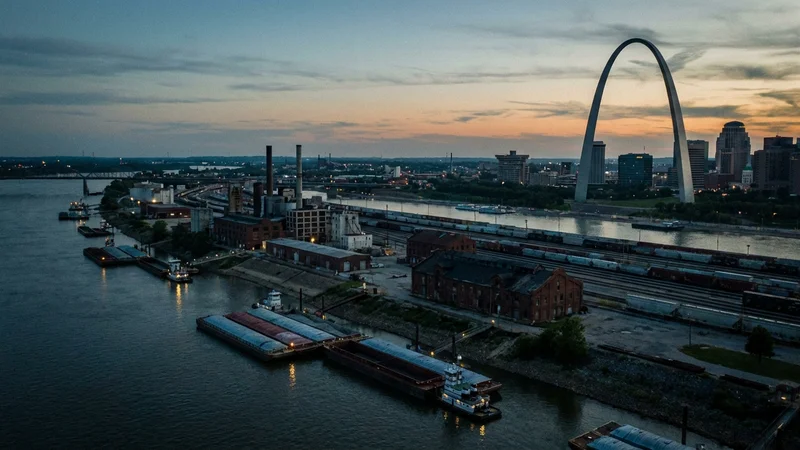
Missouri’s asbestos burden is rooted in the manufacturing, lead smelting, and railroad industries that powered the state’s economy through the 20th century. St. Louis and Kansas City were industrial centers where thousands of workers handled asbestos-containing products in factories, refineries, rail yards, and construction sites.
Decades of industrial asbestos exposure have produced hundreds of documented deaths from mesothelioma and asbestosis combined, according to CDC mortality records. For families still receiving diagnoses decades after exposure ended, Missouri’s legal landscape offers one of the longest filing windows in the country and a court system with deep experience handling asbestos cases.
State Rankings
For a full comparison of all 50 states, see our mesothelioma rates by state rankings.
| Metric | Missouri | National |
|---|---|---|
| Mesothelioma deaths (1999-2017) | 897 | 45,221 (1999-2015, MMWR) |
| Statute of limitations (PI) | 5 years from diagnosis | Varies by state |
| Statute of limitations (WD) | 3 years from death | Varies by state |
Where Exposure Happened
Missouri’s asbestos exposure traces to three primary industrial sectors that defined the state’s economy for more than a century.
Manufacturing and Lead Smelting
St. Louis was one of the largest manufacturing centers in the Midwest, part of an industrial corridor that extended through Chicago and across the Great Lakes states. The city’s factories produced automobiles, chemicals, electrical equipment, and building materials. Asbestos insulated boilers, pipes, and machinery across these facilities. Workers who installed, maintained, or operated near insulated equipment inhaled fibers throughout their careers.
The St. Louis metropolitan area was also home to lead smelting operations that relied on heat-resistant asbestos materials in furnaces and processing equipment. The Doe Run Company and other smelting facilities in the region used asbestos insulation extensively, exposing smelter workers, maintenance crews, and laborers.
Railroads
Missouri sits at the intersection of major rail corridors, and both St. Louis and Kansas City served as critical railroad hubs. The Burlington Northern Santa Fe Railway, Union Pacific, and Missouri Pacific Railroad operated maintenance yards, locomotive shops, and freight terminals across the state.
Railroad workers handled asbestos in brake linings, gaskets, pipe insulation, and locomotive components. Mechanics, boilermakers, and maintenance workers faced the heaviest exposure, but brakemen and conductors who worked in and around rolling stock were also affected. The Federal Employers Liability Act (FELA) provides a separate legal pathway for railroad workers with asbestos-related disease.
Construction and Power Generation
Missouri’s postwar building boom put thousands of construction workers in contact with asbestos-containing materials. Insulators, pipefitters, electricians, and drywall workers handled asbestos products daily on commercial and residential construction sites throughout St. Louis, Kansas City, and Springfield.
Power plants across the state, including the Labadie Energy Center and the Sioux Energy Center along the Missouri River, used asbestos to insulate boilers, turbines, and steam pipes. Workers who maintained these systems were exposed during routine repairs and overhauls.
Regional Data
| Region | Key Industries | Notable Sites |
|---|---|---|
| St. Louis Metro | Manufacturing, lead smelting, railroads | Anheuser-Busch, Mallinckrodt Chemical, rail yards |
| Kansas City Metro | Railroads, manufacturing, meatpacking | Burlington Northern yards, GM Fairfax plant |
| Springfield | Manufacturing, construction | Industrial facilities, commercial buildings |
| St. Charles County | Manufacturing, power generation | Weldon Spring, industrial corridors |
| Jefferson County | Lead smelting, mining | Doe Run, Herculaneum smelter |
The St. Louis metropolitan area accounts for a disproportionate share of the state’s asbestos cases, reflecting its concentration of heavy industry, manufacturing, and railroad operations. As a border city with Illinois, St. Louis shares an industrial corridor where workers often crossed state lines, complicating exposure histories but expanding legal options. Kansas City contributes a significant share as well, driven by its role as a major rail hub and manufacturing center.
Who Is Most at Risk
The occupations with the highest exposure in Missouri reflect the state’s industrial history. For national data on which trades carry the greatest risk, see the mesothelioma risk by occupation breakdown.
- Manufacturing workers at automotive, chemical, and electrical plants
- Lead smelter workers at Doe Run and other smelting operations
- Railroad workers in maintenance yards and locomotive shops across St. Louis and Kansas City
- Pipefitters and insulators in industrial and commercial construction
- Boilermakers at power plants and industrial facilities
- Construction tradespeople working in pre-1980 buildings
- Auto mechanics who serviced brakes and clutches containing asbestos
Secondary exposure has also affected Missouri families. Workers carried asbestos fibers home on clothing, exposing spouses and children. Take-home exposure has been the basis for several Missouri claims. A 2026 Virginia Supreme Court ruling on employer duty of care for secondary exposure could influence how Missouri courts evaluate these cases going forward.
Missouri has a five-year statute of limitations for personal injury claims, running from the date of diagnosis. Wrongful death claims must be filed within three years of death. These are among the longest filing windows in the country. Even so, knowing how Missouri’s deadline applies to a specific diagnosis, and keeping exposure records available, helps a family understand its options and decide on its own timeline.
Legal Landscape
For an overview of all current treatment options, see the 2026 mesothelioma treatment landscape. St. Louis has been one of the most active jurisdictions for asbestos litigation in the country for decades. The city has appeared in the American Tort Reform Association’s Judicial Hellholes report for many years, a designation that reflects the volume and scale of asbestos cases filed there.
Recent Missouri mesothelioma verdicts include major awards for a mechanic exposed to asbestos brake products made by Ford Motor Company and a mesothelioma verdict against Ford on behalf of a worker’s family. St. Louis remains one of the most active asbestos litigation jurisdictions in the country.
Missouri law allows claims against both solvent companies and bankrupt defendants through asbestos trust funds. An experienced mesothelioma attorney can identify all applicable trusts based on a worker’s employment history and the products used at their specific jobsites.
References
Centers for Disease Control and Prevention. CDC USCS Mesothelioma Report.
https://www.cdc.gov/united-states-cancer-statistics/publications/mesothelioma.html
Centers for Disease Control and Prevention. CDC WONDER Multiple Cause of Death 1999-2020 (ICD-10 C45, Missouri).
https://wonder.cdc.gov/mcd-icd10.html
Centers for Disease Control and Prevention. MMWR: Malignant Mesothelioma Mortality, United States, 1999-2015.
https://www.cdc.gov/mmwr/volumes/66/wr/mm6608a3.htm
Centers for Disease Control and Prevention. MMWR: Trends in Pneumoconiosis Deaths, United States, 1999-2018.
https://www.cdc.gov/mmwr/volumes/69/wr/mm6923a1.htm
Didier et al. 2025, PMC. Mesothelioma Mortality Trends in the United States.
https://pmc.ncbi.nlm.nih.gov/articles/PMC12005915/
Reader Q&A
Frequently Asked Questions
How many people have died from mesothelioma in Missouri?
CDC multiple-cause-of-death records for 1999 through 2017 show at least 897 Missouri mesothelioma deaths, with additional asbestosis deaths recorded in the same period from these two asbestos-caused diseases.
What is the statute of limitations for mesothelioma in Missouri?
Missouri has a five-year statute of limitations for personal injury claims, starting from the date of mesothelioma diagnosis. Wrongful death claims must be filed within three years of the date of death. These are among the longest deadlines in the country.
Which Missouri cities have the most asbestos exposure sites?
St. Louis and Kansas City lead the state in documented exposure sites, driven by their concentrations of manufacturing, railroads, and heavy industry. Springfield, St. Charles County, and Jefferson County also have significant exposure histories.
Why is St. Louis a major venue for asbestos lawsuits?
St. Louis has decades of experience handling asbestos cases, a large pool of affected workers from the city’s industrial history, and jury pools that understand the human impact of asbestos exposure. The city has appeared in the American Tort Reform Association’s Judicial Hellholes report for many years.
Can family members of Missouri workers file claims?
Yes. Missouri courts recognize take-home exposure claims, where family members developed mesothelioma from asbestos fibers carried home on workers’ clothing. The state’s five-year statute of limitations gives families additional time to pursue claims.
Can you remove asbestos yourself in Missouri?
In Missouri, people may remove asbestos themselves from unregulated demolition or renovation projects below certain thresholds, or from exempt single-family residences. Most single-family homes are exempt from these regulations, though professional removal is recommended to minimize health risks from fiber release. Projects exceeding regulatory thresholds require a Missouri-registered asbestos abatement contractor and certified workers, with advance notification to the Department of Natural Resources.
What is the 3 5 7 rule for asbestos sampling?
The 3-5-7 rule, from EPA’s Asbestos Hazard Emergency Response Act (AHERA) under 40 CFR 763.86, sets minimum bulk samples for friable surfacing materials (like acoustic ceilings or spray-on fireproofing) in homogeneous areas: 3 samples for <1,000 sq ft, 5 for 1,000-5,000 sq ft, and 7 for >5,000 sq ft. Samples must be randomly distributed, with the area deemed asbestos-containing if ≥1% asbestos by weight in any sample. Other materials like joint compound require separate protocols. People with mesothelioma often trace exposure to undetected asbestos in such materials.
Will I be ok if I breathed in asbestos?
Breathing in asbestos fibers increases the risk of serious diseases, including mesothelioma, lung cancer, and asbestosis, with risks rising based on exposure dose, duration, and factors like smoking. Symptoms often appear 20-40 years after exposure, and no level of exposure is considered completely safe, though short-term or low-level incidents generally carry lower risk than prolonged occupational exposure. Evidence from studies of exposed workers shows most mesotheliomas link to asbestos, but individual outcomes vary widely.