Indiana Mesothelioma Rates: Steel Belt Data
CDC data on Indiana mesothelioma deaths, county-level cases, and exposure across Gary steel mills, auto plants, and power stations.

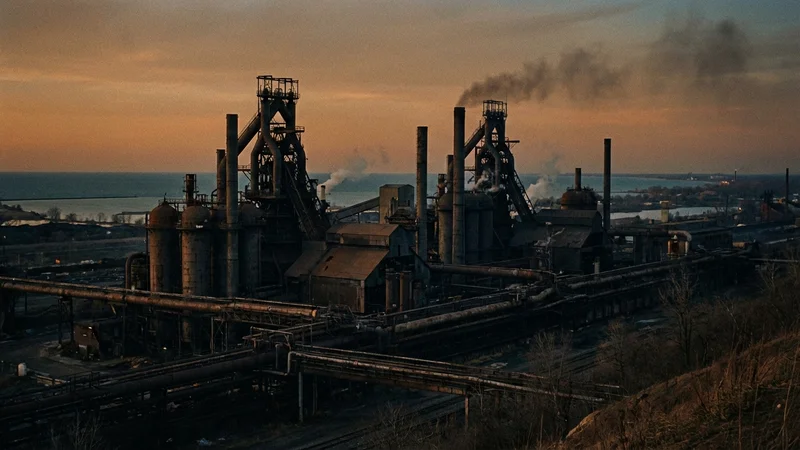
Indiana’s mesothelioma burden is a product of its industrial identity. The steel mills that line the Lake Michigan shore in Gary and East Chicago, the auto assembly plants that spread across Indianapolis and central Indiana, and the power plants that fueled both sectors all relied on asbestos for insulation, fireproofing, and heat resistance.
The result: 1,044 mesothelioma deaths over 18 years (CDC WONDER), with diagnoses still occurring as workers exposed in the 1960s through 1980s reach the end of the disease’s long latency period.
State Rankings
For a full comparison of all 50 states, see our mesothelioma rates by state rankings.
| Metric | Indiana | National |
|---|---|---|
| Mesothelioma deaths (1999-2017) | 1,044 | See CDC WONDER |
| Statute of limitations (PI) | 2 years from diagnosis | Varies by state |
| Key exposure industries | Steel, auto, power | Varies by state |
County-Level Data
| County | Key Industries | Major Employers/Sites |
|---|---|---|
| Lake (Gary) | Steel production, coke plants | US Steel Gary Works, Inland Steel, LTV Steel |
| Marion (Indianapolis) | Auto manufacturing, construction | Chrysler, GM, RCA, power plants |
| Allen (Fort Wayne) | Heavy manufacturing, auto parts | International Harvester, GE, Dana Corp |
| St. Joseph (South Bend) | Auto manufacturing, machinery | Studebaker, Bendix, AlliedSignal |
| Vanderburgh (Evansville) | Manufacturing, shipbuilding | Whirlpool, Mead Johnson, LST shipyard |
| Porter/LaPorte | Steel, utilities | Bethlehem Steel, NIPSCO power plants |
Lake County dominates Indiana’s asbestos mortality data. The Gary steel corridor, stretching from East Chicago through Gary to Portage, packed some of the largest integrated steel mills in the world into a narrow strip along Lake Michigan. US Steel Gary Works employed a very large workforce at its peak, and asbestos was embedded in every stage of steelmaking. The same pattern of steel mill exposure drove elevated rates in Illinois, Ohio, and Pennsylvania, where integrated mills operated under identical conditions.
Marion County’s burden reflects a different industrial profile. Indianapolis was an auto manufacturing hub for much of the 20th century, with Chrysler, General Motors, and their suppliers operating plants where asbestos insulation, brake components, and gaskets were standard. Indiana’s auto industry exposure paralleled the pattern in Michigan, where Detroit’s Big Three plants created a similar legacy.
Where Exposure Happened
Indiana’s asbestos exposure traces to three primary sectors.
Gary and Northwest Indiana Steel Mills
The Gary and northwest Indiana steel corridor was the center of American steelmaking for decades. US Steel Gary Works, Inland Steel in East Chicago, and Bethlehem Steel in Burns Harbor used asbestos throughout their operations. Coke ovens, blast furnaces, and rolling mills all required heat-resistant insulation. Pipefitters, insulators, boilermakers, and maintenance workers handled asbestos materials on every shift.
Auto Plants in Indianapolis, Kokomo, and South Bend
Indiana’s auto industry, centered in Indianapolis, Fort Wayne, Anderson, and Kokomo, exposed assembly workers, mechanics, and maintenance crews to asbestos brake pads, clutch facings, gaskets, and insulation. Studebaker’s South Bend complex left a long trail of asbestos exposure among its workforce across the decades it operated.
Coal-Fired Power Stations
Coal-fired power plants across Indiana used asbestos insulation on boilers, turbines, and steam lines. NIPSCO facilities in the northwest, Indianapolis Power and Light plants, and Duke Energy operations in southern Indiana all created exposure risk for plant workers and maintenance contractors.
Who Is Most at Risk
- Steelworkers at Gary Works, Inland Steel, Bethlehem Steel, and smaller mills
- Auto workers at Chrysler, GM, Studebaker, and parts suppliers
- Pipefitters and insulators in industrial and commercial construction
- Boilermakers at power plants and steel mills
- Construction tradespeople working in pre-1980 commercial and public buildings
- Maintenance workers across all industrial sectors
- Military veterans stationed at Indiana installations, who face elevated risk across all service branches
Indiana has a two-year statute of limitations for personal injury claims, running from the date of diagnosis. Wrongful death claims must be filed within two years of the date of death. This is shorter than most neighboring states, making early legal consultation important for preserving filing options.
Legal Landscape
For an overview of all current treatment options, see the 2026 mesothelioma treatment landscape. Indiana’s asbestos trust fund claims are available to steelworkers, auto workers, and power plant employees who were exposed to products from manufacturers that have since entered bankruptcy. Because steel mills and auto plants used asbestos products from many different companies, workers often qualify for multiple trust fund claims.
Verdicts and settlements in Indiana include significant jury awards against manufacturers whose asbestos-containing products were used in the state’s industrial facilities.
References
Centers for Disease Control and Prevention. CDC USCS Mesothelioma Report.
https://www.cdc.gov/united-states-cancer-statistics/publications/mesothelioma.html
Centers for Disease Control and Prevention. CDC WONDER Mortality Database.
https://wonder.cdc.gov/
Agency for Toxic Substances and Disease Registry. ATSDR Asbestos Toxicological Profile.
https://www.atsdr.cdc.gov/toxprofiles/tp61.pdf
U.S. Geological Survey. USGS Open-File Report 2011-1188: Reported Historic Asbestos Mines, Prospects, and Natural Occurrences in California.
https://pubs.usgs.gov/of/2011/1188/
CDC MMWR. Malignant Mesothelioma Mortality -- United States, 1999-2015.
https://www.cdc.gov/mmwr/volumes/66/wr/mm6608a3.htm
Occupational Safety and Health Administration. Asbestos Overview.
https://www.osha.gov/asbestos/
Reader Q&A
Frequently Asked Questions
How many people in Indiana have died from mesothelioma?
Between 1999 and 2017, 1,044 people in Indiana died from mesothelioma, according to CDC WONDER mortality data. Indiana’s industrial base — steel production, auto manufacturing, and power generation — drove significant occupational asbestos exposure across multiple generations of workers.
What is the statute of limitations for mesothelioma in Indiana?
Indiana has a two-year statute of limitations for personal injury claims, starting from the date of mesothelioma diagnosis. Wrongful death claims must also be filed within two years of the date of death. This is among the shortest deadlines in the region.
Which Indiana counties have the most mesothelioma cases?
Lake County (Gary) and Marion County (Indianapolis) account for the largest share of mesothelioma mortality in the state, reflecting decades of steel production and auto manufacturing. Allen County (Fort Wayne), St. Joseph County (South Bend), and Vanderburgh County (Evansville) also show elevated rates.
Are mesothelioma cases still being diagnosed in Indiana?
Yes. Mesothelioma has a latency period of 20 to 60 years, meaning workers exposed in the 1960s through 1980s are still receiving diagnoses. Indiana’s industrial workforce during the peak asbestos years was substantial, and new cases continue to appear each year.
What industries caused the most asbestos exposure in Indiana?
Steel production in the Gary corridor, auto manufacturing in Indianapolis and central Indiana, and coal-fired power plants across the state were the three largest sources of occupational asbestos exposure. Construction trades across the state also contributed significantly.
What state has the most asbestos?
California has the most naturally occurring asbestos in the United States. USGS Open-File Report 2011-1188 documents 290 natural asbestos occurrences across 42 of the state’s 58 counties and 25 historic mine sites. California also leads the country in total mesothelioma deaths: CDC WONDER records 5,748 mesothelioma deaths in the state from 1999 through 2022. Other high-risk states include Pennsylvania and Washington, which consistently rank among the highest for mesothelioma mortality rates.
What is the number one cause of death in Indiana?
Heart disease is the leading cause of death in Indiana, followed by cancer and unintentional injuries. Mesothelioma, while far less common, carries a very high fatality rate.
Will 30 minutes of asbestos exposure hurt you?
No level of asbestos exposure is safe, but 30 minutes of exposure carries a low risk of causing mesothelioma or other asbestos-related diseases, as risk follows a dose-response relationship tied more to long-term occupational exposure. OSHA notes short exposures as brief as a few days can cause mesothelioma, yet evidence shows one-time or brief incidents like 30 minutes are unlikely to harm unless involving high fiber concentrations, poor ventilation, or amphibole asbestos types. Factors such as visible dust or enclosed spaces elevate potential harm, while intact materials outdoors pose minimal threat. People with any exposure history report details to physicians, as diseases may appear 20-50 years later.