Illinois Mesothelioma Statistics 2026
Three Cook County verdicts totaling $115.75M, confirmed exposure industries, and the two-year filing deadline for Illinois mesothelioma claims.

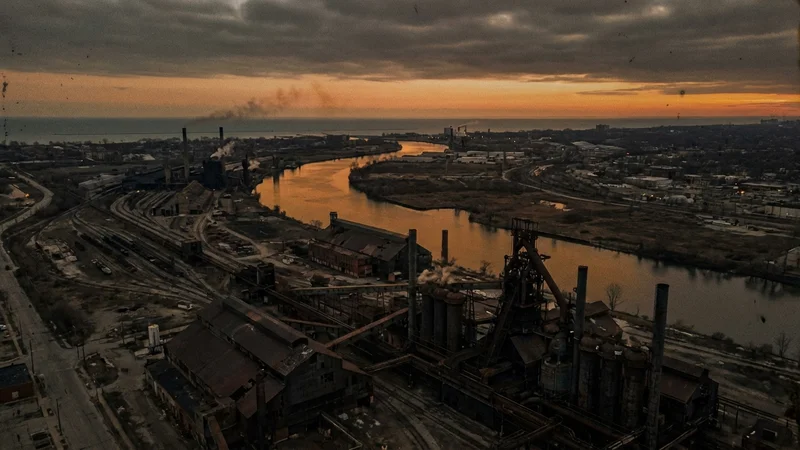
Illinois is one of the most heavily impacted states for asbestos-related disease. The combination of steel production, heavy manufacturing, railroad infrastructure, and vermiculite processing created exposure pathways that reached tens of thousands of workers across the Chicago metropolitan area and downstate industrial corridors.
The toll, measured in cases, deaths, and families still receiving diagnoses decades after exposure, places Illinois consistently among the top states for mesothelioma burden.
State Context
| Metric | Illinois | Notes |
|---|---|---|
| Mesothelioma deaths (1999-2005) | ~900 | CDC WONDER mortality data |
| Mesothelioma deaths (1999-2015) | >2,000 | CDC MMWR 1999-2015 state mortality data |
| Statute of limitations (PI) | 2 years from diagnosis | 735 ILCS 5/13-202 |
| Statute of limitations (WD) | 2 years from death | 735 ILCS 5/13-209 |
| Primary filing venue | Cook County Circuit Court | Most active meso docket in the state |
Where Exposure Happened
Illinois’s asbestos burden traces to three primary industrial sectors that defined the state’s economy through the 20th century.
Steel and Metal Production
Chicago’s Southeast Side was one of the largest steelmaking corridors in the world. U.S. Steel South Works operated for more than a century on the Calumet River, employing tens of thousands of workers at its peak. Wisconsin Steel, Republic Steel (later LTV Steel), and dozens of smaller foundries and fabrication shops surrounded it. The pattern mirrors what happened in Ohio’s Rust Belt and Indiana’s Gary steel corridor, where the same companies used the same asbestos products.
Inside these mills, asbestos insulated blast furnaces, ladles, pipes, and electrical systems. Workers who handled, maintained, or worked near insulated equipment inhaled fibers daily. The exposure was most acute for insulators, pipefitters, millwrights, and maintenance crews, but production workers in adjacent areas were also exposed.
Vermiculite Processing
Illinois was one of the largest processors of contaminated vermiculite from the Libby, Montana mine. Confirmed processing sites operated in Girard, Peoria, Quincy, Buda, and Calumet City, as well as in the Chicago area.
Vermiculite from the Libby mine was contaminated with tremolite asbestos. Workers who processed it into attic insulation, potting soil additives, and construction materials breathed fiber-laden dust throughout their shifts. Community exposure extended to residents living near processing facilities.
Railroad and Manufacturing
Chicago was the nation’s railroad hub, and railcar maintenance, locomotive repair, and freight handling all involved asbestos-containing components. The B&O Railroad, Chicago and Northwestern Railway, and dozens of other lines operated repair facilities across the region.
Manufacturing plants producing boilers, gaskets, electrical components, and automotive parts also used asbestos extensively. These worksites, combined with the construction trades, created a broad, overlapping web of exposure that touched workers across nearly every industrial sector.
County-Level Data
| County | Key Industries | Notable Sites |
|---|---|---|
| Cook | Steel, manufacturing, railroads, vermiculite | U.S. Steel South Works, Chicago-area vermiculite sites |
| Lake | Manufacturing, construction, naval training | Great Lakes Naval Station, Abbott Labs |
| DuPage | Manufacturing, construction | Industrial corridors along I-88 |
| Madison | Oil refining, steel | Granite City steel mills, Wood River refineries |
| St. Clair | Manufacturing, railroad | East St. Louis industrial zone |
Cook County alone accounts for a disproportionate share of the state’s cases, reflecting the concentration of heavy industry in the Chicago metropolitan area. Lake and Rock Island counties also carry elevated mesothelioma burdens, driven by naval training facilities, manufacturing corridors, and downstream industrial exposure.
Who Is Most at Risk
The occupations with the highest exposure in Illinois mirror the state’s industrial profile:
- Steelworkers at South Works, Wisconsin Steel, Republic Steel, and smaller mills
- Pipefitters and insulators across industrial and commercial construction
- Railroad workers in maintenance yards and locomotive shops
- Boilermakers at power plants and industrial facilities
- Vermiculite processors at Libby-connected facilities
- Construction tradespeople working in pre-1980 buildings
- Factory workers at automotive, chemical, and electrical manufacturing plants
Secondary exposure also affects families. Workers carried asbestos fibers home on clothing, exposing spouses and children to the same material that caused their own disease. Courts have recognized that employers owe a duty of care to workers’ family members in take-home exposure situations. Several recent Cook County verdicts have specifically addressed take-home exposure cases, including a $30 million award for secondhand asbestos exposure from a factory worker’s clothing.
Illinois has a two-year statute of limitations for personal injury claims, running from the date of diagnosis. Wrongful death claims must be filed within two years of death. These are among the shorter filing windows in the Midwest.
Legal Landscape
Cook County has emerged as one of the most active jurisdictions for mesothelioma litigation in the country. Recent verdicts include:
- $40.75 million against John Crane Inc. (2023): Estate of Bruce Torgerson, represented by daughter Annette Beneville. Cook County jury awarded $40.75M including $10M in family damages for exposure to asbestos-containing gaskets and packing at industrial plants and refineries. Verdict standing.
- $45 million against Johnson and Johnson and Kenvue (April 2024): Estate of Theresa Garcia. Liability split 70% Kenvue / 30% J&J. Illinois Appellate Court upheld the verdict on appeal in 2024. Verdict standing.
- $30 million against Bridgestone Firestone (December 22, 2023): Dorothy J. Jackson, administrator of the Estate of Thomas J. Jackson, case no. 19 L 009793. Thomas Jackson developed peritoneal mesothelioma from asbestos fibers on his father’s clothing from the Bridgestone Firestone plant in Decatur, Illinois. Damages included $5.25M economic, $11.14M wrongful death, and $13.6M survivor damages. Verdict standing.
Illinois law allows claims against both solvent companies and bankrupt defendants through asbestos trust funds. An experienced mesothelioma attorney can identify all applicable trusts based on a worker’s employment history and the products used at their specific jobsites. For families navigating these options, the treatment landscape is also evolving, with longer-term immunotherapy survival data now available from the CheckMate-743 trial.
References
Centers for Disease Control and Prevention. CDC USCS Mesothelioma Report.
https://www.cdc.gov/united-states-cancer-statistics/publications/mesothelioma.html
Centers for Disease Control and Prevention. CDC WONDER Mortality Database.
https://wonder.cdc.gov/
Centers for Disease Control and Prevention. Malignant Mesothelioma Mortality -- United States, 1999-2015 (MMWR).
https://www.cdc.gov/mmwr/volumes/66/wr/mm6608a3.htm
Didier et al. 2025, PMC. Mesothelioma Mortality Trends in the United States.
https://pmc.ncbi.nlm.nih.gov/articles/PMC12005915/
ATSDR. Agency for Toxic Substances and Disease Registry (ATSDR) Libby Vermiculite.
https://www.atsdr.cdc.gov/asbestos/sites/national_map/
Business Wire. Chicago Court Upholds $45M J&J Mesothelioma Verdict.
https://www.businesswire.com/news/home/20241004348565/en/Chicago-Court-Upholds-$45-Million-Mesothelioma-Verdict-Against-Johnson-Johnson
PR Newswire. Illinois Jury Awards $30M Against Bridgestone Firestone.
https://www.prnewswire.com/news-releases/illinois-jury-awards-30-million-verdict-in-mesothelioma-case-against-bridgestone-firestone-302021975.html
Illinois General Assembly. Illinois Compiled Statutes 735 ILCS 5/13-202.
https://ilga.gov/legislation/ilcs/fulltext.asp?Name=0735000050K13-202
Reader Q&A
Frequently Asked Questions
How many people are diagnosed with mesothelioma in Illinois each year?
Illinois consistently ranks among the top states for mesothelioma cases. Approximately 900 Illinois residents died from mesothelioma between 1999 and 2005, and more than 2,000 died from the disease over the full 1999-2015 period, according to CDC mortality data. Illinois accounts for a disproportionate share of national totals given its industrial history.
What is the statute of limitations for mesothelioma in Illinois?
Illinois has a two-year statute of limitations for personal injury claims, starting from the date of mesothelioma diagnosis (735 ILCS 5/13-202). Wrongful death claims must be filed within two years of the date of death (735 ILCS 5/13-209). The discovery rule applies for latent diseases.
Which Illinois counties have the most mesothelioma cases?
Cook County leads the state by a significant margin, followed by Lake, DuPage, Madison, and St. Clair counties. Cook County’s concentration of steel mills, manufacturing plants, and vermiculite processing facilities drives most of the state’s cases.
Why does Illinois have a high mesothelioma burden?
Illinois was a center of heavy industry throughout the 20th century. Steel production on Chicago’s Southeast Side, railroad operations, manufacturing, and the processing of contaminated vermiculite from Libby, Montana created extensive exposure pathways for workers across the state.
Can family members of Illinois workers file claims?
Yes. Illinois courts have recognized take-home exposure claims, where family members developed mesothelioma from asbestos fibers carried home on workers’ clothing. A 2023 Cook County verdict of $30 million (Jackson v. Bridgestone Firestone, case no. 19 L 009793) specifically addressed secondary exposure from a factory worker’s clothing.
When was asbestos banned near Chicago, IL?
Asbestos has never been fully banned in the United States, including near Chicago, Illinois. The EPA issued a partial ban in 1989 prohibiting manufacture, import, and distribution of five specific products (corrugated paper, rollboard, commercial paper, specialty paper, and flooring felt) and new uses after August 25, 1989, but a federal court overturned most provisions in 1991. In March 2024, the EPA banned chrysotile asbestos, the last type still imported into the United States, with a multi-year phase-out, though legacy uses and other forms remain regulated under federal and Illinois state rules. Chicago enforces strict local ordinances (Municipal Code Chapter 11-4) on handling, removal, and disposal of asbestos-containing materials in buildings. Asbestos was commonly used in Illinois buildings until the mid-1970s and occasionally into the late 1980s.
What is the 3 5 7 rule for asbestos sampling?
The 3-5-7 rule, from EPA’s Asbestos Hazard Emergency Response Act (AHERA) under 40 CFR 763.86, sets minimum bulk sample counts for friable surfacing materials (like acoustic ceilings or spray-on fireproofing) in homogeneous areas, scaled by the size of the area being tested. Samples must be randomly distributed, with the area deemed asbestos-containing if the material exceeds the regulatory threshold in any sample. This applies to U.S. inspections; other materials like joint compound require separate protocols. People with mesothelioma often trace exposure to undetected asbestos in such materials.
Can I remove asbestos myself in Illinois?
Federal law permits homeowners to remove asbestos from their own single-family residences, but Illinois imposes strict requirements that make DIY removal risky and potentially illegal. The Illinois Environmental Protection Agency (IEPA) and Chicago municipal codes mandate proper containment, wetting, and HEPA filtration practices, and violations can result in significant fines. Disturbing asbestos improperly releases microscopic fibers that can lodge in the lungs and cause mesothelioma, asbestosis, or lung cancer. In multi-family residences, rental properties, or commercial buildings, only licensed contractors are permitted to perform removal. Cook County requires an asbestos abatement permit filed in advance of any project, and the Illinois Department of Public Health can provide referrals to licensed contractors.