Alabama Mesothelioma Rates: Birmingham & Mobile
CDC data on Alabama's 616 mesothelioma deaths, county-level cases, and exposure across Birmingham steel mills and Mobile shipyards.

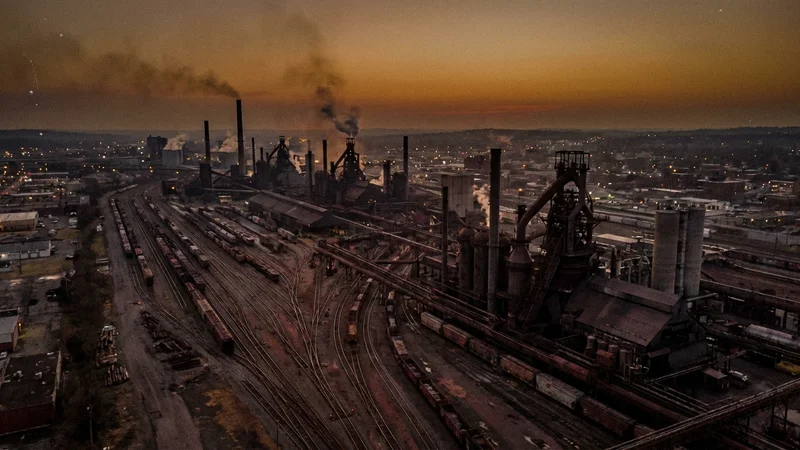
Alabama’s asbestos legacy is shaped by two industries that defined the state’s economy through the 20th century: steel production in Birmingham and shipbuilding in Mobile. These industries, along with paper mills, power plants, and chemical manufacturing, created exposure pathways for tens of thousands of workers across the state.
The toll is reflected in the numbers. Between 1999 and 2017, CDC multiple-cause-of-death records show 616 Alabama mesothelioma deaths and 802 asbestosis deaths, placing Alabama among the heavier asbestos disease burdens in the Southeast.
State Rankings
For a full comparison of all 50 states, see our mesothelioma rates by state rankings.
| Metric | Alabama | National |
|---|---|---|
| Mesothelioma deaths (1999-2017) | 616 | 45,221 (1999-2015) |
| Asbestosis deaths (1999-2017) | 802 | ~26,000 (1999-2018) |
| Statute of limitations (PI) | 2 years from diagnosis | Varies by state |
| Statute of limitations (WD) | 2 years from death | Varies by state |
Where Exposure Happened
Alabama’s asbestos burden traces to two primary industrial corridors and several supporting industries that operated across the state for decades.
Birmingham Steel Mills
Birmingham was built on steel. The city sits atop massive deposits of iron ore, coal, and limestone, the three raw materials needed for steelmaking. By the early 1900s, Birmingham had become one of the largest steel-producing cities in the country, rivaling Chicago’s Southeast Side and Gary, Indiana as centers of American steelmaking.
U.S. Steel’s Fairfield Works, Sloss Furnaces, ACIPCO (American Cast Iron Pipe Company), and dozens of smaller foundries and fabrication shops operated across the Birmingham metropolitan area. Inside these facilities, asbestos insulated blast furnaces, ladles, pipes, soaking pits, and electrical systems. Workers who installed, maintained, or worked near insulated equipment inhaled fibers throughout their careers.
The exposure was most severe for insulators, pipefitters, millwrights, and maintenance crews. But production workers on the mill floor breathed the same contaminated air. The steelworker exposure pattern in Birmingham mirrors what happened in other steel cities, with one distinction: Birmingham’s mills ran longer than many competitors, extending the exposure window into the 1980s and beyond.
Mobile Shipyards
Mobile’s shipbuilding industry expanded dramatically during World War II, when the Alabama Drydock and Shipbuilding Company (ADDSCO) and other yards along the Mobile River built and repaired hundreds of vessels for the war effort. At its peak, ADDSCO employed more than 30,000 workers.
Shipyards were among the most asbestos-intensive workplaces in America. Asbestos insulated boilers, steam pipes, turbines, and engine rooms. Workers applied it by hand, cutting and fitting sheets of insulation in confined spaces below deck where ventilation was minimal. The fiber concentrations in these enclosed areas were orders of magnitude higher than in open-air industrial settings. The same conditions that created disease in Mobile existed at shipyards in Jacksonville and Tampa and Savannah, Georgia, where Gulf and Atlantic coast yards followed identical construction methods.
The exposure continued after the war as Mobile’s shipyards shifted to commercial vessel construction and repair. Workers who built Liberty ships in the 1940s and maintained cargo vessels in the 1960s and 1970s were all exposed to the same materials.
Paper Mills and Chemical Plants
Alabama’s paper and pulp industry added another layer of exposure. Mills in Mobile, Demopolis, and across the Tennessee Valley used asbestos in boilers, pipes, and processing equipment. Paper mill exposure in Alabama followed the same pattern seen across the Southeast and Midwest, including the Fox Valley paper mills in Wisconsin where the industry’s asbestos use was similarly pervasive. Chemical plants and power generation facilities across the state followed similar patterns.
The construction trades also contributed significantly. Plumbers, electricians, drywall installers, and HVAC workers who built and renovated commercial and residential buildings before 1980 handled asbestos-containing materials routinely.
County-Level Data
| County | Key Industries | Notable Sites |
|---|---|---|
| Jefferson (Birmingham) | Steel, foundries, manufacturing | U.S. Steel Fairfield Works, Sloss Furnaces, ACIPCO |
| Mobile | Shipbuilding, paper mills, chemical plants | ADDSCO, Mobile shipyards, paper mills |
| Montgomery | Military, manufacturing, construction | Maxwell Air Force Base, industrial facilities |
| Madison (Huntsville) | Aerospace, military, construction | Redstone Arsenal, NASA Marshall Space Flight Center |
| Morgan/Limestone | Power generation, manufacturing | TVA power plants, industrial facilities |
Jefferson County and Mobile County together account for a disproportionate share of Alabama’s asbestos disease cases, reflecting the concentration of steel production and shipbuilding in those two metropolitan areas.
Who Is Most at Risk
The occupations with the highest exposure in Alabama reflect the state’s industrial profile. For a national breakdown of which trades carry the highest risk, see the mesothelioma risk by occupation analysis.
- Steelworkers at Fairfield Works, Sloss Furnaces, ACIPCO, and smaller mills
- Shipyard workers at ADDSCO and Mobile River shipbuilding facilities
- Pipefitters and insulators across industrial and commercial construction
- Boilermakers at power plants, paper mills, and industrial facilities
- Paper mill workers at facilities in Mobile, Demopolis, and the Tennessee Valley
- Construction tradespeople working in pre-1980 buildings
- Military personnel at Redstone Arsenal, Maxwell AFB, and Fort Rucker
Secondary exposure also affects families. Workers carried asbestos fibers home on clothing, exposing spouses and children to the same material that caused their own disease. Alabama courts have recognized these take-home exposure claims in recent litigation. A 2026 Virginia Supreme Court ruling on shipyard secondary exposure extended duty-of-care obligations to employers, a precedent with potential implications for similar Alabama cases.
Alabama has a two-year statute of limitations for personal injury claims, running from the date of diagnosis. Wrongful death claims must also be filed within two years of death. These deadlines are firm, and once the window closes a court can dismiss a claim regardless of its merits. Knowing how the deadline applies to a specific diagnosis, and keeping exposure records available, helps a family understand its options and decide on its own timeline.
Legal Landscape
For an overview of all current treatment options, see the 2026 mesothelioma treatment landscape. Alabama has produced significant mesothelioma verdicts, including a $115.6 million Birmingham verdict for U.S. Steel Fairfield Works steelworkers in 1998. The state’s courts have been receptive to asbestos cases, particularly in Jefferson County (Birmingham), where the concentration of industrial exposure sites provides strong evidentiary foundations.
Alabama law allows claims against both solvent companies and bankrupt defendants through asbestos trust funds. An experienced mesothelioma attorney can identify all applicable trusts based on a worker’s employment history and the products used at their specific jobsites.
References
Centers for Disease Control and Prevention. CDC USCS Mesothelioma Report.
https://www.cdc.gov/united-states-cancer-statistics/publications/mesothelioma.html
Centers for Disease Control and Prevention. CDC WONDER Multiple Cause of Death 1999-2020 (ICD-10 C45, Alabama).
https://wonder.cdc.gov/mcd-icd10.html
Centers for Disease Control and Prevention. MMWR: Malignant Mesothelioma Mortality, United States, 1999-2015.
https://www.cdc.gov/mmwr/volumes/66/wr/mm6608a3.htm
Encyclopedia of Alabama. Alabama Dry Dock and Shipbuilding Company (ADDSCO).
https://encyclopediaofalabama.org/article/alabama-dry-dock-and-shipbuilding-company-addsco/
Occupational Safety and Health Administration. OSHA Asbestos Standards and Exposure Limits.
https://www.osha.gov/asbestos
Centers for Disease Control and Prevention. MMWR: Trends in Pneumoconiosis Deaths, United States, 1999-2018.
https://www.cdc.gov/mmwr/volumes/69/wr/mm6923a1.htm
U.S. Geological Survey. Reported Historic Asbestos Mines, Prospects, and Natural Occurrences in California (OFR 2011-1188).
https://pubs.usgs.gov/of/2011/1188/
U.S. Environmental Protection Agency. Naturally Occurring Asbestos in California -- EPA Region 9.
https://archive.epa.gov/region9/toxic/web/html/basic.html
U.S. Geological Survey. Reported Historic Asbestos Mines, Prospects, and Natural Occurrences -- United States (OFR 2005-1189).
https://pubs.usgs.gov/of/2005/1189/pdf/508MapText.pdf
Centers for Disease Control and Prevention. Alabama Leading Causes of Death -- NCHS State Stats.
https://www.cdc.gov/nchs/state-stats/states/al.html
Reader Q&A
Frequently Asked Questions
How many people are diagnosed with mesothelioma in Alabama each year?
CDC multiple-cause-of-death records show 616 Alabama mesothelioma deaths and 802 asbestosis deaths between 1999 and 2017. Averaged across that period, Alabama recorded roughly 30 to 40 mesothelioma deaths per year.
What is the statute of limitations for mesothelioma in Alabama?
Alabama has a two-year statute of limitations for personal injury claims, starting from the date of mesothelioma diagnosis. Wrongful death claims must be filed within two years of the date of death.
Which Alabama counties have the most mesothelioma cases?
Jefferson County (Birmingham) and Mobile County lead the state, reflecting the concentration of steel mills and shipyards in those areas. Madison County (Huntsville), with its aerospace and military installations, and Montgomery County also have elevated rates.
Why does Alabama have so many asbestos exposure sites?
Alabama’s economy was built on two asbestos-intensive industries: steel production in Birmingham and shipbuilding in Mobile. Paper mills, power plants, chemical manufacturing, and military installations across the state added to the total. The Decades of industrial asbestos exposure reflect more than a century of industrial activity.
Can family members of Alabama workers file claims?
Yes. Alabama courts recognize take-home exposure claims, where family members developed mesothelioma from asbestos fibers carried home on workers’ clothing. Both direct exposure claims and secondary exposure claims are viable under Alabama law.
What state has the most asbestos?
California has the most asbestos in the United States, with naturally occurring deposits in 42 of its 58 counties according to the EPA, and 290 documented natural occurrences per USGS Open-File Report 2011-1188. The state also leads in mesothelioma deaths, with CDC WONDER records showing approximately 5,100 mesothelioma deaths between 1999 and 2017. Other high-risk states include Pennsylvania, with former mines and high death rates, and North Carolina, with 27 past-producing asbestos mines documented by the USGS.
Will 30 minutes of asbestos exposure hurt you?
No level of asbestos exposure is safe, but 30 minutes of exposure carries a low risk of causing mesothelioma or other asbestos-related diseases, as risk follows a dose-response relationship tied more to long-term occupational exposure. OSHA notes short exposures as brief as a few days can cause mesothelioma, yet evidence shows one-time or brief incidents like 30 minutes are unlikely to harm unless involving high fiber concentrations, poor ventilation, or amphibole asbestos types. Factors such as visible dust or enclosed spaces elevate potential harm, while intact materials outdoors pose minimal threat. People with any exposure history report details to physicians, as diseases may appear 20-50 years later.
What is the main cause of death in Alabama?
Heart disease is the leading cause of death in Alabama, consistently the top killer in the state. Cancer is the second leading cause of death, followed by chronic lower respiratory disease, stroke, and accidents, according to CDC NCHS mortality data.