Louisiana Mesothelioma by the Numbers
Louisiana ranks among 7 states with female mesothelioma death rates above 6.0 per million. Avondale, refineries, and a one year filing window.

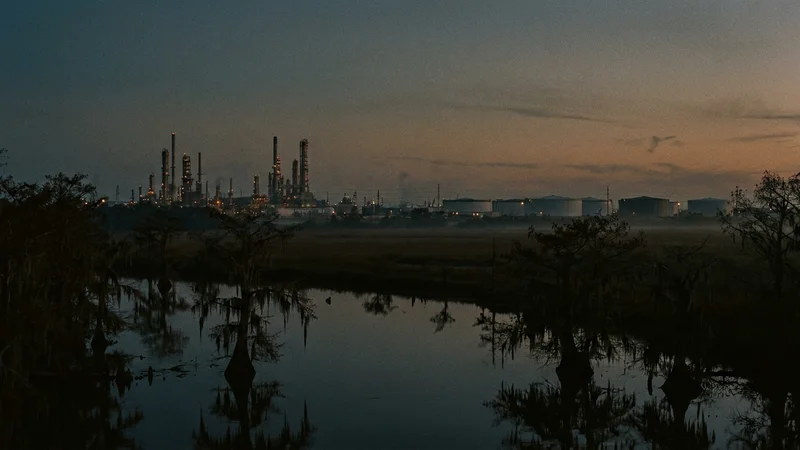
Louisiana does not always show up in state-by-state mesothelioma rankings built on raw case counts, because its population is smaller than California, Texas, or Pennsylvania. The picture changes when the data is age-adjusted and broken out by sex. CDC MMWR analysis of 1999 through 2020 mortality places Louisiana among the seven states with female mesothelioma death rates above 6.0 per 1,000,000 women aged 25 and older, alongside Maine, Minnesota, Montana, Oregon, Washington, and Wisconsin.
The reason is concentrated industrial exposure. Avondale Shipyard, Port of New Orleans longshore work, and the refinery and petrochemical corridor along the Mississippi River between Baton Rouge and New Orleans put asbestos into the air for decades. Workers carried fibers home on their clothes, which is how family members, including wives who laundered those clothes, developed mesothelioma years later.
Louisiana in National Context
| Metric | Louisiana | National |
|---|---|---|
| Female mesothelioma death rate (age 25+, 1999-2020) | Above 6.0 per 1,000,000 (top 7 states) | 4.15 per 1,000,000 (2020) |
| U.S. women mesothelioma deaths (2020) | Included in national total | 614 deaths |
| Statute of limitations (personal injury) | 1 year from diagnosis | Varies (1 to 6 years) |
| Statute of limitations (wrongful death) | 1 year from death | Varies by state |
| Largest private employer (historic) | Avondale Shipyard (25,000+ at peak) | N/A |
For a full comparison across all 50 states, see the mesothelioma rates by state rankings.
Where Exposure Happened
Louisiana’s mesothelioma burden traces to three primary industrial corridors.
Avondale Shipyard
Avondale operated on the Mississippi River near New Orleans from 1938 to 2014. At its WWII peak the yard employed roughly 25,000 to 26,000 workers, making it Louisiana’s largest private employer. Avondale built Navy destroyer escorts including USS Patterson, USS Vreeland, USS Trippe, USS Ouellet, USS Joseph Hewes, USS Bowen, USS Paul, and USS Cook, along with LSTs, other amphibious ships, commercial tankers, and cargo vessels.
Asbestos was used in pipe insulation, boiler lagging, gaskets, fireproofing, and thermal blankets through the 1970s. Insulators, pipefitters, welders, boilermakers, electricians, and laggers inhaled fibers as part of their daily work. Secondary aggregators describe Avondale as the single largest mesothelioma exposure site in Louisiana.
Refinery and Petrochemical Corridor
Louisiana’s refinery and petrochemical corridor runs along the Mississippi River between Baton Rouge and New Orleans. Refineries and chemical plants in St. James, St. John the Baptist, Ascension, and Iberville parishes used asbestos insulation, gaskets, and refractories on boilers, furnaces, and reactors through the 1970s. Maintenance crews, pipefitters, insulators, and process operators handled asbestos products on a daily basis.
Mesothelioma is caused by asbestos, not by the VOCs, chloroprene, or benzene that drive the broader cancer concerns tied to Cancer Alley. Our research produced no primary parish-level mesothelioma mortality data for this corridor. Do not conflate petrochemical emissions with the asbestos exposure that drives mesothelioma.
Port of New Orleans Longshore Work
Longshoremen at the Port of New Orleans handled raw asbestos cargo and asbestos-containing products during the mid-20th century. Take-home exposure from longshore work clothes is the factual basis for the Henry Pete v. Boland Marine case covered in the Louisiana verdicts and settlements piece. Family members, including children who hugged a parent in dusty clothes or spouses who washed them, developed mesothelioma decades later.
Who Is Most at Risk
- Avondale shipyard workers. Insulators, pipefitters, welders, boilermakers, electricians, and laggers
- Refinery and petrochemical maintenance crews along the Mississippi River corridor
- Longshoremen at the Port of New Orleans
- Construction tradespeople working in pre-1980 commercial and industrial buildings
- Spouses and children exposed secondarily through work clothes carried home
High-risk occupations across the U.S. share the same exposure profile. A welder at Avondale and a welder at a Texas Gulf Coast shipyard faced many of the same asbestos products.
Louisiana’s Legal Framework
Louisiana’s prescriptive period is one year. For personal injury claims tied to mesothelioma, the clock runs from the date of diagnosis under the discovery rule. For wrongful death, it runs from the date of death. One year is among the shortest windows in the country.
Under Cole v. Celotex Corp., 599 So.2d 1058 (La. 1992), asbestos exposures that occurred before August 1, 1980 are governed by Louisiana’s pre-comparative-fault joint-and-several regime, with joint tortfeasors allocated in equal virile shares. Exposures after August 1, 1980 fall under comparative fault per La. Civ. Code art. 2323.
Barrosse v. Huntington Ingalls (5th Cir. 2023) held that the Longshore and Harbor Workers’ Compensation Act does not preempt Louisiana state-law tort claims for certain pre-1972 Avondale asbestos exposures. The decision preserved state-court remedies for a narrow window of pre-1972 Avondale workers. Robichaux v. Huntington Ingalls (E.D. La. 2023) applied that framework to deny summary judgment in a 1961 to 1979 Avondale insulator’s case.
Louisiana’s one year prescriptive period is among the shortest in the country. For Louisiana cases, the evidence preservation and legal review timeline is compressed compared to Gulf Coast neighbors such as Texas.
Gulf Coast Context
Louisiana’s industrial profile overlaps with neighboring Gulf Coast states. The Texas mesothelioma statistics for the Gulf Coast cover a parallel corridor of refineries, petrochemical plants, and shipyards. Many of the same product manufacturers, boiler systems, and insulation brands appear in both Louisiana and Texas cases. Workers who moved between the two states for shipyard or refinery work often have multi-state exposure histories.
Compensation options for Louisiana workers include bankruptcy trust fund claims and state-court lawsuits. Verdicts and settlements are covered separately in the Louisiana verdicts and settlements piece.
References
PMC / Centers for Disease Control and Prevention. CDC MMWR Analysis of U.S. Female Mesothelioma Mortality 1999-2020.
https://pmc.ncbi.nlm.nih.gov/articles/PMC9098251/
Centers for Disease Control and Prevention. CDC WONDER Mortality Database.
https://wonder.cdc.gov/
Louisiana Supreme Court / Justia. Cole v. Celotex Corp., 599 So.2d 1058 (La. 1992).
https://law.justia.com/cases/louisiana/supreme-court/1992/91-c-2531-2.html
U.S. Court of Appeals for the Fifth Circuit / Justia. Barrosse v. Huntington Ingalls, Inc. (5th Cir. 2023).
https://law.justia.com/cases/federal/appellate-courts/ca5/21-30761/21-30761-2023-06-12.html
Reader Q&A
Frequently Asked Questions
Why is Louisiana's female mesothelioma death rate so high?
CDC MMWR analysis places Louisiana among seven states with age-adjusted female death rates above 6.0 per 1,000,000 women aged 25 and older for 1999 through 2020. The likely drivers are concentrated industrial exposure at Avondale Shipyard, the refinery and petrochemical corridor along the Mississippi River, and take-home exposure to family members from work clothes.
What is the statute of limitations for mesothelioma in Louisiana?
Louisiana’s prescriptive period is one year. For personal injury, the clock runs from the date of diagnosis. For wrongful death, it runs from the date of death. This is one of the shortest prescriptive periods in the country.
Was Avondale Shipyard really the largest mesothelioma exposure site in Louisiana?
Secondary aggregators describe Avondale as the single largest mesothelioma exposure site in the state. The shipyard operated from 1938 to 2014, employed roughly 25,000 to 26,000 at its WWII peak, and used asbestos insulation, gaskets, and fireproofing through the 1970s.
Does Cancer Alley pollution cause mesothelioma?
No. Mesothelioma is caused by asbestos exposure, not by the VOCs, chloroprene, or benzene tied to petrochemical emissions. The refinery and petrochemical corridor produced mesothelioma cases because workers handled asbestos insulation, gaskets, and refractories on the job, not because of ambient air pollution.
Are cases still being diagnosed in Louisiana?
Yes. Mesothelioma has a latency period of 20 to 60 years, so people exposed in the 1950s, 1960s, and 1970s are still receiving diagnoses now. The national U.S. women mesothelioma death count rose from 489 in 1999 to 614 in 2020 even as the age-adjusted rate edged down.
Will I be ok if I breathed in asbestos?
Breathing in asbestos fibers increases the risk of serious diseases, including mesothelioma, lung cancer, and asbestosis, with risks rising based on exposure dose, duration, and factors like smoking. Symptoms often appear 20-40 years after exposure, and no level of exposure is considered completely safe, though short-term or low-level incidents generally carry lower risk than prolonged occupational exposure. Evidence from studies of exposed workers shows most mesotheliomas link to asbestos, but individual outcomes vary widely.
What is the 3 5 7 rule for asbestos sampling?
The 3-5-7 rule, from EPA’s Asbestos Hazard Emergency Response Act (AHERA) under 40 CFR 763.86, sets minimum bulk samples for friable surfacing materials (like acoustic ceilings or spray-on fireproofing) in homogeneous areas: 3 samples for <1,000 sq ft, 5 for 1,000-5,000 sq ft, and 7 for >5,000 sq ft. Samples must be randomly distributed, with the area deemed asbestos-containing if ≥1% asbestos by weight in any sample. The EPA Pink Book recommends 9 samples per area for higher confidence, though 3-5-7 is the regulatory minimum. This applies to U.S. inspections; other materials like joint compound require separate protocols, often 3 samples. People with mesothelioma often trace exposure to undetected asbestos in such materials.
Am I in trouble if I sanded asbestos?
Sanding asbestos releases airborne fibers that people can inhale, potentially increasing the risk of mesothelioma, lung cancer, and asbestosis, with effects often appearing 20-40 years later. No safe level of exposure exists, though risk depends on fiber concentration, duration, ventilation, and factors like smoking, which synergistically elevates lung cancer odds. Short-term incidents like sanding carry lower risk than prolonged occupational exposure but still warrant concern due to the dose-response relationship. OSHA notes exposures as brief as days have caused mesothelioma in humans. Evidence shows fibers lodge in lung tissue, causing inflammation and scarring over time.