Refinery Workers and Asbestos Risks
Oil refinery workers faced extensive asbestos exposure from insulated equipment, pipes, and vessels. Learn about exposure sources and legal options.

Overview
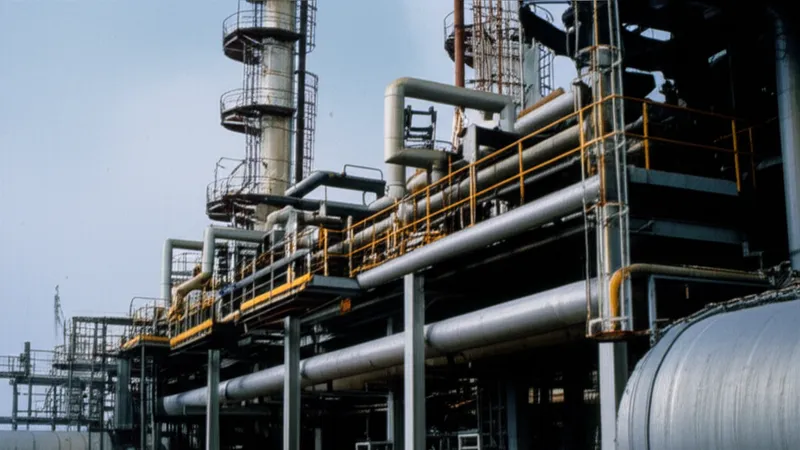
Refinery workers, employees at oil refineries and petrochemical plants, faced extensive asbestos exposure from the thousands of insulated pipes, vessels, pumps, and heat exchangers required for petroleum processing. Refineries were among the most asbestos-intensive industrial environments. The American Petroleum Institute estimates approximately 60,000 workers are directly employed at U.S. refineries today, with additional contract workers performing maintenance and turnaround operations at facilities largely built during peak asbestos use decades.
Oil refineries required asbestos insulation on virtually every pipe, vessel, and piece of equipment due to the high temperatures involved in petroleum processing. Workers were surrounded by asbestos throughout their shifts.
Why Refineries Used So Much Asbestos
Oil refining involves extreme temperatures, pressures, and flammable materials that made asbestos an essential material. Crude oil is heated to 650-750°F during initial distillation, and catalytic cracking operates at 900-1000°F. Steam systems, which refineries use in massive quantities for heating, stripping, and power generation, run at 300-600°F and were insulated with asbestos pipe covering. Distillation towers, heat exchangers, reactors, tanks, and hundreds of miles of piping in a typical refinery were insulated with asbestos-containing materials, and asbestos fireproofing was applied to structural steel and equipment supports throughout facilities. A typical large refinery built before 1980 contained an estimated thousands of tons of asbestos insulation and fireproofing.
Asbestos in Refineries
| Equipment | Asbestos Type | Exposure Level |
|---|---|---|
| Process piping | Calcium silicate, magnesia | Very High |
| Heat exchangers | Block and blanket insulation | Very High |
| Distillation columns | External lagging | High |
| Pumps and compressors | Gaskets, packing, insulation | High |
| Storage tanks | Tank insulation | Moderate |
Comprehensive industrial hygiene surveys have identified asbestos content up to 15-50% in pipe insulation, 20-50% in vessel insulation, 60-90% in gaskets, and 50-80% in valve and pump packing. Equipment that required frequent maintenance, such as heat exchangers, pumps, and valves, concentrated exposure during repair operations.
How Refinery Workers Were Exposed
Daily Operations
Refinery operators worked amid asbestos throughout their shifts:
- Monitoring equipment wrapped in asbestos insulation
- Walking through pipe racks with asbestos-lagged pipes
- Adjusting valves with asbestos packing
- Working in control rooms near insulated equipment
Maintenance and Turnarounds
Maintenance work created the highest exposure:
- Removing insulation to access equipment
- Replacing gaskets in pumps and valves
- Repacking valve stems
- Working during major turnarounds when insulation was disturbed plant-wide
Refinery turnarounds, major maintenance shutdowns, exposed all workers on site to high asbestos levels as insulation was stripped from equipment throughout the facility. Studies have measured fiber counts 10-50 times above OSHA limits during poorly controlled turnaround activities. Many turnaround workers are contractors with less familiarity with facility-specific hazards. A 2015 OSHA enforcement action against a Texas refinery documented asbestos violations during turnaround operations, with fines exceeding $200,000 for failure to protect workers.
Refinery Jobs at Risk
Every refinery position ran into some exposure. Process operators spent their shifts moving between insulated columns, maintenance mechanics repaired pumps and heat exchangers, instrument technicians serviced control lines in fiber-lagged racks, pipefitters tied in process piping, and insulators applied and stripped Kaylo pipe covering. Refineries in Texas, Louisiana, and California ran on Johns Manville and Owens Corning insulation from 1940 through the 1980s.
Insulators faced the highest exposure levels of any refinery trade. Long-term follow-up of Texaco refinery workers found markedly elevated mesothelioma standardized mortality ratios (SMRs) among insulators and combined maintenance trades (insulators, carpenters, laborers, electricians, pipefitters, boilermakers, welders), with insulator SMRs running into the hundreds. Cohort studies of Louisiana petrochemical workers, concentrated in the refinery and chemical plant corridor between Baton Rouge and New Orleans known as Cancer Alley, have documented elevated mesothelioma mortality tied to direct asbestos exposure. Pooled analyses of petroleum industry mortality studies report consistent excess mesothelioma risk across multiple facilities and countries, concentrated in maintenance-heavy roles. NIOSH and peer-reviewed literature consistently identify refinery maintenance work as a high-exposure category for asbestos-related disease.
Regulatory Oversight
Refineries are subject to multiple regulatory frameworks. OSHA’s general industry standard (29 CFR 1910.1001) and construction standard (29 CFR 1926.1101) apply to different refinery activities, with a permissible exposure limit of 0.1 fibers/cc. The EPA’s National Emission Standards for Hazardous Air Pollutants (NESHAP) require notification before demolition or renovation that may disturb asbestos. OSHA’s Process Safety Management standard (29 CFR 1910.119) requires hazard assessments that may address asbestos identification. OSHA enforcement data shows refinery asbestos violations result in penalties averaging $25,000-100,000 per citation, with serious violations sometimes exceeding $250,000. Despite decades of removal efforts and the EPA’s 2024 chrysotile ban (which carries a 12-year phase-out), legacy asbestos remains in many refineries, in equipment insulation, gaskets, hidden materials, and deteriorating insulation that workers can encounter unexpectedly during maintenance.
Related Occupations
- Pipefitters, Refinery piping
- Insulators, Insulation work
- Boilermakers, Vessel work
- Millwrights, Equipment maintenance
- Operating engineers, Equipment operation
Health Consequences
Refinery workers face elevated risk of mesothelioma, a cancer of the chest or abdominal lining; asbestosis, a progressive scarring of the lungs; lung cancer, with risk multiplied among smokers; and pleural disease that thickens the lining around the lungs.
Legal Options
Refinery workers diagnosed with mesothelioma typically pursue several tracks in parallel. Insulation and gasket manufacturers including Johns Manville, Owens Corning, and Garlock established asbestos trust funds through bankruptcy reorganization. Trust claims often run alongside product-liability suits against solvent insulation manufacturers, premises-liability claims against refinery owners, and workers’ compensation through a former employer.
Workers at refineries operated by ExxonMobil (Baytown, Texas; Baton Rouge, Louisiana), Chevron (Richmond, California; Pascagoula, Mississippi), Shell, BP, Phillips 66, and Valero have filed asbestos claims against both the operators and their insulation suppliers, in addition to claims against manufacturers like Johns Manville and Owens Corning. Contract workers may have claims against both the refinery and their direct employer depending on circumstances.
Reader Q&A
Frequently Asked Questions
Why are oil refinery workers at elevated risk?
Refineries used massive amounts of asbestos due to extreme process temperatures, fire hazards, steam systems, and equipment insulation needs. A typical pre-1980 refinery contained thousands of tons of asbestos. Cohort and case-control studies have consistently documented elevated mesothelioma rates among refinery workers, particularly in maintenance roles.
Which refinery jobs had the highest exposure?
Insulators faced the highest exposure; Texaco cohort updates documented very high insulator mesothelioma SMRs. Pipefitters, boilermakers, maintenance mechanics, and turnaround workers also had significant exposure. Even operators accumulated environmental exposure from deteriorating insulation and nearby maintenance.
What about turnaround workers?
Turnaround periods (scheduled shutdowns) presented particularly high exposure. Studies measured fiber counts 10-50 times above OSHA limits during poorly controlled turnaround activities. Time pressure, concentrated work, and contract workers unfamiliar with site hazards increased risk.
What compensation is available for refinery workers?
Multiple sources: product liability claims against asbestos manufacturers, asbestos trust funds (major defendants include Johns Manville, Owens Corning, and gasket manufacturers), premises liability claims against refinery owners, third-party contractor claims, and workers’ compensation.