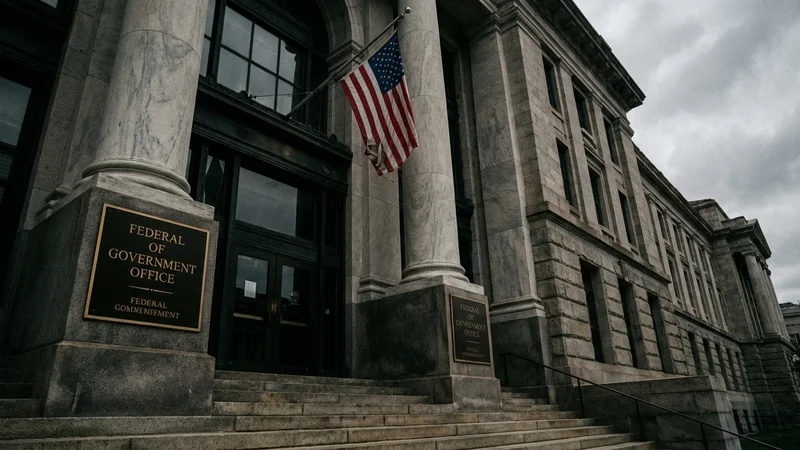
The regulatory history of asbestos in talcum powder is a story of delayed action, partial measures, and withdrawal. The FDA found asbestos in Johnson & Johnson Baby Powder in 2019. In December 2024, the agency proposed mandatory asbestos testing for all talc-based cosmetic products. In November 2025, it withdrew the proposed rule. Today, there is no federal requirement for manufacturers to test talc products for asbestos contamination before selling them.
The FDA’s Own Testing: Asbestos Found (2019)
In October 2019, the FDA conducted its own testing of Johnson & Johnson Baby Powder samples and detected asbestos contamination. This government finding was significant for several reasons:
- It was independent of the litigation. The testing was initiated by the FDA, not by plaintiffs’ attorneys
- It validated what internal J&J documents had shown for decades: that talc products could contain asbestos
- It directly contradicted J&J’s public claims that its products were safe and asbestos-free
- It came from the agency charged with protecting consumer safety
J&J disputed the results, suggesting that the FDA’s testing methodology was flawed. The company recalled one lot of Baby Powder in response but maintained that its products were safe.
The “No Safe Level” Statement
The FDA has consistently stated: “There is no established safe level below which asbestos could not cause adverse health effects.” This position means that any asbestos contamination in consumer products is a health concern, regardless of the amount detected.
Despite this position, the FDA did not mandate asbestos testing or recall talc products from the market following its 2019 findings.
The Modernization of Cosmetics Regulation Act (MoCRA)
What MoCRA Changed
In December 2022, Congress passed the Modernization of Cosmetics Regulation Act (MoCRA) as part of the Consolidated Appropriations Act. MoCRA represented the first major update to FDA cosmetics authority since the Federal Food, Drug, and Cosmetic Act of 1938.
Key provisions relevant to talc:
- Mandatory adverse event reporting: Cosmetics manufacturers must report serious adverse events to the FDA
- Facility registration and product listing: Cosmetics facilities must register with the FDA and list their products
- Good manufacturing practices: The FDA can establish GMPs for cosmetics manufacturing
- Mandatory recall authority: The FDA gained authority to order recalls of unsafe cosmetic products
- Records access: The FDA can inspect records of cosmetics manufacturers
What MoCRA Specifically Authorized for Talc
MoCRA included a provision specifically directing the FDA to propose a rule on asbestos testing in talc-based cosmetics. This provision reflected Congressional recognition that talc products posed a specific contamination risk that warranted regulatory attention.
The Proposed Testing Rule (December 2024)
In December 2024, the FDA published a proposed rule that would have required mandatory asbestos testing for all talc-based cosmetic products.
What the Rule Would Have Required
- Standardized testing methods: All talc cosmetics would need to be tested using FDA-approved analytical methods
- Batch testing: Each production batch would need to be tested before the product could be sold
- Reporting: Manufacturers would need to report test results to the FDA
- Labeling: Products containing detectable asbestos would need to be labeled or recalled
Industry Response
The cosmetics and talc industries opposed the proposed rule, arguing that:
- Current voluntary testing was sufficient
- The proposed testing methods were overly sensitive and could produce false positives
- The compliance costs would be burdensome for smaller manufacturers
- The proposed testing standards did not align with international harmonized methods
Consumer and public health advocates supported the rule, arguing that:
- Voluntary testing had failed (as demonstrated by the FDA’s own 2019 findings)
- The health stakes (mesothelioma, ovarian cancer) justified rigorous testing
- Consumers had no way to verify asbestos-free claims without mandatory testing
- The long latency period of asbestos-related diseases meant that current exposure could cause harm decades in the future
The Rule Withdrawal (November 2025)
In November 2025, the FDA withdrew the proposed mandatory testing rule. The withdrawal was unexpected given the Congressional mandate in MoCRA and the agency’s own findings of asbestos in J&J products.
Stated Reasons
The FDA cited the need for further scientific review and stakeholder input. The agency did not provide a timeline for when or whether a revised rule might be proposed.
Implications of the Withdrawal
The withdrawal means:
- No federal testing requirement: Manufacturers of talc-based cosmetics, body powders, and other products are not required to test for asbestos
- Self-certification: Companies can claim their products are “asbestos-free” without independent verification mandated by law
- Consumer reliance on voluntary claims: Consumers must trust manufacturers’ voluntary testing and labeling
- Ongoing contamination risk: Talc and asbestos occur together geologically. Without mandatory testing, contaminated products can reach consumers
Despite the FDA’s withdrawal of the testing rule, the agency’s own position remains that there is “no established safe level” of asbestos exposure. The contradiction between this position and the absence of mandatory testing has been noted by consumer advocacy groups and members of Congress.
The European Approach
The European Union has taken a different regulatory path:
EU Classification
In September 2024, the European Chemicals Agency (ECHA) classified talc as a Category 1B carcinogen under the Classification, Labelling and Packaging (CLP) regulation. This classification applies to talc broadly, not just asbestos-contaminated talc, based on evidence of ovarian and lung tumors.
UK Divergence
The UK, post-Brexit, has not adopted the EU’s classification and is conducting its own regulatory review. As of March 2026, the UK and EU positions diverge on talc regulation.
Regulatory Timeline
| Date | Action | Status |
|---|---|---|
| 2019 Oct | FDA finds asbestos in J&J Baby Powder | Active finding |
| 2019 Oct | J&J recalls one lot of Baby Powder | Single lot only |
| 2022 Dec | MoCRA enacted, directing FDA to propose talc testing rule | Law passed |
| 2024 Sep | EU classifies talc as Category 1B carcinogen | In effect |
| 2024 Dec | FDA proposes mandatory asbestos testing rule | Proposed |
| 2025 Nov | FDA withdraws proposed testing rule | Withdrawn |
| 2026 | No federal asbestos testing requirement in effect | Current status |
What This Means for Consumers
Products Still on Shelves
While J&J has discontinued talc-based Baby Powder, other talc-based products remain available:
- Body powders from other manufacturers
- Cosmetics containing talc (foundation, blush, eyeshadow)
- Some feminine hygiene products
Without mandatory testing, consumers cannot verify that these products are free of asbestos contamination.
Protective Steps
- Check ingredients: Look for talc, talcum, or magnesium silicate on product labels
- Choose talc-free alternatives: Cornstarch-based powders, talc-free cosmetics
- “Asbestos-free” claims are not federally verified: These claims rely on manufacturers’ voluntary testing
- Existing talc products from older manufacturing dates may carry higher risk: Products produced before increased scrutiny may have been manufactured with less rigorous testing
Advocacy and Legislative Efforts
The withdrawal of the FDA’s testing rule has prompted:
- Congressional inquiries into the FDA’s decision-making process
- Renewed calls from consumer advocacy groups for mandatory testing
- Potential legislative action to mandate testing through statute rather than regulation
- Continued litigation as the primary accountability mechanism in the absence of regulatory action
Does the FDA require asbestos testing in talc products?▼
No. As of March 2026, there is no federal requirement for asbestos testing in talc-based cosmetics or consumer products. The FDA proposed a mandatory testing rule in December 2024 but withdrew it in November 2025. Manufacturers may conduct voluntary testing, but there is no independent verification requirement.
Did the FDA find asbestos in Johnson and Johnson Baby Powder?▼
Yes. In October 2019, the FDA conducted its own testing and detected asbestos contamination in samples of J&J Baby Powder. J&J recalled one lot in response but disputed the FDA’s testing methodology and maintained that its products were safe. J&J discontinued talc-based Baby Powder in the U.S. in 2020.
Are talc-free products safe?▼
Cornstarch-based and other talc-free alternatives do not carry the asbestos contamination risk that talc products do. They have not been linked to mesothelioma or ovarian cancer. However, any powder (including cornstarch) should be used carefully to avoid inhalation, particularly around infants.
Why did the FDA withdraw the testing rule?▼
The FDA cited the need for further scientific review and stakeholder input. Consumer advocates and some members of Congress have criticized the withdrawal, noting the Congressional mandate in MoCRA and the FDA’s own finding of asbestos in talc products. No timeline has been provided for a revised rule.
References
U.S. Food and Drug Administration. (2019-10). FDA Finds Asbestos in Johnson & Johnson Baby Powder.
https://www.fda.gov/
U.S. Congress / FDA. (2022-12). Modernization of Cosmetics Regulation Act (MoCRA).
https://www.fda.gov/cosmetics/cosmetics-laws-regulations/modernization-cosmetics-regulation-act-2022-mocra
Federal Register. (2024-12). FDA Proposes Mandatory Asbestos Testing for Talc Cosmetics.
https://www.federalregister.gov/
MesoWatch. FDA Withdraws Talc Asbestos Testing Rule.
https://mesowatch.org/news/2025/11/fda-withdraws-talc-asbestos-testing-rule/
European Chemicals Agency. (2024-09). EU Classifies Talc as Category 1B Carcinogen.
https://echa.europa.eu/