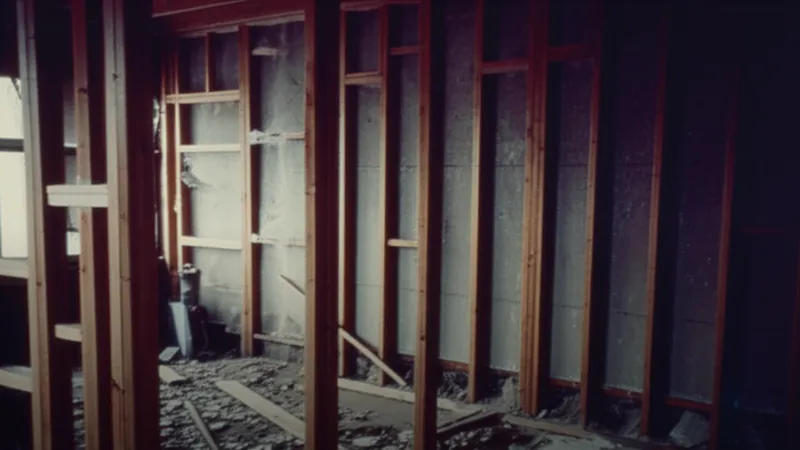
Millions of US homes contain asbestos (pre-1980 construction)
Peak building use: 1950-1980
Testing cost: $25-75 per sample
Professional removal: $3-15 per square foot
Test Before You Renovate
Never assume a material is asbestos-free. If your home was built before 1980, have suspect materials professionally tested before any renovation work. Disturbing asbestos during DIY projects is one of the most common causes of residential exposure.
If your home was built before 1980, it likely contains asbestos somewhere. Understanding where it hides and when it becomes dangerous is essential for protecting your family, especially during renovation projects.
You cannot identify asbestos by visual inspection alone. If your home was built before 1980, common locations include floor tiles (especially 9x9 inch), pipe insulation, vermiculite attic insulation, popcorn ceilings, and siding. Professional testing ($25-75 per sample) is the only way to confirm.
Is it safe to live in a house with asbestos?
Generally yes, if the asbestos-containing materials are intact and undisturbed. Asbestos is dangerous when fibers become airborne. Through damage, deterioration, or renovation work. Leave undamaged materials alone and have them professionally removed before any work that might disturb them.
Can I remove asbestos myself?
In most states, homeowners can legally remove asbestos from their own single-family homes. But this is strongly discouraged due to serious health risks. Professional abatement includes containment, HEPA filtration, wet methods, and proper disposal that DIY work cannot replicate.
What should I do before renovating an older home?
Test before disturbing any suspect materials. Identify materials you’ll affect during renovation, have them tested by a certified inspector, and hire licensed abatement contractors if asbestos is found. Never assume a material is safe. Testing is the only way to know.
What is the 3 5 7 rule for asbestos sampling?
The 3-5-7 rule, from EPA’s Asbestos Hazard Emergency Response Act (AHERA) under 40 CFR 763.86, sets minimum bulk samples for friable surfacing materials (like acoustic ceilings or spray-on fireproofing) in homogeneous areas: 3 samples for <1,000 sq ft, 5 for 1,000-5,000 sq ft, and 7 for >5,000 sq ft. Samples must be randomly distributed, with the area deemed asbestos-containing if ≥1% asbestos by weight in any sample. The EPA Pink Book recommends 9 samples per area for higher confidence, though 3-5-7 is the regulatory minimum. This applies to U.S. inspections; other materials like joint compound require separate protocols, often 3 samples. People with mesothelioma often trace exposure to undetected asbestos in such materials.
Will 30 minutes of asbestos exposure hurt you?
No level of asbestos exposure is considered safe, but a single 30-minute exposure carries a relatively low risk of causing mesothelioma or other asbestos-related disease, because risk follows a dose-response relationship tied to long-term occupational exposure. OSHA notes that short exposures of even a few days can in rare cases lead to mesothelioma decades later, but evidence shows isolated brief incidents are unlikely to cause harm unless they involve high fiber concentrations, poor ventilation, or amphibole asbestos types. Visible dust and enclosed spaces raise the risk; intact materials outdoors pose minimal threat. Anyone with a known exposure history should share that history with their physician, since asbestos-related disease may appear 20 to 50 years after exposure.
No attorney-client relationship is formed by using this site. Cases may be referred to local counsel licensed in your state. Prior results do not guarantee a similar outcome.