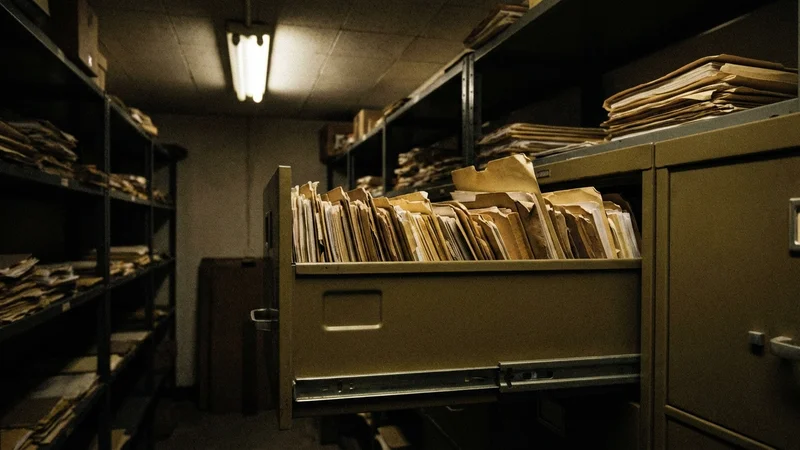
Litigation discovery has produced tens of thousands of internal Johnson & Johnson documents spanning five decades. These documents reveal that J&J found asbestos in its talc products as early as 1972, paid to suppress research findings, blocked FDA action, and continued selling products it knew were contaminated. This evidence has been central to the billions of dollars in jury verdicts awarded against the company.
The 1970s: Asbestos Found, Findings Buried
The earliest internal documents showing J&J’s knowledge of asbestos in its talc date to the early 1970s, the same decade the first scientific studies linked talc to cancer.
1971: Paying to Suppress Research
A dermatologist conducting research on J&J talc products found evidence of asbestos contamination. Rather than investigate the finding or warn consumers, J&J paid the researcher not to publish. This is among the earliest documented instances of the company actively suppressing evidence of contamination.
1972-1975: Three Labs Confirm Asbestos
Between 1972 and 1975, three independent laboratories detected asbestos in samples of J&J talc products. These were not ambiguous results or trace detections. The findings were clear enough to raise alarms within the company.
Despite three separate confirmations from three different laboratories, J&J did not:
- Recall affected products
- Add asbestos warnings to labels
- Switch to asbestos-free talc sources
- Notify the FDA or consumers
1973: The “Fiber Forming Minerals” Memo
An internal J&J memo from 1973 noted the presence of “fiber forming minerals” at the company’s talc mine. In geological and mineralogical terminology, “fiber forming minerals” in a talc deposit refers to asbestiform minerals, including tremolite, anthophyllite, and chrysotile asbestos.
The memo demonstrates that J&J was aware of the geological reality: its talc supply was co-located with asbestos-forming mineral deposits. Yet the company continued mining from these sources.
The significance of these 1970s documents cannot be overstated. They establish that J&J had actual knowledge of asbestos contamination more than 50 years ago, long before any lawsuits were filed, and chose to conceal rather than address the problem.
The 1980s-1990s: Marketing Over Safety
Expanding Marketing While Evidence Grew
Even as scientific evidence connecting talc to ovarian cancer accumulated through the 1980s and 1990s, J&J expanded its marketing of talcum powder:
- Launched the “Just a sprinkle a day” Shower to Shower advertising campaign, specifically encouraging genital use
- Internal marketing documents from 1992 reveal strategies to target African American and Hispanic women for talc sales
- Refused the Cancer Prevention Coalition’s 1994 demand for warning labels
1997: The Internal Cancer Warning
A 1997 internal J&J memo explicitly warned of the ovarian cancer danger from talcum powder use. This memo, discovered during litigation, became a key piece of evidence in multiple trials because it shows that J&J’s own personnel acknowledged the cancer risk while the company publicly denied any connection.
The 2000s: Suppression Continues
2009: Risk Report Suppressed, FDA Warnings Blocked
Internal documents from 2009 reveal two significant corporate actions:
The suppressed risk report: Company scientists prepared a report assessing the health risks of talc products. Rather than act on its findings, J&J suppressed the report, keeping it from public view and from regulatory agencies.
Blocking FDA cancer warnings: Documents indicate that J&J took steps to prevent the FDA from requiring cancer warnings on talc products. The specific mechanisms (lobbying, comment submissions, direct communication with agency officials) are detailed in court filings.
Ongoing Internal Debate
Internal communications from the 2000s show that some J&J employees and consultants expressed concerns about the cancer risk and recommended stronger warnings or product reformulation. These recommendations were repeatedly overridden by commercial considerations.
The 2010s: The Dam Breaks
2013: First Lawsuit Victory
When Deane Berg won the first talc-ovarian cancer case in 2013, J&J’s internal documents began entering the public record through litigation discovery. Each subsequent trial produced more documents, building a comprehensive picture of corporate knowledge.
2018: Reuters Investigation
In December 2018, Reuters published a major investigative report based on internal J&J documents obtained through litigation. The reporting revealed that:
- J&J had known for decades that asbestos contaminated its talc
- Company executives, scientists, doctors, and lawyers had been aware of the contamination
- The company had fought to prevent regulators and the public from learning about the risk
- Raw test data, internal memos, and confidential reports documented the contamination
The Reuters investigation brought the story to a mass audience and triggered heightened regulatory and public scrutiny.
2019: FDA Finds Asbestos
The FDA conducted its own testing of J&J Baby Powder in 2019 and found asbestos contamination. This government finding validated what internal documents had shown for decades and further undermined J&J’s public position that its products were safe.
The 2020s: Discontinuation and Bankruptcy
2020: U.S. Product Withdrawal
In May 2020, J&J announced it would stop selling talc-based Baby Powder in the United States and Canada. The company framed the decision as a response to “declining demand” rather than acknowledging safety concerns. Critics noted the timing: the withdrawal came amid escalating litigation and after the FDA’s own asbestos findings.
2021-2025: The Bankruptcy Strategy
Rather than face the consequences of decades of concealment, J&J attempted to limit its liability through the “Texas Two-Step” bankruptcy strategy. The company:
- Created LTL Management LLC to absorb talc liabilities (2021)
- Had LTL file for Chapter 11 bankruptcy, pausing 38,000+ lawsuits
- First bankruptcy dismissed by Third Circuit (2023)
- Second bankruptcy attempt also dismissed (2024)
- Created Red River Talc LLC, filed third bankruptcy (2025)
- Third bankruptcy also rejected
All three courts found that the bankruptcy filings were made in bad faith to avoid litigation.
2023: Global Discontinuation
J&J finally discontinued talc-based Baby Powder worldwide in 2023, more than 50 years after the first internal documents showed asbestos contamination.
What the Documents Mean for Current Cases
The internal document trail is a primary reason talc-mesothelioma verdicts are so large. These documents enable plaintiffs to prove:
Actual knowledge: J&J knew its products contained asbestos Deliberate concealment: The company actively suppressed research, blocked warnings, and misled regulators Continued sales: Products remained on shelves for decades after the risk was known Targeted marketing: Populations most likely to use talc for genital hygiene were specifically targeted
This combination of knowledge, concealment, and continued profiting from dangerous products is precisely what punitive damages are designed to address. Juries awarding punitive damages of 10 to 100 times the compensatory amounts reflect their view of the severity of J&J’s corporate misconduct.
How did J&J's internal documents become public?▼
The documents were obtained through the litigation discovery process, where parties in a lawsuit are required to produce relevant documents. As talc lawsuits proceeded through courts across the country, J&J was compelled to produce millions of internal documents including memos, test results, marketing plans, and communications between executives, scientists, and lawyers.
Did J&J ever admit to knowing about asbestos in its talc?▼
J&J has consistently maintained that its products were safe, were not contaminated with asbestos, and did not cause cancer. However, juries in multiple cases have found that the internal documents contradict these public statements. The company’s position conflicts with its own test results, internal memos, and the 2019 FDA finding of asbestos in Baby Powder.
Are these documents available to the public?▼
Many documents entered into evidence during trials are part of the public court record. The 2018 Reuters investigation also published key documents. However, some documents remain under court seal or confidentiality orders. As more cases proceed to trial, additional documents continue to enter the public record.
References
Reuters. (2018-12-14). J&J knew for decades that asbestos lurked in its Baby Powder.
https://www.reuters.com/investigates/special-report/johnsonandjohnson-cancer/
U.S. Food and Drug Administration. (2019-10). FDA Finds Asbestos in Johnson & Johnson Baby Powder.
https://www.fda.gov/
Journal of Occupational Medicine and Toxicology. (2023). Exposure to cosmetic talc and mesothelioma.
https://pubmed.ncbi.nlm.nih.gov/36653798/
Third Circuit Court of Appeals. (2023-01). Third Circuit Dismisses LTL Management Bankruptcy.
https://www.ca3.uscourts.gov/
Reuters. (2020-05-19). Johnson & Johnson Discontinues Talc Baby Powder.
https://www.reuters.com/