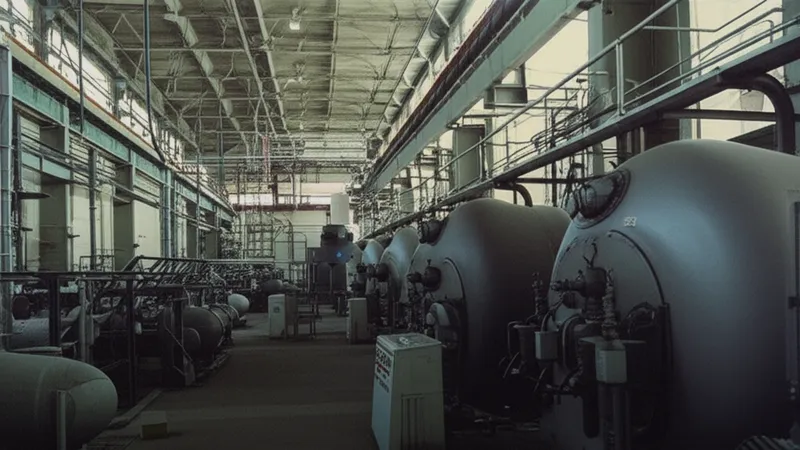
Boilermakers consistently rank among the highest-risk occupations for mesothelioma. Epidemiological studies have documented mesothelioma mortality rates 5-10 times higher among boilermakers compared to the general population. The International Agency for Research on Cancer (IARC) classifies boilermaking as one of the occupations with the strongest documented association with asbestos-related disease.
A landmark 2012 study in the American Journal of Industrial Medicine analyzed mortality among 14,000 boilermakers over a 40-year period and found a standardized mortality ratio (SMR) of 8.2 for mesothelioma, meaning boilermakers were more than eight times as likely to die from the disease as the general population.
Why Boilermakers Face Extreme Risk
Boilers and pressure vessels were among the most heavily insulated industrial equipment in the 20th century. The extreme temperatures involved, ranging from several hundred to over 1,000 degrees Fahrenheit, required extensive thermal insulation, and asbestos was the material of choice for decades.
Typical asbestos content in boiler components:
- Boiler insulation blankets: 50-90% asbestos
- Refractory cement: 15-25% asbestos
- Gaskets and packing: 60-90% asbestos
- Fire brick and block: 10-25% asbestos
- Pipe insulation: 15-50% asbestos
A single large industrial boiler could contain several tons of asbestos-containing materials. Power plant boilers, the largest in industrial use, contained even more.
Documented Exposure Levels
Industrial hygiene studies have measured exceptionally high asbestos fiber concentrations during boiler work:
| Activity | Fiber Count (f/cc) | Multiple of PEL |
|---|---|---|
| Removing boiler insulation | 10-50 | 100-500x |
| Refractory repair | 5-25 | 50-250x |
| Gasket replacement | 2-15 | 20-150x |
| Boiler tube repair | 1-8 | 10-80x |
| General maintenance | 0.5-3 | 5-30x |
OSHA’s current permissible exposure limit (PEL) is 0.1 fibers/cc. During peak asbestos use, boilermakers routinely worked in environments exceeding this limit by 100-fold or more.
A 1985 NIOSH study found that boilermakers performing routine maintenance in power plants averaged 3.2 fibers/cc over an 8-hour shift, 32 times the current PEL. Workers performing insulation removal reached instantaneous concentrations exceeding 50 fibers/cc.
Work Settings with Highest Exposure
Power plants: Coal-fired and nuclear power plants employed thousands of boilermakers. A typical coal plant contains dozens of large boilers and miles of steam piping, all originally insulated with asbestos. The Boilermakers union estimates that over 100,000 members worked in power generation during peak asbestos years.
Refineries and petrochemical plants: Process heating equipment in refineries operates at extreme temperatures and pressures. Boilermakers installed, maintained, and repaired asbestos-insulated equipment throughout these facilities.
Steel mills: The steel industry relied on boilers and high-temperature equipment that required extensive asbestos insulation. Boilermakers in steel mills faced both direct asbestos exposure and contamination from steel production processes.
Shipyards: Naval and commercial shipyards employed boilermakers to construct and repair ship propulsion systems. Shipboard boiler rooms contained concentrated asbestos in confined spaces. Research has documented mesothelioma rates among shipyard boilermakers exceeding 10 times general population levels.
Commercial buildings: Large buildings, hospitals, universities, and industrial facilities used boilers for heating and process steam. Building maintenance boilermakers encountered asbestos during routine service and emergency repairs.
The Boilermakers Union and Asbestos
The International Brotherhood of Boilermakers represents approximately 55,000 active members and has documented the health consequences of occupational asbestos exposure among its membership.
Union health surveillance data reveals:
- An estimated 4,000 members have died from asbestos-related diseases since tracking began
- Mesothelioma deaths among union members continue at rates 8-10 times expected
- Former members who worked during the 1960s-1980s face the highest ongoing risk
- The union has established health and safety programs to protect current workers and support those diagnosed with asbestos diseases
The Boilermakers National Health and Safety Trust provides resources for members exposed to asbestos, including information on medical surveillance and legal options.
Research on Boilermaker Mesothelioma
Multiple peer-reviewed studies have examined mesothelioma risk among boilermakers:
Peto et al. (1985): Found mesothelioma mortality among insulation workers (including boilermakers) at 40 times expected rates, one of the highest ever documented for any occupation.
McDonald et al. (1993): Identified boilermakers among the top five occupations for pleural mesothelioma, with an odds ratio of 6.8 compared to unexposed workers.
Rake et al. (2009): British study found boilermakers had proportional mortality ratio of 7.3 for mesothelioma, ranking third among all occupations studied.
Consonni et al. (2015): Italian study of industrial workers found boilermakers had relative risk of 5.9 for mesothelioma compared to administrative workers.
The cumulative evidence establishes boilermaking as one of the occupations most strongly associated with mesothelioma worldwide.
Historical Context
Asbestos use in boilers began in the late 19th century and peaked between 1940 and 1980. During this period:
- Major boiler manufacturers included asbestos insulation as standard equipment
- Replacement parts and repair materials contained high asbestos concentrations
- Workers received minimal or no warning about asbestos hazards
- Personal protective equipment was rarely provided or required
- Occupational health monitoring was virtually nonexistent
The first epidemiological evidence linking boilermaker work to mesothelioma emerged in the 1960s, but protective measures were implemented slowly. Many workers continued unprotected exposure through the 1980s.
Ongoing Risks
Although new asbestos installation has largely ended, boilermakers continue to face exposure from legacy materials. Older power plants, industrial facilities, and commercial buildings still contain asbestos insulation that must be managed during maintenance and decommissioning.
Current exposure scenarios include:
- Maintenance on pre-1980 boilers still in service
- Decommissioning and demolition of older power plants
- Emergency repairs that disturb existing insulation
- Retrofit projects in industrial facilities
OSHA requires asbestos awareness training for workers who may encounter asbestos but don’t perform abatement work. However, enforcement remains inconsistent, and some workers continue to be exposed without adequate protection.
Medical Surveillance
Given their elevated risk, boilermakers should receive regular health monitoring:
Recommended surveillance:
- Baseline pulmonary function tests at start of career
- Periodic chest imaging (X-ray or low-dose CT)
- Respiratory symptom assessment
- Asbestos exposure history documentation
The Boilermakers union recommends that members with significant asbestos exposure history notify their physicians and request appropriate monitoring. Early detection of asbestos-related changes may allow for earlier intervention.
Compensation and Legal Options
Boilermakers diagnosed with mesothelioma have pursued compensation through multiple channels:
Asbestos trust funds: Over 60 trusts hold approximately $30 billion for asbestos claimants. Major insulation and boiler component manufacturers have established trusts, including Johns Manville, Owens Corning, and W.R. Grace.
Product liability lawsuits: Manufacturers of asbestos-containing boiler components may be liable for failing to warn workers. Documentation of specific products used during a worker’s career supports these claims.
Premises liability: Facility owners who failed to protect workers from known asbestos hazards may bear responsibility. Power plants, refineries, and industrial facilities are frequently named in boilermaker litigation.
Workers’ compensation: Occupational disease claims may provide benefits, though statutes of limitations and coverage vary by state.
Documenting Exposure
Boilermakers should document their work history thoroughly:
- Employers and dates of employment
- Specific facilities and locations worked
- Types of boilers and equipment serviced
- Products and materials used (insulation brands, gasket manufacturers)
- Protective equipment provided (or not provided)
- Coworkers who can verify exposure conditions
Union employment records, facility maintenance logs, and product purchase records can supplement personal documentation.
If you worked as a boilermaker, document your employment history, facilities worked at, products used, and protective equipment (or lack thereof) while memories are fresh. This documentation is essential for medical monitoring and potential compensation claims.
Why are boilermakers at such high risk for mesothelioma?▼
Boilers and pressure vessels required extensive asbestos insulation to handle extreme temperatures. A single industrial boiler could contain several tons of asbestos materials. Boilermakers routinely worked in environments with fiber concentrations 100-500 times the current OSHA limit during maintenance, repair, and installation work.
Are boilermakers still at risk today?▼
Yes. While new asbestos installation has largely ended, boilermakers continue to face exposure from legacy materials in older power plants, industrial facilities, and commercial buildings. Maintenance and decommissioning work on pre-1980 equipment still presents asbestos exposure risk.
What compensation is available for boilermakers with mesothelioma?▼
Multiple sources include asbestos trust funds (over $30 billion available), product liability lawsuits against asbestos manufacturers, premises liability claims against facility owners, and workers’ compensation. The Boilermakers union provides resources for members seeking compensation.
What medical monitoring should boilermakers receive?▼
Recommended surveillance includes baseline pulmonary function tests, periodic chest imaging (X-ray or low-dose CT), respiratory symptom assessment, and documented exposure history. Notify your physician of your work history and request appropriate monitoring.