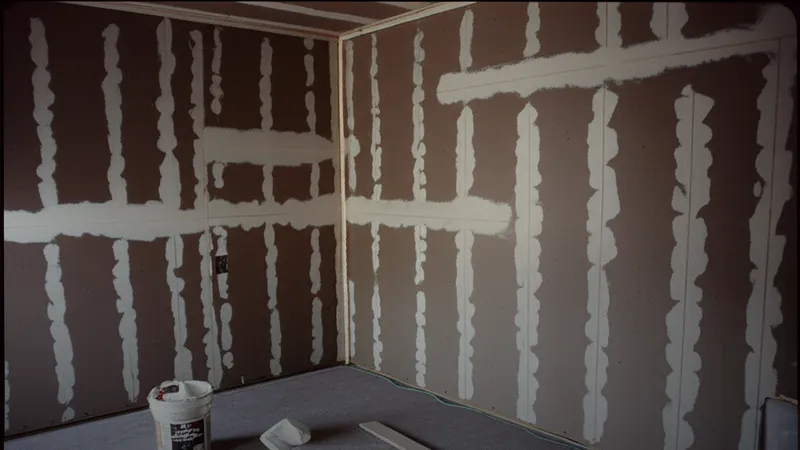
Drywall workers who mixed, applied, and sanded joint compound before 1977 faced significant asbestos exposure that most never knew existed. A landmark study found that 59% of drywall workers with more than 10 years of exposure showed asbestos-related abnormalities on chest X-rays. The fine dust created during taping and finishing operations contained asbestos fibers that workers inhaled throughout their careers.
Joint compound (also called drywall mud or taping compound) contained 3-15% chrysotile asbestos until manufacturers voluntarily phased it out in the mid-1970s. The construction boom of the post-World War II era employed millions of drywall workers who handled this material daily.
The Scope of Exposure
Joint compound was ubiquitous in construction from the mid-1940s through the 1970s:
Volume of use: A typical house required 100-200 pounds of joint compound. A large commercial building might use tons of the material. Drywall workers mixed and applied this material every working day.
Asbestos content: Most major manufacturers added asbestos to joint compound for durability, crack resistance, and improved workability. Products contained between 3% and 15% asbestos by weight.
Dust generation: The finishing process created enormous amounts of fine dust. Mixing dry compound, applying it to seams, and especially sanding created clouds of visible dust that workers breathed.
Duration of exposure: Career drywall workers applied joint compound for decades. Cumulative exposure from daily work over 20-40 year careers reached extreme levels.
Research on Drywall Worker Exposure
Several studies have documented the health effects of asbestos joint compound exposure:
Nicholson et al. (1975): The seminal study of drywall workers found that 59% of 63 workers with more than 10 years of exposure had radiographic changes consistent with asbestos disease. The study concluded that joint compound represented a “significant occupational health hazard.”
Spengler and Sexton (1983): Air sampling during joint compound sanding found fiber concentrations of 0.5-3.0 fibers/cc, exceeding current OSHA limits by 5-30 times.
Landrigan et al. (1979): Follow-up research confirmed asbestos-related lung disease among drywall workers and called for immediate regulatory action.
EPA (1989): The EPA cited joint compound exposure among the reasons for its attempted comprehensive asbestos ban, noting the difficulty workers had recognizing the hazard in a non-fibrous appearing product.
Mesothelioma case reports: Multiple case series have documented mesothelioma among drywall workers whose primary asbestos exposure was joint compound.
How Exposure Occurred
Mixing Dry Compound
Before pre-mixed joint compound became standard, workers mixed dry powder with water:
- Opening bags released visible dust clouds
- Pouring and mixing created additional airborne fibers
- Workers often mixed multiple bags daily
- Little ventilation was provided in most work areas
Fiber measurements during mixing operations found concentrations up to 5 fibers/cc, 50 times the current OSHA limit.
Application
Applying joint compound to drywall seams created moderate exposure:
- Loading tools disturbed the material
- Feathering compound on walls created some airborne dust
- Multiple coats over several days extended exposure duration
- Working overhead increased exposure to falling particles
Sanding
The most hazardous operation was sanding dried compound smooth:
- Hand sanding generated significant dust clouds
- Power sanding created even higher concentrations
- Dust remained airborne for hours in enclosed spaces
- Workers often sanded without respiratory protection
Studies found that sanding operations generated fiber concentrations of 1-3 fibers/cc, sustaining exposure throughout the workday.
Cleanup
Cleaning work areas after finishing operations created additional exposure:
- Sweeping stirred settled dust back into the air
- Workers often used brooms and compressed air
- Proper wet cleanup was rarely performed
- Dust accumulated on surfaces throughout buildings
Products That Contained Asbestos
Major joint compound manufacturers included asbestos through the 1970s:
Georgia-Pacific: Ready-mixed and powdered joint compounds contained asbestos until the mid-1970s.
National Gypsum: Gold Bond brand products contained asbestos.
United States Gypsum (USG): Various joint compound products contained asbestos.
Kaiser Gypsum: Joint compound products were manufactured with asbestos.
Bestwall Gypsum: Products contained asbestos until the company was acquired.
Numerous smaller manufacturers: Regional and local brands also commonly contained asbestos.
The voluntary phase-out of asbestos from joint compound occurred between 1975 and 1977, driven by growing awareness of health hazards and anticipation of regulatory action.
Current Risks
While new joint compound does not contain asbestos, risks remain:
Renovation and demolition: Buildings constructed before 1978 may contain asbestos joint compound on walls and ceilings. Disturbing this material during renovation releases fibers.
Testing challenges: Joint compound doesn’t look or feel different whether it contains asbestos or not. Testing is the only way to know for certain.
Widespread distribution: Virtually all commercial and residential construction from 1950-1977 potentially contains asbestos joint compound.
Inadequate awareness: Many current construction workers don’t realize joint compound could contain asbestos. Renovation work proceeds without testing or protection.
A 2018 EPA survey found that 30% of residential renovation projects disturbing pre-1980 materials did not include asbestos testing.
Documenting Your Exposure
Drywall workers should document their work history:
Employment information:
- Contractors worked for and dates
- Types of projects (residential, commercial, institutional)
- Approximate volume of joint compound used
- Brands of products used if known
Work practices:
- Whether dry or pre-mixed compound was used
- Sanding methods (hand or power)
- Respiratory protection provided (or not)
- Ventilation in work areas
Project records:
- Specific buildings worked on
- Dates of construction
- Coworkers who can verify conditions
Union records (Carpenters, Plasterers, Painters unions), contractor records, and building permits can help document work history.
Health Monitoring
Former drywall workers should:
Notify healthcare providers: Inform your doctor about joint compound exposure. This affects how respiratory symptoms should be evaluated.
Watch for symptoms: Persistent cough, shortness of breath, and chest discomfort warrant medical evaluation, especially for those with asbestos exposure history.
Consider screening: Discuss appropriate monitoring with your physician based on exposure history and duration.
Avoid additional risk factors: Smoking dramatically increases lung cancer risk for those with asbestos exposure.
Legal and Compensation Options
Drywall workers diagnosed with mesothelioma may have claims against:
Joint compound manufacturers: Companies that made asbestos-containing products may be liable for failure to warn workers. Many have established asbestos trust funds.
Building owners: Property owners who hired workers without ensuring proper asbestos protection may bear some responsibility.
Contractors: Employers who failed to protect workers from known hazards may be liable in some circumstances.
Asbestos trust funds: Trusts established by bankrupt joint compound and raw asbestos suppliers may pay claims.
Documentation of the specific products used is helpful but not always required. General evidence of joint compound exposure during the asbestos era can support claims.
Protection for Current Workers
Workers who may encounter legacy asbestos joint compound should:
Assume presence in pre-1978 buildings: Until tested, treat old joint compound as potentially containing asbestos.
Request testing: Before disturbing walls or ceilings in older buildings, ask for asbestos testing of joint compound.
Use appropriate protection: If asbestos may be present, use P100 respiratory protection and wet methods to minimize dust.
Follow regulations: OSHA requires specific protections when disturbing asbestos-containing materials.
Decontaminate properly: Don’t carry dust home on clothing. Change clothes and shower before leaving work sites.
Related Articles
- Construction Workers and Asbestos
- High-Risk Occupations for Asbestos
- Asbestos in Homes
- Mesothelioma Latency Period
- Asbestos Trust Funds
Joint compound doesn’t look or feel different whether it contains asbestos or not. Testing is the only way to know. Before disturbing walls or ceilings in buildings constructed before 1978, request asbestos testing of joint compound.
How did drywall workers get exposed to asbestos?▼
Joint compound (drywall mud) contained 3–15% asbestos until manufacturers phased it out in 1975-1977. Mixing dry compound, applying it to seams, and especially sanding created clouds of dust containing asbestos fibers. Career workers faced exposure every working day for decades.
How hazardous was drywall work?▼
A landmark study found 59% of workers with 10+ years of exposure showed asbestos-related lung abnormalities on X-rays. Air sampling during sanding found fiber concentrations of 0.5–3.0 fibers/cc: 5 to 30 times current OSHA limits. Mixing operations reached concentrations 50 times the limit.
Are drywall workers still at risk today?▼
New joint compound doesn’t contain asbestos, but renovation and demolition workers face risk from legacy materials. Buildings constructed before 1978 may contain asbestos joint compound. A 2018 EPA survey found 30% of residential renovation projects disturbing pre-1980 materials didn’t include asbestos testing.
What should former drywall workers do?▼
Document your work history including contractors, dates, products used, and sanding methods. Inform your healthcare provider about joint compound exposure. Watch for persistent cough, shortness of breath, and chest discomfort. Avoid smoking, which dramatically increases lung cancer risk with asbestos exposure.