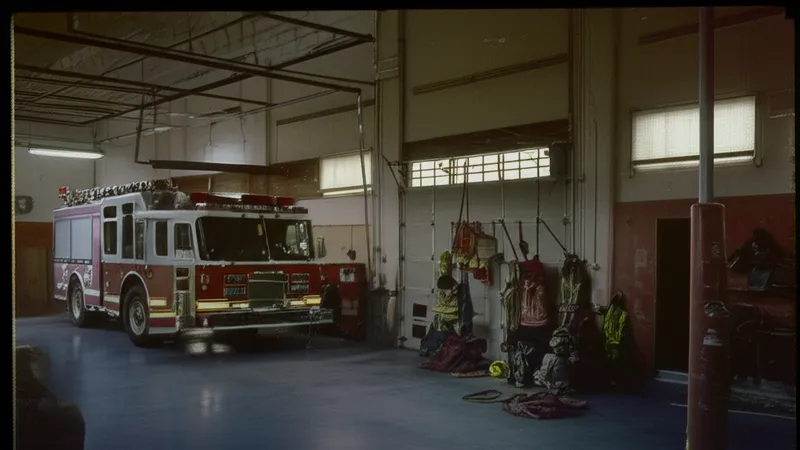
Firefighting Is a Known Carcinogen
In July 2022, the International Agency for Research on Cancer (IARC) classified occupational exposure as a firefighter as Group 1: carcinogenic to humans, the same category as asbestos and tobacco.
The IARC Working Group found sufficient evidence that firefighting causes mesothelioma and bladder cancer, with limited evidence for colon, prostate, and testicular cancers.
There are more than 15 million firefighters worldwide. Cancer is now the leading cause of line-of-duty deaths among firefighters.
How Firefighters Are Exposed to Asbestos
Building Fires
Older asbestos-containing materials release intense concentrations of toxic fibers when buildings burn. During fires, non-friable asbestos (normally considered lower risk) becomes friable as materials burn and break down.
Buildings constructed between 1930 and 1980 pose the greatest risk, they often contain:
- Roofing and siding
- Floor and ceiling tiles
- Pipe insulation
- Spray-on fireproofing
- Joint compound and plaster
Overhaul Operations
Exposure continues during overhaul when firefighters search for hotspots. Many firefighters remove their breathing apparatus while still on scene, unknowingly being exposed to airborne asbestos fibers.
Unique Exposure Pattern
Unlike most occupational asbestos exposure (gradual, regular), firefighter exposure often comes in single encounters with asbestos-contaminated smoke or debris, sometimes at extremely high concentrations.
Secondary Exposure
Firefighters carry hazardous substances on their gear back to firehouses, exposing other workers. Fibers can also be carried home on clothing, causing secondhand exposure to family members.
Mesothelioma Risk Statistics
NIOSH Firefighter Cancer Study
The landmark NIOSH study analyzed 29,993 firefighters from Chicago, Philadelphia, and San Francisco (employed since 1950, tracked through 2009):
| Finding | Result |
|---|---|
| Overall cancer diagnoses | 9% increase vs. general population |
| Cancer-related deaths | 14% increase |
| Mesothelioma incidence | 2x higher (100% increase) |
| Mesothelioma mortality risk | 129% higher |
This was the first study to identify excess mesothelioma in U.S. firefighters.
Meta-Analysis Data
- Meta-rate ratio of 1.58 for mesothelioma among career firefighters
- Scandinavian study (16,000+ firefighter deaths over 45 years): firefighters 2.5x more likely to die of mesothelioma
- Average time from first employment to diagnosis: 45 years
Cancer as Cause of Death
- 2024: 75% of line-of-duty deaths among IAFF members were from occupational cancer
- 2023: 72% of line-of-duty deaths were cancer-related
- Cancer has surpassed all other causes of firefighter line-of-duty deaths
9/11 First Responders
The World Trade Center collapse created unprecedented asbestos exposure for first responders.
Exposure Data
- Approximately 1 million tons of pulverized particulate matter released
- 25% of dust samples had asbestos levels above safe thresholds
- An estimated 300–400 tons of asbestos in the North Tower alone
- North Tower had spray-on asbestos up to approximately the 40th floor
Health Impact
| Statistic | Number |
|---|---|
| People diagnosed with 9/11-related cancer (2025) | 48,579 |
| First responders with cancer | 24,000 |
| Deaths from toxic exposure (exceeds 9/11 deaths) | 4,343 |
| Confirmed mesothelioma cases | 24 |
| Estimated exposed population | 400,000 |
Mesothelioma Latency
The first emergency responder mesothelioma death was in 2006, Deborah Reeve, an FDNY EMS paramedic diagnosed in 2004.
A 2024 study of four WTC mesothelioma cases found cancer developed 15–19 years after exposure. Given the 20–60 year latency period, experts expect significant increases in mesothelioma cases among 9/11 responders.
Dr. Raja Flores of Mount Sinai Hospital: “We haven’t seen many yet, but we’re going to see a very significant rise in cases.”
Given the 20-60 year mesothelioma latency period, experts expect significant increases in cases among 9/11 first responders in the coming years. Anyone who worked at Ground Zero should monitor their health closely.
IARC Group 1 Classification
What Group 1 Means
| IARC Group | Classification | Examples |
|---|---|---|
| Group 1 | Carcinogenic to humans | Firefighting, asbestos, tobacco |
| Group 2A | Probably carcinogenic | Red meat, night shift work |
| Group 2B | Possibly carcinogenic | Gasoline, pickled vegetables |
The 2022 reclassification upgraded firefighting from Group 2B (“possibly carcinogenic”) to Group 1.
Evidence Base
A working group of 25 international experts from 8 countries found:
- Sufficient evidence for mesothelioma and bladder cancer
- Limited evidence for colon, prostate, testis cancers, melanoma, and non-Hodgkin lymphoma
Firefighting exhibits 5 of 10 key characteristics of carcinogens:
- Genotoxic
- Induces epigenetic alterations
- Induces oxidative stress
- Induces chronic inflammation
- Modulates receptor-mediated effects
Presumptive Illness Laws by State
All 50 states, D.C. and federal firefighters have some form of presumptive cancer legislation, though coverage varies significantly.
How These Laws Work
Presumptive laws establish that certain cancers in firefighters are presumed to result from duty-related exposure. This shifts the burden of proof, firefighters don’t have to prove their cancer was caused by the job.
Benefits may include:
- Enhanced retirement/pension benefits
- Workers’ compensation
- Death and disability benefits
Common Requirements
- Service duration: Typically 5–10 years minimum before diagnosis
- Tobacco use: Many states require firefighters to have refrained from tobacco
- Pre-employment physical: Documentation showing no cancer at hire
- Rebuttable presumption: Employers may challenge claims
Volunteer Coverage
- Half of states with presumptive laws cover volunteer firefighters
- States with explicit volunteer coverage: California, Pennsylvania
- States excluding volunteers: Florida, Washington
State Examples
| State | Key Provisions |
|---|---|
| California | Covers all firefighting members “whether volunteers, partly paid, or fully paid” |
| Pennsylvania | Act 46 (2011) covers both volunteer and career firefighters |
| Maryland | Expanded from 4 to 9 cancers (2012), then to 11 cancers (2019) |
| Oregon | 14 cancer types covered for non-volunteer firefighters with 5+ years service |
| Florida | $25,000 one-time payment plus medical/disability benefits (career only) |
Resources:
- IAFF Presumptive Health Database: iaff.org/presumptive-health
- National Volunteer Fire Council: nvfc.org
Decontamination and Protection
On-Scene Decontamination
Research shows proper decontamination significantly reduces exposure:
- Wet decontamination with soap and water can reduce contaminants by up to 85%
- Cleansing wipes reduce PAH contamination on neck skin by a median of 54%
- Dry brushing before wet decontamination prevents contaminant spread
NFPA 1851 Requirements (2020 Edition)
The standard for protective equipment care now requires:
- Two advanced cleanings per year (increased from one)
- Advanced cleaning whenever PPE exposed to products of combustion
- Gross decontamination before leaving scene
- Bagging and isolation of contaminated gear
- Verified Independent Service Provider for outsourced cleaning
Best Practices
On scene:
- Maintain full PPE including SCBA throughout entire incident
- Keep SCBA on during salvage and overhaul operations
- Gross decontamination while still on air
After incident:
- “Shower within the hour” to wash off absorbed toxins
- Place contaminated gear in sealed bags
- Never bring contaminated gear into living quarters
At the station:
- Properly vent diesel exhaust in apparatus bays
- Regularly decontaminate apparatus seats and interiors
- Maintain second set of gear
Current Gaps
A survey found only 19% of firefighters reported their gear was cleaned after each use. Too few personnel perform decontamination on-scene following documented exposure.
Vermiculite (Zonolite) Insulation Risk
Up to 35 million U.S. homes may contain Zonolite attic insulation, derived from asbestos-contaminated vermiculite from Libby, Montana.
- Most vermiculite insulation produced before 1990 often contains asbestos
- Zonolite was widely used between 1940s and 1980s
- Building fires can release these fibers in high concentrations
Firefighters responding to fires in older homes with vermiculite insulation face elevated exposure risk.
What Firefighters Should Do
Document Exposure History
- Keep records of structure fires responded to
- Note building ages and suspected asbestos materials
- Document any known high-exposure incidents
- Maintain employment records
Health Monitoring
- Participate in department health screening programs
- Inform doctors about firefighting career
- Report respiratory symptoms promptly
- Consider National Firefighter Registry enrollment (CDC)
Know Your Rights
- Research your state’s presumptive illness laws
- Understand workers’ compensation options
- Document compliance with department health requirements
- Maintain records of tobacco-free status if applicable
Legal Options
If diagnosed with mesothelioma:
- Workers’ compensation claims (presumptive laws may apply)
- Personal injury lawsuits against asbestos product manufacturers
- 9/11 Victim Compensation Fund (if applicable)
How does the IARC Group 1 classification affect firefighters?▼
Group 1 means IARC found sufficient evidence that firefighting causes cancer in humans. The same classification as asbestos and tobacco. This strengthens the scientific basis for presumptive illness laws and compensation claims.
What are presumptive illness laws?▼
These laws presume certain cancers in firefighters resulted from duty-related exposure, shifting the burden of proof. Most states cover mesothelioma, though specific requirements (service duration, tobacco use) vary.
Are volunteer firefighters covered by presumptive laws?▼
Coverage varies by state. About half of states with presumptive laws cover volunteers. California and Pennsylvania include volunteers; Florida and Washington do not.
How can firefighters reduce asbestos exposure?▼
Maintain full PPE including SCBA throughout entire incidents, perform gross decontamination on scene, shower within an hour, and never bring contaminated gear into living quarters.