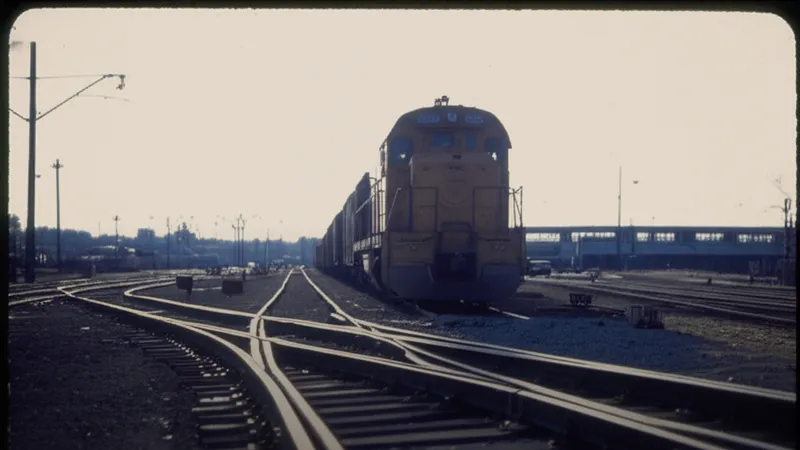
Railroad workers have faced asbestos exposure since the early 20th century, when the material became standard in locomotive insulation, brake systems, and rail yard facilities. Epidemiological studies have documented mesothelioma rates 2-4 times higher among railroad workers compared to the general population, with certain job categories showing even greater elevation.
The railroad industry employed millions of workers during peak asbestos use decades. According to the Railroad Retirement Board, approximately 235,000 active railroad workers remain employed today, many in roles that still involve contact with legacy asbestos materials in older equipment and facilities.
Sources of Asbestos in Railroad Work
Locomotive insulation: Steam locomotives contained extensive asbestos insulation around boilers, pipes, and steam lines. Diesel locomotives, which began replacing steam power in the 1940s, also contained asbestos in engine compartments, exhaust systems, and electrical components. A typical steam locomotive contained an estimated 1,000-2,000 pounds of asbestos insulation.
Brake systems: Railroad brake shoes and brake linings contained 30-70% asbestos by weight through the 1980s. The friction created during braking generated dust that railroad workers inhaled throughout their careers. Air brake systems used asbestos gaskets and seals in critical components.
Passenger car construction: Railroad passenger cars built before 1980 contained asbestos in floor tiles, wall panels, ceiling materials, and HVAC systems. Conductors, porters, and maintenance workers who spent careers in these cars accumulated significant exposure.
Rail yard facilities: Maintenance shops, roundhouses, and rail yard buildings contained asbestos insulation, fireproofing, and building materials. Workers in these facilities faced both direct handling of asbestos products and environmental exposure from deteriorating materials.
Railcar cargo: Railroad workers also faced exposure from transporting asbestos products. Raw asbestos and finished products were shipped by rail, sometimes in poorly sealed cars that leaked fibers.
Research on Railroad Worker Mesothelioma
Studies have documented elevated mesothelioma risk across multiple railroad job categories:
Selikoff and Hammond (1979): An early study examining asbestos disease among railroad workers found that locomotive shop workers had asbestosis rates 3.4 times higher than the general population.
Mancuso and Coulter (1963): One of the first studies to identify elevated cancer mortality among railroad workers, finding lung disease rates significantly above expected levels.
Nicholson et al. (1982): Found that railroad car repairers had relative risk of 2.8 for mesothelioma compared to unexposed populations.
Welch et al. (2005): Analysis of FELA claims found that brake shop workers, car repairers, and locomotive mechanics filed the most asbestos-related claims, with documented exposure in 94% of cases.
National Academy of Sciences (2006): Reviewed railroad worker health data and confirmed “consistent evidence” of elevated asbestos disease risk across multiple job classifications.
High-Risk Railroad Occupations
Car men/car repairers: Workers who maintained and repaired railcars faced among the highest exposure levels. Brake work, insulation replacement, and floor repair all involved direct asbestos contact. Studies have found mesothelioma SMRs of 3.5-5.0 among car repairers.
Locomotive mechanics: Engine house workers who maintained diesel and steam locomotives handled asbestos insulation, gaskets, and brake components. Exposure occurred during routine maintenance and major overhaul work.
Boilermakers: Railroad boilermakers who worked on steam locomotives and shop boilers faced extreme exposure levels comparable to industrial boilermakers. Some studies show mesothelioma SMRs exceeding 6.0 for this group.
Machinists: Shop machinists who fabricated parts and performed precision work on locomotives encountered asbestos in gaskets, packing, and insulation materials.
Laborers: General laborers in rail yards and maintenance facilities cleaned up asbestos debris, assisted with insulation work, and worked in areas contaminated by other trades.
Brakemen and conductors: Train crew members who inspected trains, coupled cars, and checked brake systems were exposed to brake dust throughout their shifts.
Track workers: Section gang and maintenance of way employees who worked on rail infrastructure encountered asbestos in signal systems, grade crossing equipment, and older buildings.
The FELA Advantage
Unlike most workers, railroad employees are not covered by state workers’ compensation systems. Instead, they may file claims under the Federal Employers’ Liability Act (FELA), a federal law enacted in 1908 that provides unique advantages for injured railroad workers.
Key differences from workers’ compensation:
| Factor | Workers’ Comp | FELA |
|---|---|---|
| Burden of proof | No-fault | Must prove employer negligence |
| Damage limits | Statutory caps | Full damages available |
| Pain and suffering | Usually excluded | Recoverable |
| Punitive damages | Not available | Available in some cases |
| Venue | State system | Federal or state court |
| Jury trial | No | Yes |
Under FELA, railroad workers who can prove their employer was negligent in exposing them to asbestos may recover full compensation for medical expenses, lost wages, pain and suffering, and in some cases punitive damages. There are no statutory caps on recovery amounts.
Proving negligence under FELA typically involves demonstrating that the railroad:
- Knew or should have known about asbestos hazards
- Failed to provide adequate warnings
- Failed to provide appropriate protective equipment
- Failed to maintain safe working conditions
Given the extensive documentation of asbestos dangers dating to the early 20th century, many FELA cases have successfully established railroad negligence.
Unlike most workers, railroad employees can file claims under the Federal Employers’ Liability Act. Which allows full damages with no caps, recovery for pain and suffering, and jury trials. Consult attorneys experienced in both FELA and asbestos cases.
Historical Timeline of Railroad Asbestos Use
1900-1930: Asbestos becomes standard insulating material for steam locomotives and railway buildings. Workers receive no warnings about health hazards.
1930-1960: Peak asbestos use in railroad industry. Diesel locomotives, also containing asbestos, begin replacing steam power. Studies begin documenting respiratory disease among railroad workers.
1960-1980: Evidence of asbestos dangers mounts. Some railroads begin reducing asbestos use. First mesothelioma cases among railroad workers are diagnosed.
1980-2000: Major railroads transition to non-asbestos brake materials and insulation. Legacy materials remain in older equipment and facilities. FELA litigation increases.
2000-present: Most asbestos exposure occurs during maintenance of older equipment and facilities. Railroad workers exposed in earlier decades continue developing mesothelioma.
Exposure During the Steam Era
Workers who maintained steam locomotives faced extraordinary asbestos exposure. Steam locomotives operated at high temperatures and pressures, requiring extensive insulation throughout:
- Boiler jackets and lagging
- Steam pipe covering
- Firebox insulation
- Cylinder insulation
- Brake components
- Valve packing and gaskets
Maintenance work in engine houses often occurred in poorly ventilated spaces. Workers removed and replaced insulation without respiratory protection. Asbestos debris accumulated on floors and surfaces, creating ongoing exposure between active maintenance tasks.
An estimated 500,000 railroad workers were employed during the steam era, with many accumulating heavy asbestos exposure before the transition to diesel power.
Diesel Locomotive Exposure
The shift to diesel locomotives didn’t eliminate asbestos exposure. Diesel units contained asbestos in:
- Engine compartment insulation
- Exhaust system components
- Electrical insulation
- Brake systems
- Traction motor insulation
- Cooling system gaskets
Diesel mechanics who performed routine maintenance and major overhauls continued encountering asbestos through the 1980s and beyond. Some diesel locomotives built in the 1970s remained in service into the 2000s, requiring ongoing maintenance.
Current Risks
While new asbestos installation has largely ended in the railroad industry, exposure risks continue:
Legacy equipment: Older locomotives and railcars still in service may contain asbestos components. Maintenance and retirement of this equipment creates exposure potential.
Facilities: Rail yard buildings, maintenance shops, and other structures built before 1980 may contain asbestos in insulation, floor tiles, roofing, and other materials.
Right-of-way maintenance: Signal houses, grade crossing equipment, and other infrastructure along rail lines may contain asbestos materials installed decades ago.
Current railroad safety regulations require asbestos awareness training and specific work practices when asbestos may be encountered. However, compliance varies, and workers may unknowingly disturb asbestos during routine tasks.
Documenting Railroad Exposure
Railroad workers should maintain detailed records of their employment:
- Railroads employed by and dates of service
- Job classifications held
- Specific duties performed
- Locomotives and equipment worked on
- Facilities where work occurred
- Safety equipment provided (or not provided)
- Co-workers who can verify conditions
Railroad Retirement Board records, union membership files, and railroad employment records can supplement personal documentation.
Legal Options for Railroad Workers
FELA claims: Railroad workers diagnosed with mesothelioma may file lawsuits against their railroad employers under FELA. These claims can result in substantial compensation when negligence is proven.
Product liability: Manufacturers of asbestos-containing railroad products may be sued separately from FELA claims. Companies that made brake shoes, insulation, gaskets, and other products can be held liable for failure to warn.
Asbestos trust funds: Manufacturers that have gone bankrupt have established trusts that pay claims. Railroad workers may file with multiple trusts depending on which products they encountered.
Because FELA has different procedural requirements than standard civil litigation, attorneys experienced in both FELA and asbestos cases can help evaluate the available options.
Related Articles
- High-Risk Occupations for Asbestos
- Boilermakers and Asbestos
- Auto Mechanics and Brake Asbestos
- Asbestos Trust Funds
- Mesothelioma Legal Options
Why are railroad workers at high risk for mesothelioma?▼
Railroad workers faced extensive asbestos exposure from locomotive insulation (1,000-2,000 lbs per steam engine), brake systems (30-70% asbestos), passenger car construction, and rail yard facilities. Studies show 2-4x higher mesothelioma rates, with car repairers showing SMRs of 3.5-5.0.
What is FELA and how does it help?▼
The Federal Employers’ Liability Act (1908) allows railroad workers to sue employers for negligence. Unlike workers’ compensation. FELA permits full damages with no caps, recovery for pain and suffering, and jury trials. Many cases have established railroad negligence given documented asbestos dangers.
Are railroad workers still at risk today?▼
Yes. Legacy equipment (older locomotives and railcars) may still contain asbestos. Rail yard buildings and maintenance shops have asbestos in insulation, floor tiles, and roofing. Signal houses and grade crossing equipment along rail lines contain decades-old asbestos materials.
What legal options do railroad workers have?▼
FELA claims against railroad employers (with potential for substantial compensation), product liability suits against asbestos manufacturers, and asbestos trust fund claims. Because FELA has different procedures than standard litigation, consult attorneys experienced in both FELA and asbestos cases.