Overview
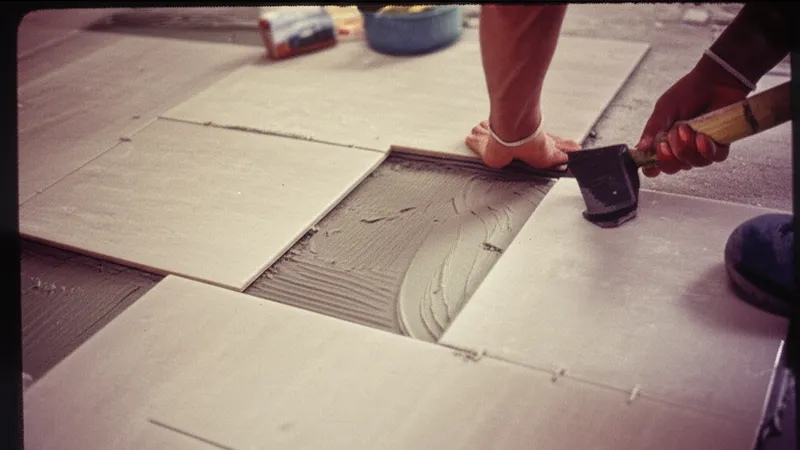
Tile setters and floor covering installers faced significant asbestos exposure from vinyl asbestos tiles (VAT), tile adhesives, and backing materials. Millions of buildings contain asbestos flooring installed between 1950 and 1980, and workers who installed, and later removed, these materials were heavily exposed.
The black mastic adhesive used to install vinyl asbestos tiles often contained more asbestos than the tiles themselves. Scraping and sanding this adhesive during renovation creates extremely high exposure levels.
Asbestos in Flooring Products
| Product | Asbestos Content | Exposure Level |
|---|---|---|
| Vinyl asbestos tile (VAT) | 10–25% | High when cut/broken |
| Mastic adhesive | 5–15% | Very High |
| Cutback adhesive | 5–15% | Very High |
| Sheet vinyl backing | Variable | Moderate |
| Underlayment | Variable | Moderate |
How Tile Setters Were Exposed
Installation (Historical)
During new installation, workers:
- Cut tiles to fit around obstacles
- Applied adhesive with trowels
- Pressed tiles into place
- Trimmed excess material
Removal and Renovation
Removal work created the highest exposure:
- Breaking apart old tiles
- Scraping adhesive residue from concrete
- Sanding substrate for new flooring
- Grinding adhesive from subfloor
9x9 inch floor tiles installed between 1920–1980 are almost always asbestos-containing. Testing is required before disturbing any floor tile of this era.
Work Environments
Tile setters worked in:
- Residential: Homes and apartments
- Commercial: Office buildings, retail
- Institutional: Schools, hospitals
- Industrial: Factories, warehouses
Related Occupations
Tile setters worked alongside:
- Floor covering workers, General flooring
- Carpenters, Building construction
- Laborers, Cleanup and disposal
- Demolition workers, Renovation
Related Industry
Current Risk
Tile setters today face asbestos exposure when removing flooring in buildings constructed before 1980. Proper testing, abatement procedures, and respiratory protection are essential.
Health Consequences
Tile setters with asbestos exposure are at risk for:
- Mesothelioma: Cancer of the chest or abdominal lining
- Asbestosis: Progressive lung scarring
- Lung cancer: Especially combined with smoking
- Pleural disease: Thickening of lung lining
Legal Options
Tile setters diagnosed with mesothelioma may pursue:
Asbestos Trust Funds
Flooring manufacturers have established trusts:
- Various tile and adhesive manufacturer trusts
Additional Claims
- Product liability lawsuits: Against tile and adhesive manufacturers
- Premises liability: Against building owners
- Workers’ compensation: Through employer coverage