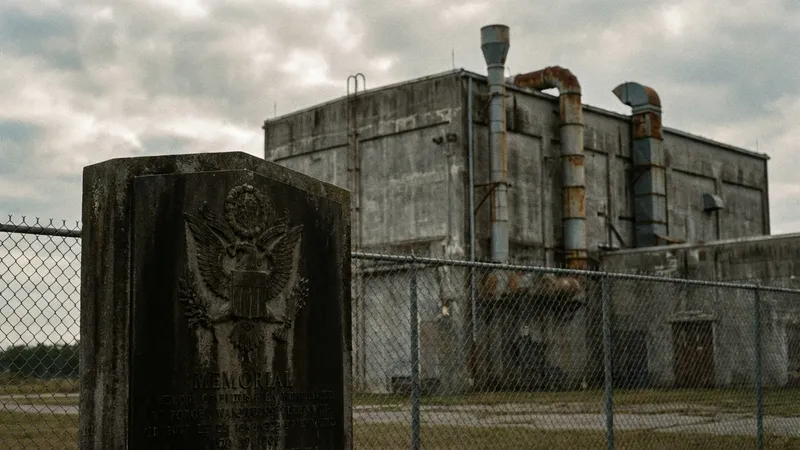
A federal study has confirmed what many missile crews long suspected: working in Cold War-era underground bunkers at Minot Air Force Base carries a measurable increase in cancer risk, primarily linked to asbestos exposure.
The Study Results
Air Force Global Strike Command (AFGSC) released comprehensive health risk assessments for its three active nuclear missile bases as part of the ongoing Missile Community Cancer Study.
Cancer Risk Estimates (Minot AFB)
| Exposure Duration | Excess Cancers per 10,000 |
|---|---|
| Short-term duty | ~1 |
| Long-term duty | Up to 7 |
While the absolute risk is characterized as “small,” the study confirms a real, measurable increase in cancer incidence tied to asbestos exposure in missile facilities.
Sources of Asbestos Exposure
The underground missile alert facilities at Minot AFB contained multiple asbestos sources:
Known Asbestos Materials
| Location | Material |
|---|---|
| Floors | Asbestos floor tiles |
| Piping | Asbestos insulation |
| Equipment | Electrical component insulation |
| General | Original 1960s construction materials |
How Exposure Occurred
- Routine maintenance: Removing/replacing floor tiles disturbed asbestos
- Equipment repairs: Working on insulated piping released fibers
- Overheating equipment: 1960s-era components off-gassed when hot
- General deterioration: Aging materials released fibers over time
Missileers often spent 24-hour shifts in these confined underground spaces with limited ventilation.
If you served at Minot, Malmstrom, or F.E. Warren AFB between 1976-2010, register with the Missile Community Cancer Study, document your service dates and facilities, and inform your doctor about potential asbestos exposure. VA benefits are available for service-related conditions.
Historical Documentation
Documents obtained through Freedom of Information Act requests revealed the Air Force was aware of asbestos hazards for decades:
| Year | Documentation |
|---|---|
| 1989 | Reports of asbestos leaks in missile silos |
| 1992 | ”PRIORITY” marked asbestos reports |
| 2024 | Investigation launched |
| 2025 | Health risk assessments released |
Internal reports flagged asbestos concerns as urgent (“PRIORITY”) more than 30 years before the comprehensive health study was conducted.
The Broader Investigation
The study examined all three active U.S. nuclear missile bases:
| Base | Location | Status |
|---|---|---|
| Minot AFB | North Dakota | Study complete |
| Malmstrom AFB | Montana | Study complete |
| F.E. Warren AFB | Wyoming | Study complete |
Thousands of tests were conducted across all three installations, examining air quality, surface contamination, and historical exposure records.
Other Hazards Identified
Beyond asbestos, the investigation found additional contaminants:
| Contaminant | Source | Health Risk |
|---|---|---|
| PCBs | Electrical equipment | Cancer, other effects |
| Lead | Paint, equipment | Neurological effects |
| Various chemicals | Equipment coolants | Variable |
When 1960s-era Minuteman III system components overheat, they can off-gas electrical insulation and polychlorinated biphenyls (PCBs).
Who Is Affected
Potentially Exposed Personnel
- Missile launch officers (“missileers”)
- Maintenance technicians
- Security forces
- Communications specialists
- Support staff working in facilities
Exposure Period
Personnel who worked at Minot AFB between 1976 and 2010 may have been exposed to asbestos in missile alert facilities. The Air Force has established resources for those who served during this period.
What Affected Veterans Should Do
Immediate Steps
-
Register with the Missile Community Cancer Study
- Access health risk information
- Connect with screening resources
- Document your service history
-
Document your exposure
- Dates of service at Minot AFB
- Specific facilities where you worked
- Duration of time in missile alert facilities
- Any known asbestos disturbance incidents
-
Talk to your doctor
- Discuss your exposure history
- Ask about appropriate screening
- Report any respiratory symptoms
VA Healthcare
Veterans may be eligible for:
- VA healthcare for service-related conditions
- Disability compensation if diagnosed with asbestos-related disease
- Specialized screening for asbestos-related conditions
See our guide: VA Benefits for Mesothelioma Veterans
Understanding Your Risk
The Latency Period
Mesothelioma and other asbestos-related cancers have long latency periods:
| Disease | Typical Latency |
|---|---|
| Mesothelioma | 20–50 years |
| Lung cancer | 15–35 years |
| Asbestosis | 10–40 years |
Someone exposed at Minot AFB in 1990 could develop mesothelioma between 2010 and 2040.
Risk Context
The study found 1–7 excess cancers per 10,000 personnel. For context:
- This is a statistically significant increase over background rates
- Individual risk remains relatively low
- Long-term exposure increases risk
- Other factors (smoking, other exposures) can compound risk
Air Force Response
The Air Force has committed to:
- Continued monitoring of environmental conditions at all missile bases
- Health trend tracking among missile community personnel
- Remediation of identified hazards where possible
- Resources for affected personnel and veterans
Implications for Other Bases
The study raises questions about asbestos exposure at other military installations:
- Many bases have buildings constructed in the 1950s–1970s
- Asbestos was widely used in military construction
- Underground/confined facilities may pose higher risk
- Similar investigations may be warranted elsewhere
Related Resources
What did the federal study find?▼
The Missile Community Cancer Study found 1-7 excess cancers per 10,000 missile personnel linked to asbestos exposure in underground facilities at Minot AFB. While characterized as “small” absolute risk, it’s a statistically significant increase. Long-term exposure increased risk.
Who was affected?▼
Missile launch officers, maintenance technicians, security forces, communications specialists, and support staff who worked in underground missile alert facilities between 1976-2010 may have been exposed. The study covered all three active U.S. nuclear missile bases: Minot (ND), Malmstrom (MT), and F.E. Warren (WY).
What other hazards were found?▼
Beyond asbestos, the investigation found PCBs (from electrical equipment) and lead (from paint and equipment). When 1960s-era Minuteman III system components overheat, they can off-gas electrical insulation and polychlorinated biphenyls.
What should affected veterans do?▼
Register with the Missile Community Cancer Study, document dates of service and specific facilities, talk to your doctor about exposure history and appropriate screening, and understand your VA benefits for service-related conditions.