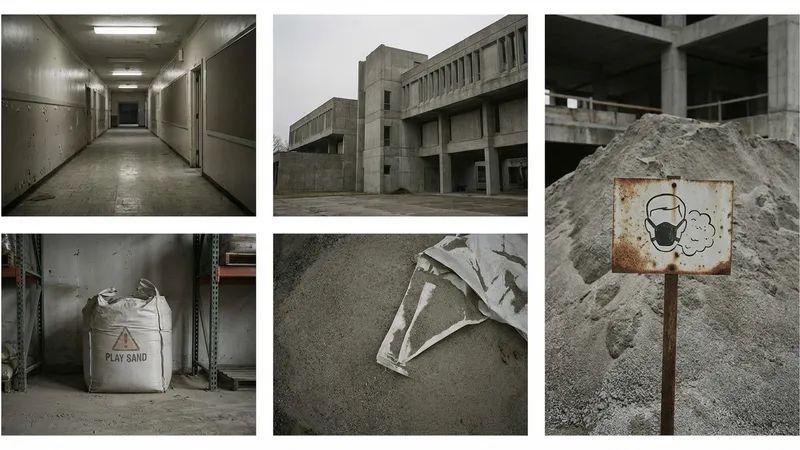
Hobbycraft has withdrawn children’s colored play sand from its UK stores after independent laboratory testing confirmed the presence of asbestos fibers. The discovery follows a similar crisis in Australia, where contaminated play sand forced 69 schools to close in late 2025.
What Was Found
A concerned UK parent, aware of the Australian play sand recalls, purchased a craft kit from Hobbycraft and sent samples to an accredited laboratory for testing. Three of the five colored sand samples. Yellow, green, and pink. Tested positive for fibrous tremolite asbestos.
The contaminated sand was sold as part of Hobbycraft’s “Giant Box of Crafts” kit, a popular children’s activity set.
Tremolite Asbestos
Tremolite is an amphibole form of asbestos considered more dangerous than chrysotile (white asbestos). Like all asbestos types, tremolite fibers can cause:
There is no safe level of asbestos exposure, though risk increases with dose and duration.
Government Response
UK government officials are pressing Hobbycraft to issue a formal product recall rather than simply withdrawing the items from shelves.
“Parents are right to be concerned by this,” a government source told reporters. “Officials are investigating, but there’s no good reason why Hobbycraft shouldn’t recall this themselves, given the evidence.”
Hobbycraft has stated it is investigating the matter but has not yet issued an official recall that would notify customers who already purchased the product.
Parents who purchased Hobbycraft craft kits containing colored sand should stop using them immediately. Keep the sand contained and contact Hobbycraft for return instructions. Do not attempt to dispose of potentially contaminated materials in household trash.
Health Risk Assessment
The British Occupational Hygiene Society (BOHS) and the Faculty of Asbestos Assessment and Management (FAAM) have weighed in on the risk level:
| Factor | Assessment |
|---|---|
| Fiber release during normal use | Low (sand is not easily aerosolized) |
| Risk if sand is crushed or ground | Higher (mechanical action releases fibers) |
| Overall exposure risk | Low but not zero |
According to the National Asbestos Exposure Register, while the prospective risk for a person exposed would be extremely low, there is no safe threshold for asbestos exposure.
Part of a Global Pattern
The UK discovery follows a larger international crisis involving contaminated play sand products:
Australia and New Zealand (2025)
- 69 schools closed after asbestos found in colored play sand
- National recall issued for multiple brands
- Products traced to imported supplies
UK Investigation (2026)
- Parent-initiated testing reveals contamination
- Same type of product affected (colored craft sand)
- Suggests common supply chain issues
Both the Australian and UK contaminations appear to involve imported colored sand products, raising questions about quality controls in the international supply chain for children’s craft materials.
What Parents Should Do
Immediate Steps
- Stop using any colored craft sand products
- Do not shake or pour the sand, which could release fibers
- Keep containers sealed until you can safely dispose of them
- Contact the retailer for return/refund information
- Monitor for recalls from official sources
If Children Were Exposed
The exposure risk from brief contact with contaminated sand is considered very low. However, if you have concerns:
- Note the product details and approximate dates of use
- Mention the exposure to your child’s pediatrician at their next visit
- There is no need for emergency medical attention for brief, past exposure
Regulatory Gap
Unlike Australia, which has robust asbestos testing requirements for imported goods, the UK lacks mandatory pre-market testing for asbestos in consumer products. This incident has renewed calls for stronger import controls.
The European Union recently declined to follow the WHO’s classification of talc as “probably carcinogenic,” highlighting ongoing regulatory disagreements about mineral contamination standards.
Related Coverage
- Australia Recalls Asbestos-Contaminated Children’s Sand
- UK, EU Split on Talc Cancer Classification
- Asbestos Exposure Guide
What type of asbestos was found in the play sand?▼
Laboratory testing confirmed fibrous tremolite asbestos in three colors (yellow, green, and pink) of the sand sold in Hobbycraft craft kits. Tremolite is an amphibole asbestos, considered more hazardous than chrysotile.
How dangerous is brief exposure to this sand?▼
Health experts say the risk from brief exposure is very low. Asbestos fibers are unlikely to become airborne from sand in its normal state unless it is mechanically crushed or ground. However, there is no completely safe level of asbestos exposure.
Has Hobbycraft issued a recall?▼
As of January 24, 2026, Hobbycraft has withdrawn the products from sale but has not issued a formal recall. UK government officials are urging the company to notify customers who already purchased the affected products.
Is this related to the Australian play sand recall?▼
The products appear similar. Both involve imported colored craft sand. This suggests potential supply chain issues affecting multiple markets. Australia recalled contaminated play sand in late 2025, forcing 69 schools to close.