Maryland Mesothelioma Verdicts and Settlements
Maryland mesothelioma case outcomes: the $1.56B Cherie Craft talc verdict, $14.5M Busch steamfitter case, and Dixon take-home Ford brake verdict.

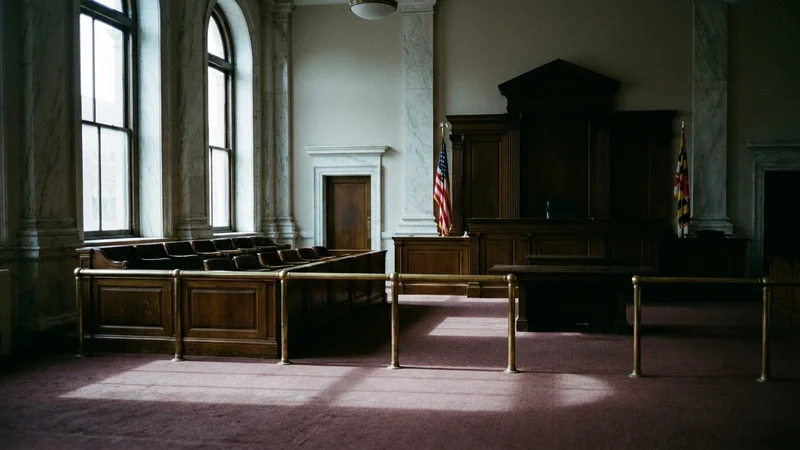
Baltimore City is one of the most active asbestos litigation venues in the country, anchored by decades of cases tied to Sparrows Point, Port of Baltimore shipyards, and Baltimore-based insulation contractors. The $1.56 billion Craft talc verdict returned on December 22, 2025, the largest single-plaintiff talc award on record at the time, sits at the top of a docket that also includes landmark appellate holdings on causation, damages caps, and the discovery rule.
Major Maryland Mesothelioma Verdicts
| Amount | Case | Year | Docket | Status |
|---|---|---|---|---|
| $1,560,000,000 verdict ($59.84M compensatory + $1B punitive vs J&J + $500M punitive vs Pecos River Talc) | Craft v. Johnson & Johnson / Pecos River Talc | 2025 | 24-X-000005 | Appeal pending (as of June 2026) |
| $14,568,528.33 verdict; reduced to ~$7,284,264.17 on judgment | Wallace & Gale Asbestos Settlement Trust v. Busch | 2017 | 24X16000151 | Upheld, Court of Appeals affirmed July 3, 2019 |
| $15,000,000 verdict; reduced to $6,065,000 on judgment | Dixon v. Ford Motor Company | 2010 | Unconfirmed | Reinstated, Court of Appeals reversed COSA and reinstated (2013) |
| $3,970,000 combined (Copland $1,205,000; Ellison $760,000; Alford $1,960,000) | Copland, Ellison, and Alford v. General Electric (lung cancer, not mesothelioma) | 2007 | Unconfirmed | Entered only, appellate disposition not confirmed in retrieved sources |
Craft v. Johnson & Johnson and Pecos River Talc (2025)
On December 22, 2025, a Baltimore City Circuit Court jury returned a $1.56 billion verdict for plaintiff Cherie A. Craft, age 54, diagnosed with peritoneal mesothelioma in January 2024. Case No. 24-X-000005, filed in the Baltimore City Asbestos Litigation docket, named Johnson & Johnson, its subsidiary Pecos River Talc LLC, and Kenvue Inc. (the J&J consumer products spinoff). J&J agreed before trial to indemnify Kenvue for all liability in the case.
Craft alleged decades of daily use of J&J talc-based baby powder and that J&J fraudulently misrepresented and concealed the product’s asbestos content. The jury agreed, finding fraudulent misrepresentation and concealment and awarding $59.84 million in compensatory damages, $1 billion in punitive damages against J&J, and $500 million in punitive damages against Pecos River Talc.
News reports announcing the verdict were published December 23, 2025; the jury return date was December 22. J&J called the verdict “egregious and patently unconstitutional” and announced an immediate appeal. As of June 2026, the appeal is pending and no post-trial reduction has been confirmed.
Wallace & Gale Asbestos Settlement Trust v. Busch (2017, affirmed 2019)
On February 16, 2017, a Baltimore City Circuit Court jury awarded William E. Busch, Jr., a retired steamfitter from Pasadena, Maryland, $14,568,528.33 after a trial before Judge Shannon Avery. Busch was diagnosed with mesothelioma in March 2016. His exposure ran from 1967 through 1976, when he worked as a steamfitter for Honeywell at Loch Raven High School and encountered asbestos-containing magnesia block insulation installed by Wallace & Gale in the school’s boiler room. He also alleged home renovation exposure during the same period.
The jury’s award broke down as follows: $10 million in noneconomic damages, $1.25 million in economic damages, $318,528.33 in past medical expenses, and $3 million for loss of consortium. Cross-claims against absent defendants reduced the entered judgment to approximately $7,284,264.17.
The Court of Special Appeals affirmed in 2018 (No. 1055, Sept. Term 2017). The Court of Appeals of Maryland affirmed on July 3, 2019 in Wallace & Gale Asbestos Settlement Trust v. Busch, No. 58, Sept. Term 2018, 464 Md. 474, 211 A.3d 1166, holding that sufficient circumstantial evidence supported the jury’s inference that Wallace & Gale installed asbestos-containing products in the boiler room even without direct product identification testimony.
Dixon v. Ford Motor Company (2010, reinstated 2013)
In April 2010, a Baltimore City jury returned a $15 million verdict in favor of the estate of Joan Dixon and her surviving family. Dixon was diagnosed with mesothelioma in March 2008 and died in February 2009 at age 68. Her exposure was entirely take-home: she washed the work clothes of her husband Bernard Dixon, which carried asbestos dust from Ford brake pads he worked on during the 1960s and 1970s.
The jury allocated $5 million to the estate, $4 million to Bernard Dixon, and $1.5 million each to four daughters. Maryland’s non-economic damages cap under Md. Code § 11-108(b)(3)(ii) reduced the entered judgment to $6,065,000, $5 million to the estate, approximately $426,000 to Bernard Dixon, and approximately $159,750 per daughter.
The Maryland Court of Special Appeals reversed the verdict in 2012 (Dixon v. Ford Motor Co., 206 Md. App. 180, 47 A.3d 1038), finding error in the admission of causation testimony. The Court of Appeals reversed COSA and reinstated the full verdict in 2013 (Dixon v. Ford Motor Co., 433 Md. 137), holding that the trial court did not abuse its discretion in admitting expert testimony from Dr. Laura Welch that every exposure to asbestos is a substantial contributing cause of mesothelioma, read alongside her testimony on the frequency, intensity, and proximity of the specific exposure at issue.
Copland, Ellison, and Alford v. General Electric (2007)
In 2007, a Baltimore Circuit Court jury awarded a combined $3,970,000 to the families of three Sparrows Point steelworkers who developed asbestos-related lung cancer (not mesothelioma) from asbestos-containing crane brake linings manufactured by General Electric. Individual awards were $1,205,000 to the Copland family, $760,000 to the Ellison family, and $1,960,000 to the Alford family. GE announced plans to appeal. The appellate disposition of this case is not confirmed in retrieved neutral primary sources.
Why Baltimore City
Baltimore City Circuit Court has functioned as one of the country’s primary asbestos litigation venues since the 1980s, when cases tied to Bethlehem Steel’s Sparrows Point plant and the Port of Baltimore’s shipyard complex began entering the docket in volume. The court operates a dedicated asbestos litigation track, Baltimore City Asbestos Litigation, that handles consolidated scheduling and discovery for thousands of filed cases. That institutional infrastructure draws plaintiffs with Maryland-connected exposures and keeps case timelines shorter than in many other jurisdictions.
The Sparrows Point complex, which operated as an integrated steel mill and shipyard from the late 19th century until its closure in 2012, used asbestos-containing insulation, refractories, pipe coverings, and equipment throughout its production facilities. Workers at the mill, as well as contractors who performed insulation and maintenance work there, account for a significant share of Maryland’s asbestos disease burden. Contractor defendants, including Wallace & Gale, ACandS, and others, ran alongside product defendants like Ford, General Electric, and Johnson & Johnson in Baltimore City’s consolidated docket.
A jury verdict and an entered judgment are two different things. The $14.5 million Busch verdict became a $7.28 million judgment after cross-claim reductions. The $15 million Dixon verdict became a $6.065 million judgment under Maryland’s statutory damages cap. The Craft $1.56 billion verdict had not been reduced or affirmed at the appellate level as of June 2026, J&J’s appeal was pending. Prior results do not guarantee a similar outcome in any other case.
Maryland’s Three-Year Clock and the Occupational-Disease Exception
Maryland imposes a three-year statute of limitations on asbestos personal injury claims under Md. Code, Cts. & Jud. Proc. § 5-101. For latent diseases like mesothelioma, the period runs from when the plaintiff knew or reasonably should have known of the disease and its causal connection to asbestos, not from the date of exposure. That discovery rule was established by the Court of Appeals in Harig v. Johns-Manville Products Corp., 284 Md. 70, 394 A.2d 299 (1978), and it remains the foundational authority for SOL accrual in Maryland asbestos cases.
Wrongful death actions carry the same three-year window, running from the date of the decedent’s death under Md. Code, Cts. & Jud. Proc. § 3-904. Maryland also provides an occupational disease exception for wrongful death claims: where the death arises from an occupational disease, the action must be filed within the earlier of ten years from death or three years from the claimant’s discovery of the cause. Mesothelioma, as a latent occupational disease, squarely implicates that exception. Families whose loved ones died from mesothelioma should not assume the standard three-year-from-death window applies without verifying which limitations period governs their specific facts.
Because mesothelioma has a latency period of 20 to 50 years, linking current disease to specific products and employers from decades ago requires extensive investigation. The earlier that investigation starts after diagnosis, the more options remain open.
How Baltimore Cases Actually Resolve
Most Maryland mesothelioma cases never reach a jury. Defendants with Maryland asbestos exposure, insulation contractors, equipment manufacturers, product companies, include many that have declared bankruptcy and established asbestos trust funds that pay claims without litigation. Plaintiffs with Maryland-connected exposures frequently file simultaneously in the Baltimore City Circuit Court against solvent defendants and in the trust fund system against bankrupt ones.
Settlement amounts in filed cases vary widely based on exposure evidence, the number of defendant products identified, the plaintiff’s diagnosis and prognosis, and the strength of medical causation evidence. No government or academic body publishes current average settlement figures for mesothelioma cases, and figures cited by plaintiff law firm marketing materials are not independently verifiable from primary sources.
References
Claims Journal / Insurance Journal. Baltimore Jury Returns $1.56B Verdict Against Johnson & Johnson in Talc Case.
https://www.claimsjournal.com/news/national/2025/12/23/334732.htm
Justia / Maryland Court of Appeals. Wallace & Gale Asbestos Settlement Trust v. Busch, No. 58, Sept. Term 2018, 464 Md. 474.
https://law.justia.com/cases/maryland/court-of-appeals/2019/58-18.html
FindLaw / Maryland Court of Appeals. Dixon v. Ford Motor Company, 433 Md. 137 (2013).
https://caselaw.findlaw.com/court/md-court-of-appeals/1640031.html
Insurance Journal. GE to Appeal $3.97M Asbestos Verdict in Maryland (Copland, Ellison, Alford).
https://www.insurancejournal.com/news/east/2007/07/23/81967.htm
Maryland General Assembly. Md. Code, Cts. & Jud. Proc. § 5-101 (General three-year limitations period).
https://mgaleg.maryland.gov/mgawebsite/Laws/StatuteText?article=gcj§ion=5-101
Maryland General Assembly. Md. Code, Cts. & Jud. Proc. § 3-904 (Wrongful death limitations).
https://mgaleg.maryland.gov/mgawebsite/laws/StatuteText?article=gcj§ion=3-904&enactments=false
The Daily Record. Maryland Court of Special Appeals Opinions Dec 17, 2012 (McFadden / Nardone).
https://thedailyrecord.com/2012/12/16/opinions-121712-maryland-court-of-special-appeals/
Reader Q&A
Frequently Asked Questions
What is the largest mesothelioma verdict in Maryland history?
As of June 2026, the $1.56 billion Craft verdict against Johnson & Johnson and Pecos River Talc, returned by a Baltimore City Circuit Court jury on December 22, 2025, is the largest. It includes $59.84 million in compensatory damages, $1 billion in punitive damages against J&J, and $500 million in punitive damages against Pecos River Talc. J&J has announced an appeal; the verdict had not been reduced or affirmed at the appellate level as of June 2026.
How did the Busch steamfitter verdict break down?
The February 16, 2017 Baltimore City jury awarded William Busch $14,568,528.33: $10 million noneconomic, $1.25 million economic, $318,528.33 past medical expenses, and $3 million loss of consortium. Cross-claims against absent defendants reduced the entered judgment to approximately $7,284,264.17. The Court of Appeals of Maryland affirmed the judgment on July 3, 2019.
What happened to the Dixon verdict after the appeals?
The April 2010 Baltimore City jury verdict of $15 million was reduced to $6,065,000 on entry under Maryland’s non-economic damages cap. The Maryland Court of Special Appeals reversed the verdict entirely in 2012. The Court of Appeals of Maryland then reversed COSA and reinstated the verdict in 2013, holding that the trial court did not abuse its discretion in admitting causation testimony about the role of every asbestos exposure, read in context of frequency, intensity, and proximity evidence.
How long does Maryland give people with mesothelioma to file a lawsuit?
Three years from diagnosis under the discovery rule established in Harig v. Johns-Manville Products Corp., 284 Md. 70 (1978). The clock starts when the plaintiff knew or reasonably should have known of the disease and its connection to asbestos, not at the time of exposure. Wrongful death claims run three years from the date of death under Md. Code § 3-904, with an occupational disease exception that may extend or alter the window depending on when the family discovered the cause of death.
Is the Copland v. GE verdict a mesothelioma case?
No. The 2007 Copland, Ellison, and Alford verdict against General Electric involved asbestos-related lung cancer, not mesothelioma. The three Sparrows Point steelworker families received a combined $3.97 million. GE announced plans to appeal, but the appellate outcome is not confirmed in retrieved neutral primary sources.
Do Baltimore City courts give mesothelioma cases expedited scheduling?
Yes. Baltimore City Asbestos Litigation operates as a consolidated docket with dedicated scheduling. Mesothelioma cases, given the severity of the diagnosis and typical patient prognosis, are regularly granted expedited trial dates. That scheduling advantage is one reason plaintiffs with Maryland-connected exposures frequently choose Baltimore City as their venue.