South African Asbestos Miners Face Higher Mortality
A UCT study of 11,343 former South African asbestos miners found women had 17% higher mortality than expected. Lung function predicted survival.

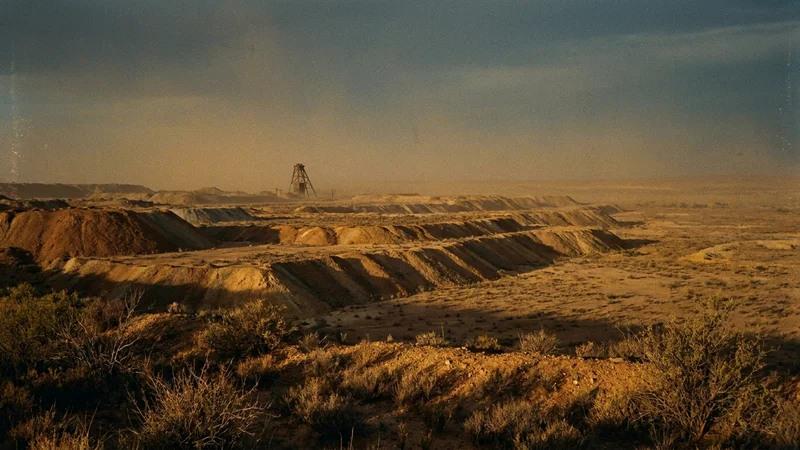
Decades after South Africa banned asbestos mining, former miners continue to face higher death rates than the general population, according to a University of Cape Town study published in the American Journal of Industrial Medicine and announced by UCT on May 4.
The research analyzed records from 11,343 former asbestos miners enrolled in the Asbestos and Kgalagadi Relief Trusts between January 2004 and March 2023. It is one of the most comprehensive analyses to date of long-term mortality in South Africa’s asbestos workforce, a population that has long been described as underdiagnosed and undertreated.
What the Study Found
All-cause mortality among former miners was 4% higher than in the general South African population. The excess was modest overall, but it was substantially larger among women, whose mortality was 17% higher than expected.
The research team identified several strong predictors of mortality. Severity of lung abnormalities on chest radiographs, scored using International Labour Organization profusion categories, was associated with a 13% to 42% increased risk of death as severity worsened. Former miners with very low forced expiratory volume in one second (FEV1) had a 60% increased risk of dying, and those with very low forced vital capacity (FVC) had a 26% increased risk.
Underweight participants (body mass index below 18.5 kg/m²) had a 46% increased risk of death, and former smokers had a 43% increased risk. Standardized mortality ratios declined over the 20-year study period, which the authors said may suggest some improvement in survival or in the underlying health of the cohort over time.
Why Women’s Mortality Was Higher
The 17% excess mortality among women stood out against the more modest 4% overall figure. Dr. Yumna Williams-Mohamed, a registrar in occupational medicine at UCT and the lead author, attributed the gap to gender-specific work patterns in historical mining settings.
“This is reflective of gender specific job tasks, aboveground asbestos work, and inadequate protective measures in historical mining settings,” Williams-Mohamed said. “The finding highlights the often-overlooked experiences of women in asbestos-related occupations.”
Women in South African asbestos mining were concentrated in tasks such as cobbing, sorting, and bagging fiber, often without respiratory protection. Those activities produced high airborne fiber concentrations and have been linked in earlier studies to elevated rates of mesothelioma and asbestosis.
The Asbestos Relief Trust and the Kgalagadi Relief Trust were established under South African class-action settlements to compensate former workers and community members exposed to asbestos. The trusts also fund medical screening and surveillance, which made it possible to assemble the cohort the study analyzed.
South Africa’s Asbestos Legacy
South Africa was one of the world’s largest asbestos producers for most of the 20th century. The country mined three of the six regulated asbestos fiber types: chrysotile (white asbestos), amosite (brown asbestos), and crocidolite (blue asbestos). At peak production in the late 1970s, mining employed tens of thousands of workers across the Northern Cape, Limpopo, and Mpumalanga provinces.
Crocidolite from South Africa’s Northern Cape, in particular, was historically associated with the highest mesothelioma risk of any asbestos fiber. The country once produced nearly all the world’s amosite and about 97% of its crocidolite, with much of the supply exported to construction, insulation, and shipbuilding industries in Europe, North America, and Asia.
Mining and use of all asbestos types were banned in South Africa in 2008. The latency between exposure and mesothelioma diagnosis ranges from 20 to 50 years, so disease incidence has continued to rise in former mining communities even after the ban.
What It Means for Other Asbestos Cohorts
The UCT findings are consistent with international cohort studies of asbestos-exposed workers in Italy, Australia, the United Kingdom, and the United States, which have all reported elevated long-term mortality from lung cancer, mesothelioma, and non-malignant respiratory disease.
Williams-Mohamed and her colleagues argued that the lung function data point to a clear public health priority. “These results suggest that mortality risk is shaped not only by past occupational exposure but also by broader clinical and lifestyle factors that interact with asbestos-related lung damage over time,” she said.
The supervising team included Professor Rodney Ehrlich, Dr. Jim teWaterNaude, and Associate Professor Shahieda Adams. The work was conducted as a Master of Medicine dissertation and was awarded cum laude.
References
University of Cape Town. (2026-05-04). Former asbestos miners face elevated mortality decades after exposure, study finds.
https://www.news.uct.ac.za/article/-2026-05-04-former-asbestos-miners-face-elevated-mortality-decades-after-exposure-study-finds
American Journal of Industrial Medicine. (2026-05-04). Mortality and its determinants in a cohort of former South African asbestos miners.
https://onlinelibrary.wiley.com/doi/10.1002/ajim.70077
Mail & Guardian. (2026-05-05). Decades after asbestos ban, former miners continue to suffer deadly health effects.
https://mg.co.za/the-green-guardian/2026-05-05-decades-after-asbestos-ban-former-miners-continue-to-suffer-deadly-health-effects/
Reader Q&A
Frequently Asked Questions
What did the UCT study find?
The University of Cape Town study analyzed 11,343 former South African asbestos miners with records from 2004 to 2023. All-cause mortality was 4% higher than in the general population, with women showing a 17% excess. Severe lung function impairment, severe radiographic abnormalities, low body mass index, and smoking history were the strongest predictors of death.
Why did women have higher mortality than men in the cohort?
The lead researcher attributed the gap to gender-specific job tasks, aboveground asbestos work, and inadequate protective equipment in historical mining settings. Women were often concentrated in cobbing, sorting, and bagging tasks that produced high airborne fiber exposures without respiratory protection.
What asbestos types did South Africa mine?
South Africa mined chrysotile (white asbestos), amosite (brown asbestos), and crocidolite (blue asbestos). The country once produced nearly all the world’s amosite and about 97% of its crocidolite. South African crocidolite from the Northern Cape has been historically associated with the highest mesothelioma risk of any asbestos fiber.
Are these findings relevant outside South Africa?
Yes. The mortality patterns are consistent with cohort studies of asbestos-exposed workers in Italy, Australia, the United Kingdom, and the United States. The lung function data, in particular, support routine respiratory monitoring and early management of asbestos-related lung disease in any exposed worker population.