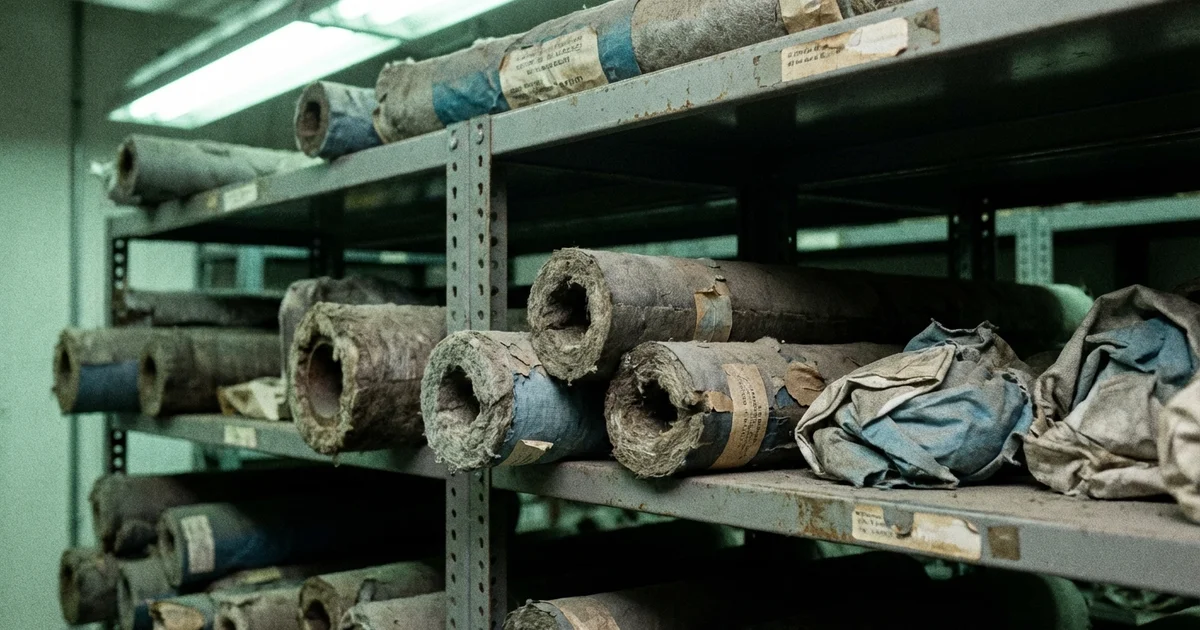
From the 1930s through the 1980s, asbestos was added to building materials, automotive parts, industrial equipment, and consumer products for its heat resistance and durability. Workers who manufactured, installed, or removed these products faced the highest exposure risks.
Products by Category
Click on any product to learn about its asbestos content, who was exposed, and the industries where it was used.
Automotive
Construction
Electrical
Fireproofing
Industrial
Gaskets 1940-1990 Packing Materials 1940-1990 Welding Blankets 1940-1990 Heat Shields 1940-1990 Refractory Materials 1940-1985 Asbestos Cloth and Textiles 1940-1980 Asbestos Paper 1940-1980 Asbestos Rope and Cord 1940-1985 Turbine Insulation 1940-1980 Boiler Gaskets 1940-1990 Fireproof Curtains 1940-1980
Insulation
All Products A-Z
Asbestos Cement Sheets Asbestos Cloth and Textiles Asbestos Paper Asbestos Rope and Cord Boiler Gaskets Boiler Insulation Brake Pads Ceiling Tiles Cement Pipe Cement Siding Clutch Facings Duct Insulation Electrical Insulation Fire Doors Fireproof Curtains Floor Tiles Flooring Adhesives Gaskets Heat Shields Insulation Blankets Insulation Board Joint Compound Packing Materials Pipe Insulation Popcorn Ceilings Refractory Materials Roofing Felt Roofing Shingles Spray-On Fireproofing Textured Coatings Transite Panels Turbine Insulation Vermiculite Insulation Welding Blankets
Why Product Identification Matters
Identifying which asbestos products you were exposed to is critical for:
- Medical history: Helps doctors understand your exposure level and duration
- Legal claims: Determines which companies may be liable for your illness
- Trust fund compensation: Many manufacturers established trust funds for victims
- Multiple exposures: Most mesothelioma patients were exposed to several products
Who Was Exposed?
Asbestos product exposure was not limited to factory workers. People who faced exposure include:
- Manufacturing workers: Those who made asbestos products
- Installation workers: Insulators, roofers, floor installers, pipefitters
- Maintenance workers: Those who repaired or serviced equipment
- Demolition workers: Those who removed asbestos materials
- Secondary exposure: Family members of workers who carried fibers home
- Building occupants: People in buildings with deteriorating asbestos
Documentation Tips
If you're trying to document your asbestos exposure history, consider:
- Work history records and pay stubs showing job sites
- Product purchase records, invoices, or shipping documents
- Co-worker testimony about products used
- Union records and apprenticeship documentation
- Building permits and construction records
An experienced mesothelioma attorney can help investigate your exposure history and identify liable companies.