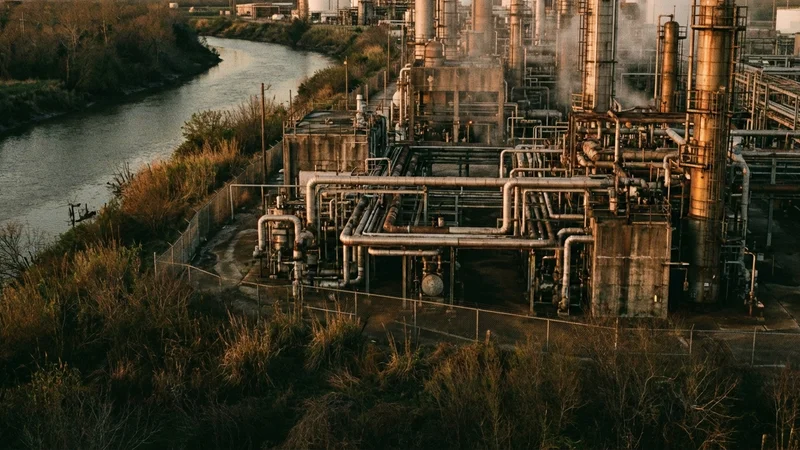
The stretch of Gulf Coast Texas from Beaumont through Port Arthur and down to Texas City is one of the most dangerous places in America to have worked during the 20th century. According to CDC WONDER mortality data, 451 people in a metro area of fewer than 400,000 died from asbestos-related disease between 1979 and 2002. Adjusted for population, that rate exceeds every other metro in Texas, including Houston.
The reason is concentration. Within this corridor, refineries, petrochemical plants, and chemical manufacturing facilities sat within miles of each other. Workers moved between them. Asbestos was in all of them.
The Geography of Exposure
The Beaumont-Port Arthur-Texas City corridor follows the Gulf Coast from the Louisiana border southwest to Galveston Bay. Three clusters of industrial activity define the region.
| Cluster | Key Industries | Exposure Period |
|---|---|---|
| Beaumont-Port Arthur | Oil refineries, petrochemical plants, rubber manufacturing | 1930s-1980s |
| Orange-Bridge City | Shipbuilding, chemical plants, paper mills | 1940s-1970s |
| Texas City-La Marque | Oil refineries, tin smelting, chemical processing | 1940s-1980s |
Beaumont and Port Arthur sit on the Neches River and Sabine Lake, where the concentration of refineries made Southeast Texas one of the largest petrochemical production zones in the world. Texas City, 80 miles to the southwest on Galveston Bay, added another cluster of refineries and processing plants.
Workers in this region often did not stay at a single facility. Contract maintenance crews, pipefitters, and insulation workers rotated between plants during turnaround shutdowns. A single worker might have been exposed to asbestos products from a dozen different manufacturers across multiple worksites over the course of a career.
Why the Per Capita Rate Is So High
Based on CDC WONDER mortality data, Houston reported more total asbestos deaths (524) than Beaumont-Port Arthur (451). But Houston’s population is more than 15 times larger. When adjusted for the size of the population at risk, Beaumont-Port Arthur’s asbestos death rate is the highest in Texas by a significant margin.
| Metro Area | Deaths (1979-2002) | Approx. Population | Relative Rate |
|---|---|---|---|
| Beaumont-Port Arthur | 451 | ~385,000 | Highest in Texas |
| Houston | 524 | ~5,900,000 | High (raw count) |
| Corpus Christi | 98 | ~430,000 | Moderate |
| Dallas-Fort Worth | 270 | ~7,500,000 | Lower |
| San Antonio | 142 | ~2,500,000 | Lower |
The density of exposure sources matters. In a city like Houston, many residents work outside the petrochemical industry. In Beaumont-Port Arthur, the refineries and plants were the economic backbone. A larger share of the working population had direct or indirect contact with asbestos-containing facilities.
For the statewide picture, see 4,467 Diagnoses: Texas Mesothelioma by the Numbers.
The Workers Who Were Exposed
The occupations most affected in the Beaumont-Port Arthur corridor mirror those in Houston, but with one difference: the smaller community meant that a larger percentage of families were touched by the same industries.
Pipefitters who cut and joined asbestos-insulated piping. Boilermakers who stripped old insulation from industrial boilers. Insulation workers who handled raw chrysotile and amosite asbestos. Electricians who ran wiring through crawl spaces packed with asbestos materials. Laborers who cleaned up debris without knowing what it contained.
Secondary exposure also affected families in this region. Workers carried asbestos fibers home on their clothing, shoes, and hair. Spouses who laundered contaminated work clothes have been diagnosed with mesothelioma decades after their only contact with asbestos was doing laundry.
The $12 Million Beaumont Verdict
According to publicly reported case outcomes, one of the most significant Texas asbestos cases involved a $12 million award to a refinery worker from the Beaumont area who was exposed to asbestos during the 1980s. Specific verdict amounts reflect publicly reported outcomes and may not correspond to verified court records. The worker spent years maintaining equipment at facilities along the Neches River, where asbestos insulation was standard in piping and boiler systems.
The case established that the manufacturers who supplied asbestos products to Beaumont-area refineries knew the material was dangerous and failed to warn workers. This pattern of manufacturer liability has been central to asbestos litigation in Texas.
For a full look at Texas verdict data, see Texas Asbestos Verdicts and Settlements.
Ongoing Risk
Asbestos remains present in many older industrial facilities along the corridor. Demolition, renovation, and maintenance work can disturb materials that have been in place for decades.
For workers and residents in the Beaumont-Port Arthur-Texas City area, the risk is not only historical. Anyone working on older industrial structures or buildings in this region should be aware of potential asbestos exposure and take appropriate precautions.
MesoWatch maintains a searchable database of documented asbestos exposure sites in Texas, including facilities in the Beaumont-Port Arthur corridor.
How many people died from asbestos in the Beaumont-Port Arthur area?▼
According to CDC WONDER mortality data, the Beaumont-Port Arthur metro area recorded 451 asbestos-related deaths between 1979 and 2002. This includes deaths from mesothelioma, asbestosis, and asbestos-related lung cancer.
Why does Beaumont-Port Arthur have such a high asbestos death rate?▼
The metro area had one of the densest concentrations of oil refineries and petrochemical plants in North America. With a population under 400,000, a larger share of the working population was directly exposed to asbestos in industrial settings compared to larger metros like Houston.
What industries caused asbestos exposure in the Beaumont corridor?▼
Oil refineries, petrochemical plants, rubber manufacturing, chemical processing, shipbuilding, and paper mills all used asbestos products extensively. Workers often rotated between multiple facilities, compounding their exposure.
Is asbestos still present in Beaumont-area industrial facilities?▼
Yes. Many older industrial facilities and public buildings in the region still contain asbestos materials. Demolition, renovation, and maintenance work can release fibers from materials installed decades ago.
What legal options do families in the Beaumont area have?▼
Under Texas CPRC Section 16.003, the state imposes a two-year statute of limitations for mesothelioma claims. Workers exposed at Beaumont-area refineries and plants may qualify for claims through multiple asbestos trust funds. An experienced Texas mesothelioma attorney can help identify applicable trusts.
References
CDC WONDER Mortality Database.
https://wonder.cdc.gov/
CDC USCS Mesothelioma Report.
https://www.cdc.gov/united-states-cancer-statistics/publications/mesothelioma.html
Texas Cancer Registry (DSHS).
https://www.dshs.texas.gov/texas-cancer-registry
Honchar 1988, Texas Mesothelioma Review (NIOSH).
https://pubmed.ncbi.nlm.nih.gov/3363523/
Didier et al. 2025, Mesothelioma Mortality US 1999-2020.
https://pmc.ncbi.nlm.nih.gov/articles/PMC12005915/
Texas CPRC §16.003: Statute of Limitations.
https://statutes.capitol.texas.gov/Docs/CP/htm/CP.16.htm