Galveston Shipyard Workers and Mesothelioma
Galveston and Texas City shipyards exposed thousands to asbestos during WWII and beyond. Data on workers, claims, and outcomes.

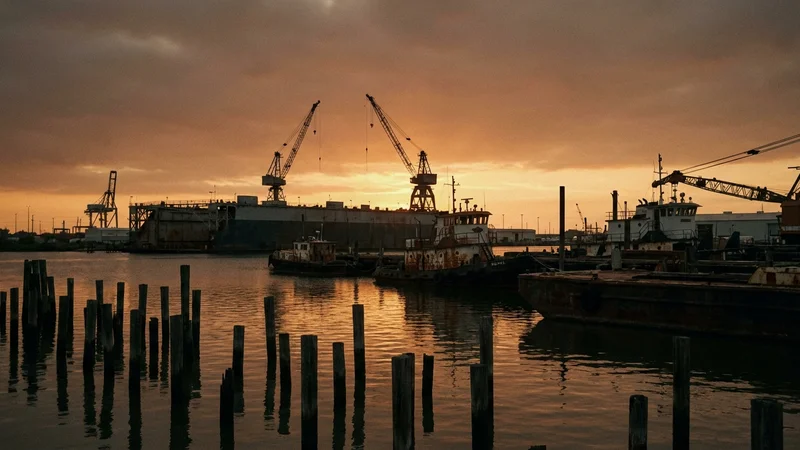
The shipyards along Galveston Bay were once among the busiest in the Gulf of Mexico. From World War II through the 1980s, these facilities built, repaired, and overhauled naval and commercial vessels. Asbestos was woven into nearly every component of a ship: insulation around steam pipes, lagging on boilers, packing in turbines, gaskets in valves, and fireproofing throughout the hull.
The workers who did this job, many of them young men who had never heard the word “asbestos,” are now in their 60s, 70s, and 80s. Decades after their last day in the shipyard, they are being diagnosed with mesothelioma.
Where the Exposure Happened
The Galveston-Texas City area had several shipyard operations that used asbestos extensively. These ranged from large-scale naval repair facilities to smaller commercial drydocks.
| Facility Type | Location | Primary Work | Asbestos Use |
|---|---|---|---|
| Naval repair yards | Galveston, Texas City | Warship overhaul and repair | Hull insulation, boiler lagging, pipe covering |
| Commercial drydocks | Galveston Bay | Cargo vessel maintenance | Engine room insulation, steam pipe wrapping |
| Ship conversion facilities | Texas City | Military vessel refitting | Complete re-insulation of mechanical systems |
| Marine engine shops | Galveston | Engine and turbine repair | Gaskets, packing, brake linings |
The work was physically demanding and took place in confined, poorly ventilated spaces. Below-deck areas where pipes, boilers, and turbines were concentrated had the highest asbestos fiber levels. Workers described visible dust clouds when old insulation was stripped from pipes during repair work.
The Occupations at Highest Risk
Not every shipyard worker had the same level of exposure. The trades that involved direct contact with asbestos materials, or that disturbed existing asbestos during maintenance, carried the greatest risk.
| Occupation | Exposure Source | Where in the Ship |
|---|---|---|
| Pipefitters | Cutting, joining, and insulating asbestos-wrapped pipes | Engine rooms, boiler rooms, throughout hull |
| Boilermakers | Removing and replacing boiler insulation | Boiler rooms |
| Insulation workers (laggers) | Handling raw asbestos blankets and cement | All insulated areas |
| Shipfitters | Cutting and welding near asbestos-insulated structures | Hull, decks, bulkheads |
| Machinists | Working on turbines with asbestos packing and gaskets | Engine rooms |
| Electricians | Pulling wire through asbestos-insulated compartments | Throughout vessel |
| Painters | Sanding surfaces containing asbestos primers | Hull exterior, interior spaces |
Many shipyard workers performed multiple trades over the course of a career, or worked alongside tradespeople who were disturbing asbestos materials nearby. Even workers who never handled asbestos directly breathed the same air in the same enclosed spaces.
The Navy Connection
The U.S. Navy specified asbestos insulation for virtually all vessel systems from the 1930s through the 1970s. Ships built or repaired at Galveston-area yards carried asbestos in hundreds of components. When those ships came in for overhaul, workers removed old insulation and installed new asbestos materials, often without any respiratory protection.
By commonly cited estimates, approximately one in three people diagnosed with mesothelioma in the United States served in the military. Navy veterans are disproportionately represented because of the intensity and duration of their exposure aboard asbestos-insulated vessels.
Veterans who served aboard ships built or maintained at Galveston-area facilities may be eligible for both VA disability benefits and asbestos trust fund claims. For more information on veteran-specific resources, see MesoWatch’s veterans and mesothelioma guide.
The $8.2 Million Verdict
According to publicly reported case outcomes, one of the notable Texas asbestos cases involved an $8.2 million verdict for a Galveston shipyard worker who spent years servicing Navy vessels. Specific verdict amounts reflect publicly reported outcomes and may not correspond to verified court records. The worker developed mesothelioma decades after his shipyard employment ended, a timeline consistent with the disease’s long latency period.
The case established that the asbestos product manufacturers who supplied materials to Galveston shipyards were liable for failing to warn workers about the known dangers of their products. This pattern of manufacturer liability has been critical to asbestos litigation involving shipyard workers across the Gulf Coast.
For a full look at Texas asbestos verdicts, see $18.6 Million and Counting: Texas Asbestos Verdicts and Settlements.
Secondary Exposure: Families at Risk
Shipyard workers did not leave asbestos at the dock. Fibers embedded in work clothing, boots, and hair were carried home. Family members who handled contaminated laundry or simply lived with a shipyard worker were exposed to asbestos fibers through no choice of their own.
Cases of mesothelioma in spouses and children of shipyard workers have been documented throughout the Gulf Coast. The latency period is the same: 10 to 50 years between exposure and diagnosis.
Galveston in the Statewide Context
The Galveston-Texas City area is one of three major exposure corridors in Texas, alongside Houston and Beaumont-Port Arthur. While the refinery corridors drove the largest raw numbers of asbestos deaths, shipyard exposure in Galveston produced a distinct pattern: concentrated exposure over shorter periods (a ship overhaul might last weeks or months) with extremely high fiber levels in confined spaces.
For the statewide data picture, see 4,467 Diagnoses: Texas Mesothelioma by the Numbers. For the Houston refinery corridor, see 524 Asbestos Deaths in Houston. For the Beaumont-Port Arthur industrial belt, see 451 Deaths Along America’s Asbestos Corridor.
Legal Options for Shipyard Workers and Families
Under Texas CPRC Section 16.003, the state imposes a two-year statute of limitations for mesothelioma claims, starting from the date of diagnosis. Shipyard workers and their families may have multiple paths to compensation.
Asbestos trust fund claims are often the first route. Workers exposed to products from manufacturers who filed for bankruptcy can file claims with those companies’ trusts, and industry analysis counts more than 60 trusts holding over $30 billion nationally. Shipyard workers were typically exposed to products from multiple manufacturers, making them eligible for several trust fund claims. Workers can also file personal injury lawsuits against manufacturers who remain solvent. And veterans exposed to asbestos during military service may qualify for VA disability compensation regardless of whether they also pursue trust fund claims or lawsuits.
For help identifying applicable legal options, Texas families can connect with a mesothelioma attorney experienced in Gulf Coast shipyard cases.
References
CDC WONDER Mortality Database.
https://wonder.cdc.gov/mcd-icd10-expanded.html
CDC USCS Mesothelioma Report.
https://www.cdc.gov/united-states-cancer-statistics/publications/mesothelioma.html
Honchar 1988, Texas Mesothelioma Review (NIOSH).
https://pubmed.ncbi.nlm.nih.gov/3363523/
Texas Cancer Registry (DSHS).
https://www.dshs.texas.gov/texas-cancer-registry
U.S. Courts: Asbestos Bankruptcy.
https://www.uscourts.gov/services-forms/bankruptcy/bankruptcy-basics/asbestos
Texas CPRC §16.003: Statute of Limitations.
https://statutes.capitol.texas.gov/Docs/CP/htm/CP.16.htm
Reader Q&A
Frequently Asked Questions
What asbestos products were used in Galveston shipyards?
Galveston shipyards used asbestos in pipe insulation, boiler lagging, turbine packing, gaskets, fireproofing materials, brake linings, and deck coatings. Nearly every mechanical system on a ship contained asbestos components from the 1930s through the 1970s.
Which shipyard workers had the highest asbestos exposure?
Pipefitters, boilermakers, and insulation workers (laggers) had the highest direct exposure because they handled asbestos materials daily. Shipfitters, machinists, electricians, and painters were also exposed through proximity in confined, poorly ventilated spaces.
Can family members of shipyard workers get mesothelioma?
Yes. Secondary exposure occurred when workers carried asbestos fibers home on their clothing, boots, and hair. Spouses and children who handled contaminated laundry or lived with shipyard workers have been diagnosed with mesothelioma decades later.
What is the statute of limitations for shipyard asbestos claims in Texas?
Under Texas CPRC Section 16.003, the state imposes a two-year statute of limitations for mesothelioma claims, starting from the date of diagnosis. For wrongful death claims, the deadline is two years from the date of death.
How much was the Galveston shipyard worker verdict?
According to published case reports, a Galveston shipyard worker who serviced Navy vessels was awarded $8.2 million after developing mesothelioma from occupational asbestos exposure. Based on publicly reported outcomes, Texas shipyard and refinery verdicts have typically ranged from $8 million to $20 million.