524 Asbestos Deaths in Houston
Houston leads Texas in asbestos deaths. A data analysis of the refineries, plants, and shipyards behind the toll.

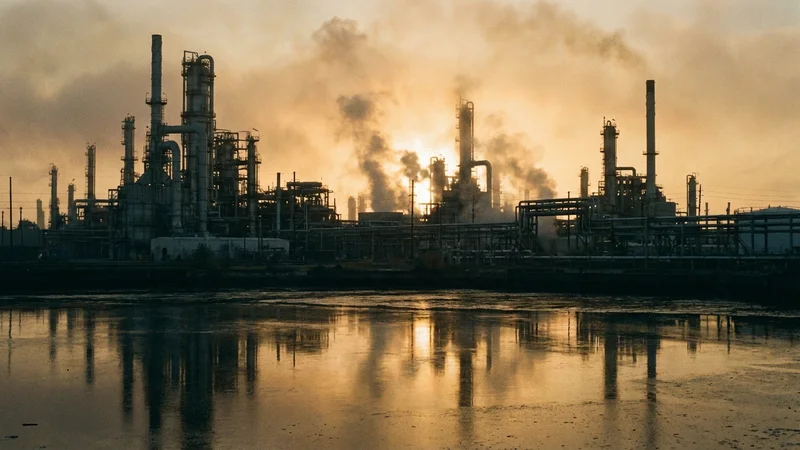
Houston is the deadliest city in Texas for asbestos-related disease. According to CDC WONDER mortality data, 524 people in the Houston metro area died from mesothelioma, asbestosis, or asbestos-related lung cancer between 1979 and 2002. The number has continued to climb in the decades since, as workers exposed in the 1960s, 1970s, and 1980s reach the end of the disease’s long latency period.
The reason is geography and industry. Houston sits at the center of America’s petrochemical economy, and for most of the 20th century, every refinery, chemical plant, and processing facility along the Gulf Coast relied on asbestos to insulate pipes, line boilers, and protect equipment from extreme heat. The workers who built and maintained those facilities were exposed daily.
The Houston Ship Channel: 52 Miles of Exposure
The Houston Ship Channel stretches 52 miles from the Port of Houston to Galveston Bay. Along its banks, dozens of oil refineries, chemical manufacturing plants, and industrial facilities operated continuously for decades. At the peak of Houston’s petrochemical boom in the 1960s and 1970s, thousands of workers entered these facilities every day.
Asbestos was everywhere. It insulated the miles of piping that carried superheated oil and chemical products. It lined the boilers that powered the plants. It was woven into gaskets, valve packing, and protective clothing. When workers cut, sanded, or removed asbestos materials during maintenance and turnaround shutdowns, the fibers became airborne.
| Occupation | Asbestos Exposure Source | Risk Level |
|---|---|---|
| Pipefitters | Cutting, fitting, and insulating asbestos-wrapped pipes | Very high |
| Boilermakers | Removing and replacing asbestos boiler insulation | Very high |
| Insulation workers | Direct handling of raw asbestos insulation materials | Very high |
| Electricians | Working near asbestos insulation in confined spaces | High |
| Welders | Disturbing asbestos materials during cutting and welding | High |
| Maintenance crews | Turnaround shutdowns involving removal of old insulation | High |
| Laborers | Cleanup of asbestos debris in plant environments | Moderate to high |
Turnaround shutdowns were particularly dangerous. During these planned maintenance periods, entire sections of a refinery would be taken offline, old insulation stripped, and new materials installed. Workers described clouds of asbestos dust filling enclosed spaces. Many did this work for years without knowing the material they were handling could kill them.
Refineries and Chemical Plants
Houston’s refinery district along the Ship Channel included facilities operated by some of the largest petrochemical companies in the world. These plants used asbestos-containing products from manufacturers including Johns Manville, Owens Corning, and W.R. Grace.
Workers at these facilities were not the only people exposed. Contractors who moved between plants carried exposure from site to site. Family members who laundered asbestos-contaminated work clothing developed mesothelioma through secondary exposure, sometimes decades later.
The heaviest concentration of exposure sites remains along the Ship Channel, where industrial operations began using asbestos as early as the 1930s.
For a full list of documented exposure locations, see MesoWatch’s Texas asbestos exposure site database.
The Death Toll by the Numbers
Based on CDC WONDER mortality data, Houston’s 524 asbestos-related deaths between 1979 and 2002 include three categories of disease: mesothelioma, asbestosis, and asbestos-related lung cancer.
| Metro Area | Total Deaths | Population Context |
|---|---|---|
| Houston | 524 | Largest metro, highest raw count |
| Beaumont-Port Arthur | 451 | Smallest metro, highest per capita |
| Dallas-Fort Worth | 270 | Second-largest metro |
| San Antonio | 142 | Military base exposure |
| Corpus Christi | 98 | Port and refinery exposure |
The disparity between Houston and Beaumont-Port Arthur is striking. Beaumont-Port Arthur reported 451 deaths in a metro area with a fraction of Houston’s population, giving it the highest per capita rate of asbestos-related disease in the state. For more on the Beaumont-Port Arthur corridor, see 451 Deaths Along America’s Asbestos Corridor.
Verdicts and Settlements
Houston-area asbestos litigation has produced significant jury verdicts in the petrochemical and shipyard sectors. Texas courts have a long record of holding asbestos product manufacturers and employers liable for occupational exposure, particularly in refinery and maritime cases. For a full look at Texas asbestos litigation, see Texas Asbestos Verdicts and Settlements.
Treatment in Houston
Houston is home to MD Anderson Cancer Center, one of the top-ranked cancer hospitals in the country and a major center for mesothelioma treatment and research. MD Anderson’s thoracic oncology program runs active clinical trials in immunotherapy, targeted therapy, and surgical techniques, and draws patients from across the country.
Baylor St. Luke’s Medical Center, part of the Baylor College of Medicine system, also has a thoracic surgery program with mesothelioma experience. Both institutions are actively recruiting for clinical trials that include people with pleural and peritoneal mesothelioma.
For people with mesothelioma in the Houston area, proximity to these treatment centers is one advantage of living in the region most affected by the disease.
Legal Options for Houston-Area Families
Under Texas CPRC Section 16.003, people with mesothelioma have two years from the date of diagnosis to file a personal injury claim. For families who have lost someone to the disease, the wrongful death statute of limitations is also two years from the date of death.
Workers exposed at Houston Ship Channel refineries and plants may qualify for claims through multiple asbestos trust funds. According to a 2011 U.S. Government Accountability Office report (GAO-11-819), 60 asbestos bankruptcy trusts had been established since 1988 with combined assets of approximately $37 billion. Eligibility depends on which manufacturers supplied asbestos products to specific worksites.
An experienced mesothelioma attorney in Texas can help families identify which trusts apply to their exposure history and file within the applicable deadlines.
References
CDC WONDER Mortality Database.
https://wonder.cdc.gov/mcd-icd10-expanded.html
CDC USCS Mesothelioma Report.
https://www.cdc.gov/united-states-cancer-statistics/publications/mesothelioma.html
Texas Cancer Registry (DSHS).
https://www.dshs.texas.gov/texas-cancer-registry
Honchar 1988, Texas Mesothelioma Review (NIOSH).
https://pubmed.ncbi.nlm.nih.gov/3363523/
Didier et al. 2025, Mesothelioma Mortality US 1999-2020.
https://pmc.ncbi.nlm.nih.gov/articles/PMC12005915/
Texas CPRC §16.003: Statute of Limitations.
https://statutes.capitol.texas.gov/Docs/CP/htm/CP.16.htm
GAO-11-819: Asbestos Injury Compensation, Role and Administration of Asbestos Trusts.
https://www.gao.gov/assets/a585381.html
Reader Q&A
Frequently Asked Questions
How many people died from asbestos exposure in Houston?
According to CDC WONDER mortality data, 524 people in the Houston metro area died from asbestos-related diseases between 1979 and 2002, covering mesothelioma, asbestosis, and asbestos-related lung cancer. The toll has continued to grow in the years since as more workers from the peak exposure decades develop disease.
What caused the high rate of asbestos exposure in Houston?
Houston’s petrochemical industry used asbestos extensively in oil refineries, chemical plants, and processing facilities along the Houston Ship Channel. Pipefitters, boilermakers, insulation workers, and maintenance crews handled asbestos materials daily, often without respiratory protection.
Which Houston facilities had the most asbestos exposure?
Oil refineries and chemical plants along the 52-mile Houston Ship Channel were the primary exposure sites. These facilities used asbestos in pipe insulation, boiler lining, gaskets, valve packing, and protective equipment from the 1930s through the 1980s.
What kinds of asbestos verdicts have Houston-area juries returned?
Houston-area courts have a long record of significant asbestos verdicts in petrochemical refinery and maritime cases. Texas juries have held asbestos product manufacturers and employers liable for occupational exposure across pipefitting, construction, and shipyard occupations. An experienced Texas mesothelioma attorney can provide current case outcomes and assess which claims apply to a specific exposure history.
Where can people with mesothelioma get treatment in Houston?
MD Anderson Cancer Center and Baylor St. Luke’s Medical Center are the two main mesothelioma treatment centers in Houston. Both run active clinical trials and have thoracic oncology programs with mesothelioma experience.
What is the statute of limitations for mesothelioma in Texas?
Under Texas CPRC Section 16.003, the state imposes a two-year statute of limitations for mesothelioma personal injury claims, starting from the date of diagnosis. Wrongful death claims also have a two-year deadline from the date of death.