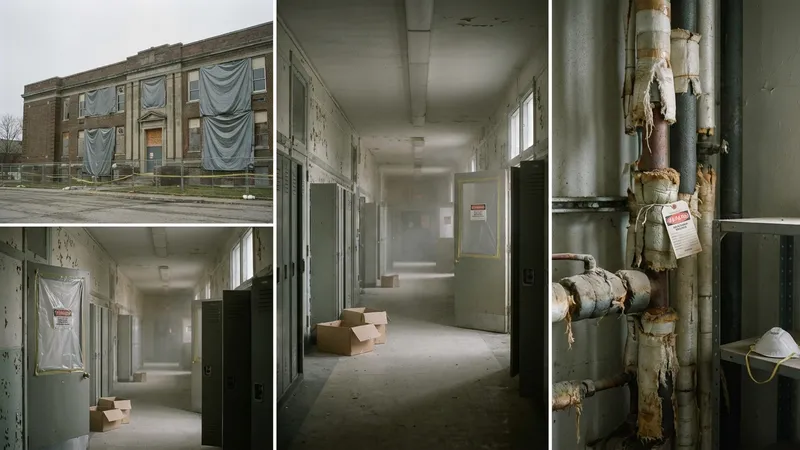
John D. Janvier School on Cold Lake First Nations reserve in Alberta closed abruptly in December 2025 after routine maintenance discovered asbestos contamination on surfaces throughout the building. Approximately 200 students from preschool through grade 9 were relocated to temporary portable classrooms while officials assess the extent of contamination and plan remediation.
The discovery highlights ongoing concerns about asbestos in aging school buildings, particularly in Indigenous communities where infrastructure funding has historically lagged behind needs.
What Was Found
During routine maintenance work in early December 2025, workers discovered what appeared to be asbestos-containing material on surfaces in multiple areas of the school. Subsequent testing confirmed the presence of asbestos contamination.
Key findings from initial assessment:
- Surface contamination was found in multiple locations throughout the building
- Air quality testing found no detectable airborne asbestos fibers
- The contamination appeared to result from deterioration of asbestos-containing building materials over time
- The school building dates from an era when asbestos was commonly used in construction
The distinction between surface contamination and airborne fibers is important: asbestos poses the greatest health risk when fibers become airborne and can be inhaled. Surface contamination, while requiring remediation, represents a lower immediate risk if undisturbed.
Response and Student Relocation
Cold Lake First Nations leadership and Indigenous Services Canada (ISC) took immediate action:
December 2025: School closed immediately upon confirmation of asbestos presence
Temporary facilities: Portable classrooms were arranged to allow students to continue their education without extended disruption
Professional assessment: Environmental consultants were engaged to conduct comprehensive testing and develop a remediation plan
Communication: Community meetings were held to inform parents about findings, risks, and response plans
Chief Roger Makeechak expressed frustration that the community’s children were again facing disruption due to infrastructure issues, while also acknowledging the necessity of prioritizing student safety.
Health Implications
For students and staff who occupied the building:
Airborne testing results: The absence of detectable airborne asbestos fibers is reassuring. Asbestos-related diseases result from inhaling fibers over time, and brief potential exposure to settled material generally represents low risk.
Medical monitoring: Health Canada and Alberta Health Services have offered guidance to concerned families. No widespread health screening was recommended given the test results.
Long-term risk: Single brief exposures to low levels of asbestos, particularly without confirmed airborne fiber presence, typically do not significantly increase disease risk. The extended latency period for asbestos diseases (often 20-50 years) means that any health effects would not appear for decades.
Parents with concerns may want to consult their healthcare providers and maintain records of the potential exposure for future reference.
If your child attended John D. Janvier School or any school with known asbestos, keep records of dates and duration of attendance. While brief, low-level exposure typically poses minimal risk, documentation may be valuable for future medical monitoring.
The Broader Problem of Asbestos in Schools
The Cold Lake situation reflects a nationwide challenge:
Aging infrastructure: Many Canadian schools were built during the 1950s-1970s when asbestos use was at its peak. These buildings are now 50-70 years old, and asbestos-containing materials are deteriorating.
Indigenous communities: First Nations schools have historically received less infrastructure investment than provincial schools. A 2016 Parliamentary Budget Officer report found that First Nations schools required $1.2 billion in deferred maintenance and repairs.
Inspection gaps: Not all older schools have been comprehensively surveyed for asbestos. Materials can remain hidden in walls, ceilings, and mechanical systems until renovation or deterioration exposes them.
Remediation costs: Proper asbestos abatement is expensive. Schools face difficult choices between costly remediation and building replacement.
Similar Incidents
Cold Lake is not isolated:
Kitigan Zibi Anishinabeg (Quebec): School closures due to mold and structural issues have forced similar relocations in this First Nations community.
Multiple Ontario schools: Several schools in Northern Ontario have faced temporary closures or partial closures due to asbestos discoveries during renovations.
United Kingdom: A national crisis in 2023-2024 forced emergency closures of schools built with reinforced autoclaved aerated concrete (RAAC), many of which also contained asbestos.
What Happens Next
The remediation process for John D. Janvier School will likely include:
Comprehensive survey: Full inspection to identify all asbestos-containing materials in the building
Remediation planning: Development of an abatement plan based on the type, condition, and location of asbestos materials
Options assessment: Evaluation of whether remediation or building replacement makes more sense given the building’s age and overall condition
Timeline: Proper asbestos abatement takes time. Students may remain in temporary facilities for months depending on the scope of work required.
Indigenous Services Canada has committed to funding necessary remediation or replacement, though specific plans and timelines had not been announced as of January 2026.
Protecting Students in Older Schools
For parents and educators concerned about asbestos in schools:
Request information: Schools should have asbestos management plans on file. Parents can request information about known asbestos locations and conditions.
Report deterioration: Damaged ceiling tiles, crumbling insulation, and other visible deterioration should be reported immediately for assessment.
Avoid disturbance: Asbestos in good condition and left undisturbed generally poses minimal risk. Problems arise when materials are damaged, disturbed, or deteriorate over time.
Advocate for assessment: If your school was built before 1980 and has not had a recent asbestos survey, advocate for comprehensive inspection.
Related Articles
- Asbestos in Schools
- Teachers and School Staff Exposure
- Asbestos Products Guide
- Asbestos Exposure in Public Buildings
Is my child at risk from asbestos exposure at this school?▼
Air quality testing found no detectable airborne asbestos fibers. Asbestos poses the greatest health risk when fibers become airborne and are inhaled. Surface contamination, while requiring remediation, represents a lower immediate risk. Brief potential exposure to settled material generally represents low risk.
Should my child be tested for asbestos exposure?▼
Health Canada and Alberta Health Services have not recommended widespread health screening given the negative air test results. Maintaining records of the potential exposure may be helpful for future reference, as any health effects would not appear for 20 to 50 years due to asbestos disease latency.
When will students return to the school building?▼
No specific timeline has been announced. Proper asbestos abatement takes time, and students may remain in temporary facilities for months depending on the scope of work. Indigenous Services Canada has committed to funding remediation or replacement, but officials are still assessing whether to remediate or replace the building entirely.
Why is asbestos common in older schools?▼
Many Canadian schools were built during the 1950s-1970s when asbestos use was at its peak. These buildings are now 50-70 years old, and asbestos-containing materials. Used in insulation, floor tiles, ceiling tiles, and other building components. Are deteriorating. Not all older schools have been comprehensively surveyed for asbestos.