9th Circuit Overturns $8M BNSF Libby Asbestos Verdict
The 9th Circuit reversed the $8M verdict against BNSF Railway, ruling the company is immune from strict liability as a common carrier under Montana law.

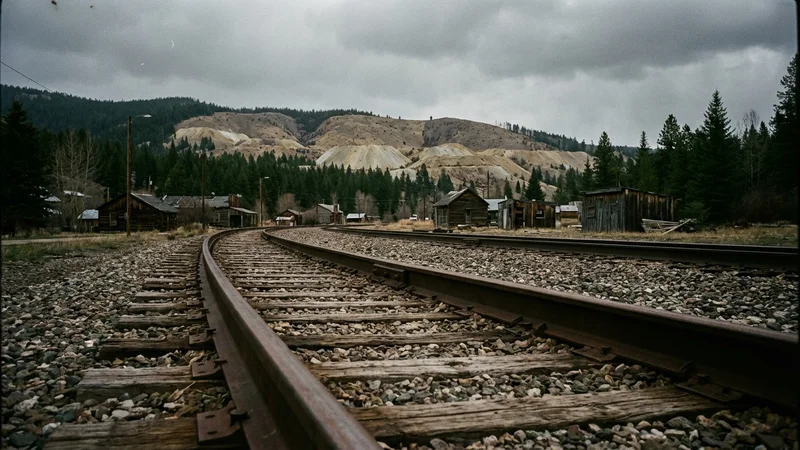
The 9th US Circuit Court of Appeals on February 24, 2026 reversed an $8 million jury verdict against BNSF Railway tied to asbestos contamination at its rail yard in Libby, Montana, a town where hundreds of residents have died from asbestos-related diseases.
The April 2024 verdict had awarded $4 million each to the estates of Joyce Walder and Thomas Wells. Both developed mesothelioma after exposure to asbestos-contaminated vermiculite that passed through the BNSF rail yard.
In an opinion by Circuit Judge Morgan B. Christen, the Ninth Circuit held that BNSF is immune from strict liability as a common carrier under Montana law. The dangerous condition arose from the railroad’s federally mandated duty to transport vermiculite for W.R. Grace.
The ruling threatens more than 200 pending cases against BNSF in Montana courts. Plaintiffs’ counsel indicated the estates were evaluating further appeal.
The Libby Disaster
Libby, Montana, is the site of one of the worst environmental health disasters in American history.
For decades, W.R. Grace and Company operated a vermiculite mine outside Libby that produced an estimated 80% of the world’s vermiculite supply. The ore was contaminated with a particularly toxic form of asbestos known as Libby Amphibole. Asbestos-laden dust spread across the town, settling in baseball fields, yards, schools, and the downtown rail yard where BNSF transported the product.
The contamination was so severe that the EPA declared Libby a Public Health Emergency in 2009, the first such declaration under the federal Superfund law. The cleanup took approximately 19 years and cost roughly $600 million. The EPA investigated more than 7,600 properties and cleaned up over 2,600 homes and businesses.
More than 2,000 people in the Libby area have been diagnosed with asbestos-related diseases. CDC data shows death rates from asbestos-related conditions in Lincoln County between 1999 and 2020 were more than 10 times higher than in Montana’s most populated counties.
The People Behind the Verdict
Joyce Walder grew up in Libby and later moved to Idaho, California, and the Bahamas. She worked in schools and served in the US Air Force Reserve. She was diagnosed with mesothelioma in mid-2020 and died in October 2020 at age 66. Her sister, Judith Hemphill, serves as estate representative.
Thomas Wells worked for the US Forest Service in Libby during summers in the 1970s. He lived in a trailer near the downtown BNSF rail yard. He was diagnosed with mesothelioma at the end of 2019 and died in March 2020 at age 65.
His son, Jackson Wells, said his father “felt a connection with Libby, even though he wasn’t there for that long. So whatever he could do to help out the community was what it was about for him.”
What the Jury Found
After a two-week trial led by Jinnifer Mariman of the McGarvey Law Firm, the federal jury found BNSF strictly liable for the toxic contamination at its downtown Libby rail yard. The jury concluded that the rail yard contamination was a “substantial factor” in both deaths and that BNSF’s handling of asbestos-contaminated vermiculite was “outside its duties as a common carrier.”
The jury did not find BNSF negligent, did not find that the company had knowledge or intentional disregard of hazardous conditions, and awarded no punitive damages. The verdict was limited to compensatory damages.
BNSF’s rail yard in Libby contained approximately 18,000 tons of contaminated soil when cleanup began in 2003. The cleanup involved removing millions of pounds of asbestos-contaminated dirt and thousands of contaminated rails and crossties. That cleanup concluded in 2020.
The Appeal and Reversal
BNSF, a subsidiary of Berkshire Hathaway since 2010, argued that Montana’s common carrier exception protects it from strict liability. The railroad contended it was legally obligated to transport W.R. Grace’s products and could not be held strictly liable for contamination caused by its shipping customer.
A three-judge panel of the 9th Circuit heard oral arguments on October 21, 2025, in Portland. The panel included Judges Consuelo Callahan, Morgan Christen, and Andrew Hurwitz. Attorney Kevin Parker of McGarvey Law argued that BNSF was not simply hauling vermiculite but was “working essentially as a business partner with W.R. Grace.”
On February 24, 2026, the panel unanimously ruled for BNSF. Judge Christen’s opinion applied Montana’s common carrier exception (Restatement §521), holding that because federal law imposes a public duty on railroads to transport materials, BNSF could not be strictly liable for accumulated asbestos dust tied to that duty. The jury had already cleared BNSF of negligence, so the panel directed entry of judgment for the railroad.
Railroads have certain legal protections as “common carriers,” meaning they are required by law to transport goods offered to them. BNSF argues this obligation shields it from strict liability for hazardous materials it was required to ship. The central legal question is whether that protection extends to contamination that accumulated in the rail yard itself, separate from the act of transportation.
What Happens Next
Plaintiffs’ counsel indicated after the February 24 ruling that the estates were evaluating further appeal, which could include en banc review by the full Ninth Circuit or a petition to the U.S. Supreme Court.
The stakes extend well beyond this single case. Montana Asbestos Claims Court Judge Amy Eddy previously noted that a reversal would open the door for BNSF to move to dismiss pending cases tied to its Libby operations. Attorneys representing Libby residents have said they are working on nearly 2,000 total cases against BNSF.
In a separate development, Libby’s asbestos-screening clinic was shuttered in May 2025 after losing a lawsuit to BNSF Railway, leaving the community with fewer resources to monitor the long-term health effects of decades of asbestos exposure.
References
U.S. Court of Appeals, 9th Circuit. (2026-02-24). Wells v. BNSF Railway Company (9th Circuit opinion).
https://cdn.ca9.uscourts.gov/datastore/opinions/2026/02/24/24-4802.pdf
Montana Free Press. (2026-02-24). Appeals Court Sides with BNSF Railway in Libby Asbestos Victims Dispute.
https://montanafreepress.org/2026/02/24/appeals-court-sides-with-bnsf-railway-in-dispute-with-libby-asbestos-victims/
Montana Free Press. Railroad Giant Seeks to Overturn Montana Asbestos Liability Verdict.
https://montanafreepress.org/2025/10/20/railroad-giant-seeks-to-overturn-montana-asbestos-liability-verdict/
AP News / KERA. Jury Finds BNSF Railway Contributed to 2 Deaths in Montana Town.
https://www.keranews.org/news/2024-04-23/jury-bnsf-railway-contributed-to-2-deaths-in-montana-town-where-asbestos-sickened-thousands
NPR. Near Old Montana Mine, Special Clinic for Asbestos-Related Illness Fights to Survive.
https://www.npr.org/sections/shots-health-news/2025/07/07/nx-s1-5452433/libby-montana-vermiculite-asbestosis-clinic-shutdown-bnsf-lawsuit
Reader Q&A
Frequently Asked Questions
What happened in Libby, Montana?
Libby was home to a vermiculite mine that produced an estimated 80% of the world’s supply. The ore was contaminated with a toxic form of asbestos. Dust from mining and transportation spread across the town, killing hundreds of residents and sickening thousands more with asbestos-related diseases. The EPA declared it a Public Health Emergency in 2009.
What is BNSF Railway's connection to Libby?
BNSF operated the rail yard in downtown Libby and transported W.R. Grace’s asbestos-contaminated vermiculite out of town. Approximately 18,000 tons of contaminated soil accumulated in the rail yard. The April 2024 jury found that BNSF’s handling of the material was outside its duties as a common carrier, but the 9th Circuit reversed that finding on February 24, 2026, concluding the railroad was shielded by Montana’s common carrier exception.
How many cases are pending against BNSF?
More than 200 cases are pending in Montana state and federal courts. Attorneys have indicated they are working on nearly 2,000 total cases against BNSF on behalf of Libby residents. The outcome of this appeal could affect all of them.
What happened to W.R. Grace?
W.R. Grace filed for bankruptcy in 2001 after thousands of asbestos lawsuits. The company emerged from bankruptcy roughly a decade later and established a trust to compensate people harmed by its products. Neither Walder nor Wells received trust payments before their deaths.
What is the average settlement for asbestos exposure?
Settlement amounts for asbestos exposure vary significantly based on diagnosis. People with mesothelioma typically receive pre-trial settlements ranging from $1 million to $2.4 million, while those with asbestos-related lung cancer average $250,000 to $400,000. Non-malignant asbestos-related conditions like asbestosis generally settle for $10,000 to $50,000, though trust fund payouts for these conditions average $300,000 to $400,000 across all trusts. Trial verdicts are substantially higher, with mesothelioma cases averaging around $9 million when they reach jury verdict. Settlement amounts depend on factors including diagnosis certainty, strength of exposure evidence, number of liable defendants, and case jurisdiction.
What is the largest mesothelioma settlement?
Reported mesothelioma verdicts have reached up to $250 million against a single defendant, as in the 2003 Roby Whittington case versus U.S. Steel, described across multiple sources as the largest in asbestos litigation history. More recent high verdicts include $1.5 billion for Cherie Craft versus Johnson & Johnson in December 2025 and $966 million for Mae K. Moore’s family in a talc-related case. Settlements typically average $1 million to $2 million, with individual amounts varying widely but rarely exceeding $10 million in reported cases. No primary government or peer-reviewed sources confirm a single largest settlement, as data relies on law firm and litigation reports.
What is the BNSF lawsuit settlement?
BNSF Railway Company agreed to a $75 million class action settlement in 2024 to resolve claims by truckers that it violated Illinois’ Biometric Information Privacy Act (BIPA) by collecting fingerprints at four Illinois facilities without proper consent between April 4, 2014, and March 5, 2024. The settlement followed a 2022 jury verdict finding BNSF liable for 45,600 reckless or intentional violations, initially awarding $228 million ($5,000 per violation), which a court later vacated. With approximately 46,500 class members, each is estimated to receive around $1,000 from the net fund; no claim form is required, but class members had until July 15, 2024, to update contact and tax information.
What are the verdicts for mesothelioma?
Mesothelioma verdicts vary widely depending on case circumstances, but trial awards average $20.7 million according to Mealey’s Litigation Report (2024), significantly higher than settlements which typically range from $1 million to $2 million. Recent high-profile verdicts include a $1.5 billion award by a Maryland jury against Johnson & Johnson in 2026 for talc-based baby powder exposure causing peritoneal mesothelioma, and a $51 million verdict upheld in February 2026 against Avon for mesothelioma caused by talc products. Juries may award both compensatory damages (for medical costs, lost income, and pain and suffering) and punitive damages intended to punish corporate negligence and deter future wrongdoing. Only about 5% of mesothelioma lawsuits reach a jury verdict; most resolve through settlement negotiations. Actual compensation depends on factors including exposure history, disease type, treatment costs, and evidence of corporate knowledge or concealment of asbestos risks.