Virginia Mesothelioma Verdicts and Settlements
Key Virginia mesothelioma verdicts from the $6.45M Parker case at Norfolk Naval Shipyard to the $17M Coulbourn verdict and the reversed Minton judgment.

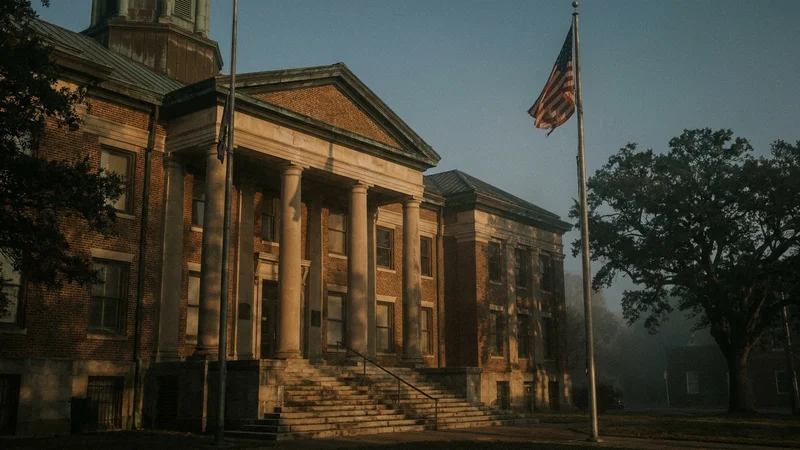
Virginia’s mesothelioma litigation reflects the state’s shipyard-heavy industrial history. Newport News Shipbuilding and Norfolk Naval Shipyard account for a large share of exposure claims, and cases routinely name gasket, valve, and pipe insulation manufacturers as defendants because Navy vessels contained products from dozens of companies across a worker’s career. The verdicts below are verified against court records and neutral legal press sources.
Major Virginia Mesothelioma Verdicts
| Amount | Case | Year | Docket / Court | Status |
|---|---|---|---|---|
| $6.45M | Parker v. John Crane Inc. | 2016 | Newport News Circuit Court | Verdict entered |
| $17M | Coulbourn et al. v. Crane Co. et al. | 2016 | U.S. District Court, D. Arizona (CV 3:13-cv-08141) | Verdict entered |
| ~$25M jury award (reduced, then reversed) | Exxon Mobil Corp. v. Minton | 2011 trial / 2013 appeal | Newport News Circuit; Rec. No. 111775 (VA Sup. Ct.) | Reversed and remanded |
| N/A (duty-of-care ruling) | Quisenberry v. Huntington Ingalls Inc. | 2018 | Supreme Court of Virginia, Rec. No. 171494 | Upheld |
Parker v. John Crane Inc. (2016)
On March 4, 2016, a Newport News Circuit Court jury awarded $6.45 million to George Parker, a retired machinist who worked at Norfolk Naval Shipyard. Judge Timothy S. Fisher presided. Virginia Lawyers Weekly reported a damage breakdown of $4.5 million for pain and suffering, $1.5 million for loss of consortium, and $450,000 in medical damages, though that breakdown derives from a paywalled source and has not been independently confirmed by a second neutral report.
The jury found John Crane Inc. strictly liable and negligent for asbestos-containing gaskets and seals it manufactured in the 1960s and 1970s. Five other gasket manufacturers had settled before the verdict and appeared on the jury’s verdict form. The case was tried under maritime law. The $6.45 million figure is confirmed by Virginia Lawyers Weekly.
Coulbourn et al. v. Crane Co. et al. (2016)
On April 22, 2016, a federal jury in the U.S. District Court for the District of Arizona awarded $17 million to Sandra Brown Coulbourn, the surviving wife of George Coulbourn, and statutory beneficiaries. George Coulbourn worked as a civilian machinist at Norfolk Naval Shipyard from 1959 to 1966, removing asbestos-containing gaskets and packing from valves during vessel maintenance.
The damage breakdown: $9 million in compensatory damages, $5 million in punitive damages against Crane Co., and $3 million in punitive damages against The William Powell Company. The jury allocated fault across multiple defendants. Confirmed allocations: Crane Co. at 20%, The William Powell Company at 5%, and the U.S. Navy and remaining defendants at 75% combined, with the Navy’s share confirmed at 47% by Insurance Journal and PR Newswire. The specific sub-allocation of the remaining fault among other named entities is not confirmed in accessible neutral sources and is not reproduced here.
The case (docket CV 3:13-cv-08141-PCT-SRB) was filed in Arizona, illustrating how shipyard exposure claims cross jurisdictional lines when plaintiffs or witnesses relocate after retirement.
Exxon Mobil Corp. v. Minton: The Reversal (2011-2013)
Rubert Minton worked as a repair supervisor at Newport News Shipbuilding and Dry Dock Company and alleged mesothelioma from asbestos exposure aboard Exxon commercial tankers. A Newport News Circuit Court jury awarded him approximately $25 million in 2011: $12 million in compensatory damages, $430,963.70 in medical expenses, and $12.5 million in punitive damages. The trial court then reduced the punitive award to $5 million under the ad damnum clause before appeal, bringing the effective post-remittitur total to approximately $17.43 million.
The Virginia Supreme Court reversed and remanded the verdict entirely in a 5-2 ruling in January 2013 (Record No. 111775) on two grounds. First, the circuit court had wrongly excluded evidence of Newport News Shipbuilding’s own knowledge of asbestos hazards, which was relevant to Exxon’s defense. Second, punitive damages are prohibited under the federal Longshore and Harbor Workers’ Compensation Act, which governs maritime employer liability. The U.S. Supreme Court denied certiorari. No damages were ultimately paid under this verdict. The case demonstrates the procedural risk that LHWCA preemption poses even after a successful trial.
Quisenberry v. Huntington Ingalls Inc. (2018)
The Virginia Supreme Court’s 4-3 decision (Record No. 171494, October 11, 2018) established that a shipyard employer owes a duty of care to a worker’s family member who develops mesothelioma from handling the worker’s asbestos-contaminated clothing at home, where the employer knew or should have known that asbestos fibers could be transported home on work clothing.
Plaintiff Wanda Quisenberry developed mesothelioma from washing the work clothes of her father, Benni Quisenberry, who worked at Newport News Shipbuilding (now Huntington Ingalls Industries) for 30 years. Senior Justice Leroy F. Millette Jr. authored the majority opinion. Chief Justice Lemons and Justice McClanahan wrote dissents. This ruling is not a damages verdict but a duty-of-care precedent that opened the door for secondary, or “take-home,” exposure claims in Virginia.
Virginia’s Shipyard Asbestos Context
Virginia’s outsized role in mesothelioma litigation stems directly from its naval and maritime industries. Newport News Shipbuilding, now part of Huntington Ingalls Industries, was one of the largest private shipyards in the country, employing tens of thousands of machinists, pipefitters, insulators, and laborers over decades when asbestos was the insulation of choice for naval vessels. Norfolk Naval Shipyard operated alongside it as a major federal repair and maintenance facility.
Both the Parker and Coulbourn cases involved civilian machinists removing asbestos-containing gaskets and valve packing, a routine task that released respirable fibers into enclosed shipboard spaces. The multi-defendant structure of these cases, with fault spread across the shipyard, the Navy, and a dozen or more product manufacturers, is standard in Virginia shipyard litigation.
These figures represent reported outcomes verified through Virginia Lawyers Weekly, the Virginia Supreme Court, and federal court records. Individual case results depend on the specific exposure history, medical documentation, and defendants involved. Prior results don’t guarantee a similar outcome. The Minton verdict listed above was reversed in full; no damages were paid under that judgment.
Virginia’s Filing Deadline and the Two-Disease Rule
Virginia imposes a two-year statute of limitations on personal injury actions under Va. Code § 8.01-243, and a two-year limitations period for wrongful death claims under Va. Code § 8.01-244(B), running from the date of death.
On accrual, Virginia enacted a two-disease rule in 2020 (HB781/SB661, amending Va. Code § 8.01-249(4)). Under current law, a prior non-malignant asbestos diagnosis, such as asbestosis or pleural plaques, does not start the clock for a later mesothelioma claim. A mesothelioma diagnosis is now a separate cause of action that accrues when a physician communicates that diagnosis to the patient. This is a significant protection for workers who received an earlier asbestos-related diagnosis and then developed mesothelioma years later.
Virginia doesn’t have a general discovery rule for personal injury. But because mesothelioma accrual under § 8.01-249(4) now runs from physician communication of the malignant diagnosis, a claimant’s window opens at that point, not at an earlier non-malignant finding.
Settlements and Shipyard Trust Claims
Most Virginia mesothelioma cases resolve before trial, through direct settlements with manufacturers or through claims against asbestos bankruptcy trusts. Virginia’s shipyard history means workers often have exposure records connecting them to multiple solvent defendants and multiple trusts simultaneously.
Trust fund claims and direct lawsuit settlements are typically confidential and don’t produce public dollar figures. Verified settlement ranges from primary government or court sources aren’t publicly available. What the public record does show is the verdict range: Virginia shipyard cases have produced confirmed verdicts from $6.45 million to $17 million in recent years, with the Minton case illustrating that even large jury awards can be reversed on federal maritime preemption grounds.
References
Virginia Lawyers Weekly. Virginia Lawyers Weekly: Jury awards $6.45M to shipyard retiree.
https://valawyersweekly.com/2016/03/17/jury-awards-6-45m-to-shipyard-retiree/
Virginia Supreme Court via Justia. Exxon Mobil Corp. v. Minton, Record No. 111775 (Virginia Supreme Court, 2013).
https://law.justia.com/cases/virginia/supreme-court/2013/111775.html
Insurance Journal. Navy Civilian Employee Awarded $17M in Asbestos Death Case.
https://www.insurancejournal.com/news/west/2016/04/22/406255.htm
Virginia Supreme Court via Justia. Quisenberry v. Huntington Ingalls Inc., Record No. 171494 (Virginia Supreme Court, 2018).
https://law.justia.com/cases/virginia/supreme-court/2018/171494.html
Washington Legal Foundation. Divided Virginia Supreme Court Decision Epitomizes National Split Over Take-Home Asbestos Liability.
https://www.wlf.org/2018/10/26/wlf-legal-pulse/divided-virginia-supreme-court-decision-epitomizes-national-split-over-take-home-asbestos-liability/
Virginia Law. Va. Code § 8.01-243 (personal injury statute of limitations).
https://law.lis.virginia.gov/vacode/title8.01/chapter4/section8.01-243/
Virginia Law. Va. Code § 8.01-244(B) (wrongful death statute of limitations).
https://law.lis.virginia.gov/vacode/title8.01/chapter4/section8.01-244/
Virginia Law. Va. Code § 8.01-249(4) (accrual of cause of action; two-disease rule).
https://law.lis.virginia.gov/vacode/title8.01/chapter4/section8.01-249/
Reader Q&A
Frequently Asked Questions
What was the largest Virginia mesothelioma verdict that actually held?
Among verdicts that were not reversed on appeal, the Coulbourn estate’s $17 million federal verdict in 2016 (tried in Arizona, arising from Norfolk Naval Shipyard exposure) and Parker’s $6.45 million Newport News Circuit Court verdict in 2016 are the most notable confirmed outcomes. The Minton verdict, which reached approximately $25 million before remittitur and $17.43 million after, was reversed in full by the Virginia Supreme Court in 2013 on federal maritime preemption grounds.
What is the two-disease rule and how does it affect my filing deadline in Virginia?
Virginia enacted a two-disease rule in 2020 (amending Va. Code § 8.01-249(4)). Under current law, a prior non-malignant asbestos diagnosis, such as asbestosis, does not start the two-year statute of limitations for a mesothelioma claim. A mesothelioma diagnosis is a separate cause of action, and the two-year clock begins when a physician communicates that diagnosis. Workers who received an earlier asbestos-related diagnosis and then developed mesothelioma aren’t automatically time-barred.
Are shipyard cases handled differently in Virginia?
Yes. Shipyard cases frequently involve multiple defendants because a single vessel contained asbestos products from dozens of manufacturers, and because federal maritime law, including the Longshore and Harbor Workers’ Compensation Act, can affect what damages are available. The LHWCA, for example, preempts punitive damages, a point the Virginia Supreme Court confirmed when it reversed the Minton verdict in 2013. Maritime law governs the exposure itself, while Virginia procedural rules govern the lawsuit’s timing and conduct in state court.
Can family members of shipyard workers file mesothelioma claims in Virginia?
Yes. The Virginia Supreme Court’s 4-3 ruling in Quisenberry v. Huntington Ingalls (2018) held that a shipyard employer owes a duty of care to family members who handle workers’ asbestos-contaminated clothing at home. Wanda Quisenberry’s claim arose from washing her father’s work clothes over his 30-year career at Newport News Shipbuilding. This precedent makes “take-home” exposure claims viable in Virginia.
Why was the Minton verdict reversed even though the jury found for the plaintiff?
The Virginia Supreme Court reversed on two grounds. First, the trial court had wrongly excluded evidence of Newport News Shipbuilding’s own knowledge of asbestos dangers, which was relevant to Exxon’s defense. Second, the LHWCA, the federal workers’ compensation statute for longshore and harbor workers, prohibits punitive damages in claims arising from injuries covered by the act. Because Minton’s injury arose from his work on vessels in navigable waters, LHWCA preempted the $12.5 million punitive award (which the trial court had already reduced to $5 million). The court reversed and remanded both the compensatory and punitive components entirely.
How does fault get allocated across multiple defendants in Virginia shipyard cases?
Virginia courts apportion fault among all potentially responsible parties, including settled defendants and non-parties like the U.S. Navy. In the Coulbourn case, the jury allocated 47% of fault to the U.S. Navy, 20% to Crane Co., 5% to The William Powell Company, and the remaining percentage to other named parties. A plaintiff’s total recovery is affected by how fault is distributed, by whether defendants are solvent, and by whether the Navy’s share is recoverable through separate federal channels.