Wisconsin Supreme Court Upholds $26.5M Pabst Verdict
Wisconsin Supreme Court affirms $26.5M verdict against Pabst for steamfitter Jerry Lorbiecki's mesothelioma death, rejecting its contractor defense.

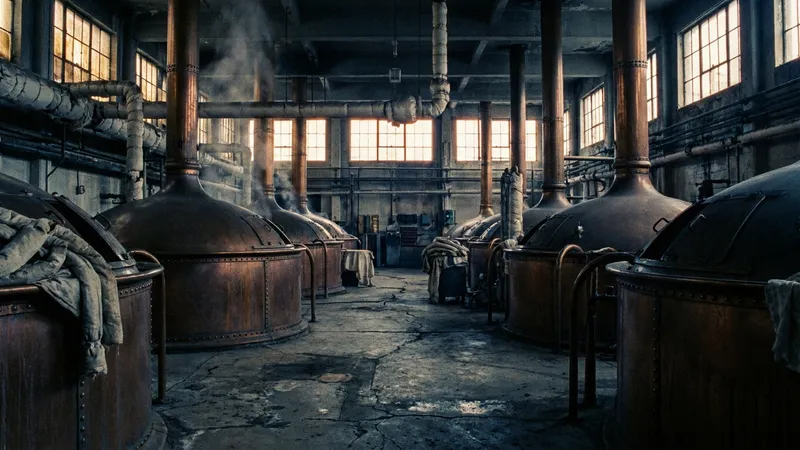
The Wisconsin Supreme Court on April 15, 2026 affirmed a $26.5 million verdict against Pabst Brewing Co. in the asbestos death of Gerald “Jerry” Lorbiecki, a steamfitter who worked at the company’s Milwaukee brewery in the 1970s. The ruling rejected Pabst’s central defense. The brewery argued it couldn’t be held liable because Lorbiecki worked for an outside contractor.
He wasn’t a Pabst employee. Didn’t matter. The court held that Wisconsin’s Safe Place Act extends to every worker on site, not just direct hires.
The Case: Lorbiecki v. Air & Liquid Systems Corp.
Lorbiecki died of mesothelioma after spending years as a steamfitter inside the Pabst Milwaukee brewery. He worked for an independent contractor that Pabst hired to service steam and piping systems. That job put him around asbestos insulation on pipes, boilers, and fittings throughout the facility.
The case was filed in 2018 in Milwaukee County Circuit Court, Branch 14, as Carol Lorbiecki, Individually and as Personal Representative of the Estate of Gerald Lorbiecki v. Air & Liquid Systems Corporation, et al., case number 2018CV004971.
A Milwaukee County jury sided with the family in 2021, awarding compensatory and punitive damages totaling $26.5 million. Pabst appealed on the theory that a property owner couldn’t be liable for a contractor’s asbestos exposure under the Safe Place Act. The Wisconsin Court of Appeals affirmed. The state Supreme Court has now affirmed again.
What the Ruling Actually Says
The core question was whether Pabst’s Safe Place duty was non-delegable. Pabst argued that by hiring a contractor, it had handed off responsibility for workplace safety. The court disagreed.
Under Wisconsin’s Safe Place Act, the owner of a place of employment has a duty to keep the premises as safe as the nature of the work allows. The court held that obligation runs to every worker on site, whether they collect a paycheck from the owner or from a contractor. Hiring out the work doesn’t hire out the duty.
The court also pointed to evidence the brewery knew the risk was there. At trial, the family’s attorneys introduced a 1986 OSHA citation documenting crumbling asbestos in the workers’ lunchroom. That’s the room where Lorbiecki and every other contractor on site took their breaks. Not a hidden hazard. It was in the room where workers ate.
“The Wisconsin Supreme Court has now made clear that companies cannot avoid responsibility for unsafe conditions simply because the work is performed by contractors,” said Jonathan Holder of Dean Omar Branham Shirley, which represented the Lorbiecki family.
Why This Matters Beyond Wisconsin
Premises-owner liability for contractor asbestos exposure is one of the most contested areas of mesothelioma litigation. Defendants routinely argue they hired a specialist and the specialist is the only party on the hook. Wisconsin’s ruling cuts directly against that.
The practical effect: a steamfitter, pipefitter, electrician, boilermaker, or insulator who developed mesothelioma after working inside a Wisconsin facility in the 1970s or 1980s now has a clearer path to naming the property owner as a defendant, even if the exposure happened while the worker was employed by a subcontractor.
That’s a meaningful expansion of recovery in a state with heavy industrial and manufacturing exposure history. Wisconsin mesothelioma statistics show hundreds of diagnoses tied to paper mills, shipyards, and breweries. Historical Wisconsin mesothelioma verdicts and settlements have leaned on the Safe Place Act repeatedly.
The Brewery Asbestos Problem
Breweries were heavy asbestos users. Steam pipes, boilers, kettles, refrigeration lines, and fermentation tanks were all wrapped in asbestos insulation to hold heat or cold. Gaskets, packing material, and thermal cement in valves and pumps added more. A 1970s brewery had asbestos running through nearly every utility system.
Steamfitters were particularly exposed. Their job was to install, repair, and remove those insulated lines. Cutting insulation off a hot pipe released fibers. Wrapping a new joint released fibers. Grinding out a frozen valve released fibers. The lunchroom dust in the 1986 OSHA citation was one symptom of a facility-wide problem.
Pabst’s Milwaukee brewery operated for more than a century before closing in 1996. Generations of tradesmen passed through it.
Recent Premises Liability Mesothelioma Verdicts
| Amount | Case | State | Year |
|---|---|---|---|
| $26.5M | Lorbiecki v. Pabst (affirmed) | Wisconsin | 2021 / 2026 |
| $18M | Cook v. Hennessy (brake dust) | Florida | 2025 |
| $45.5M | Whitehouse v. J&J | Illinois | 2025 |
| $51M | Ramirez v. Avon (affirmed) | California | 2026 |
| $9M | Prior Hennessy brake dust verdict | New York | n/a |
The Lorbiecki verdict stands out as one of the largest contractor-exposure premises liability awards in the Midwest. And unlike product-liability verdicts against talc or brake manufacturers, it holds a property owner fully on the hook for worker safety. Pabst didn’t make or sell asbestos. The court held it liable anyway.
What Families Should Take From It
People who worked inside Wisconsin breweries, paper mills, foundries, or power plants in the 1960s, 1970s, and 1980s may have been exposed regardless of who signed their paycheck. Mesothelioma’s latency period runs 20 to 60 years, so diagnoses today often trace to jobs half a century ago.
A spouse, adult child, or contractor’s family member may also have been exposed through work clothing brought home. Secondary exposure cases are a growing category of mesothelioma litigation, particularly among women.
Wisconsin has well-established asbestos trust funds covering many of the manufacturers and equipment makers that supplied asbestos insulation to breweries and industrial plants. Trust claims can be pursued alongside or instead of tort litigation depending on diagnosis and exposure history.
References
Wisconsin Supreme Court. Lorbiecki v. Pabst Brewing Co., Wisconsin Supreme Court opinion (2026).
https://www.wicourts.gov/sc/opinion/DisplayDocument.pdf?content=pdf&seqNo=1105505
The Daily Reporter. Wisconsin Supreme Court: Pabst liable for asbestos exposure.
https://dailyreporter.com/2026/04/16/wisconsin-supreme-court-pabst-liable-asbestos-exposure-milwaukee/
Wisconsin Supreme Court. Lorbiecki v. Pabst Opinion.
https://www.dropbox.com/scl/fi/pvt34ai8plvvjavup2vqg/Lorbiecki-Opinion.pdf?rlkey=40299kubo9sx4wgaaqupw8t5v&st=w4q8akda&dl=0
Wisconsin Legislature (Wis. Stat. § 101.11). Wisconsin Safe Place Statute.
https://docs.legis.wisconsin.gov/statutes/statutes/101/11
CDC. Incidence of Malignant Mesothelioma, United States.
https://www.cdc.gov/united-states-cancer-statistics/publications/mesothelioma.html
National Cancer Institute. Asbestos Exposure and Cancer Risk.
https://www.cancer.gov/about-cancer/causes-prevention/risk/substances/asbestos/asbestos-fact-sheet
Reader Q&A
Frequently Asked Questions
What was the Lorbiecki v. Pabst verdict amount?
A Milwaukee County jury awarded $26.5 million in 2021. The Wisconsin Court of Appeals affirmed. The Wisconsin Supreme Court affirmed again on April 15, 2026.
Why is the Safe Place Act ruling important?
The court held that a property owner’s duty to maintain a safe workplace extends to every worker on site, including contractors and subcontractors. A brewery, factory, or mill can’t avoid liability by pointing to the contractor who technically employed the worker.
Did Gerald Lorbiecki work for Pabst?
No. He worked for an independent contractor hired to service steam and piping systems at the Milwaukee brewery. That was central to Pabst’s appeal, and the court rejected it.
What kinds of workers were exposed to asbestos at breweries?
Steamfitters, pipefitters, boilermakers, insulators, millwrights, and electricians all worked around asbestos insulation on steam lines, boilers, refrigeration systems, and fermentation equipment. Asbestos was standard thermal insulation in industrial facilities through the 1970s.
How do families file a mesothelioma claim for contractor exposure in Wisconsin?
Wisconsin’s Safe Place Act allows claims against property owners as well as product manufacturers. A mesothelioma attorney experienced in Wisconsin premises liability can pursue claims against the facility, manufacturers of asbestos-containing insulation and equipment, and applicable asbestos trust funds.
What are the verdicts for mesothelioma?
Mesothelioma verdicts vary widely depending on case circumstances, but trial awards average $20.7 million according to Mealey’s Litigation Report (2024), significantly higher than settlements which typically range from $1 million to $2 million. Recent high-profile verdicts include a $1.5 billion award by a Maryland jury against Johnson & Johnson in 2026 for talc-based baby powder exposure causing peritoneal mesothelioma, and a $51 million verdict upheld in February 2026 against Avon for mesothelioma caused by talc products. Juries may award both compensatory damages (for medical costs, lost income, and pain and suffering) and punitive damages intended to punish corporate negligence and deter future wrongdoing. Only about 5% of mesothelioma lawsuits reach a jury verdict; most resolve through settlement negotiations. Actual compensation depends on factors including exposure history, disease type, treatment costs, and evidence of corporate knowledge or concealment of asbestos risks.