EPA Delays Its Legacy Asbestos Rule to 2027
The EPA will propose its Part 2 rule on legacy asbestos and asbestos-containing talc by June 2027 and is taking public exposure data through August 24, 2026.

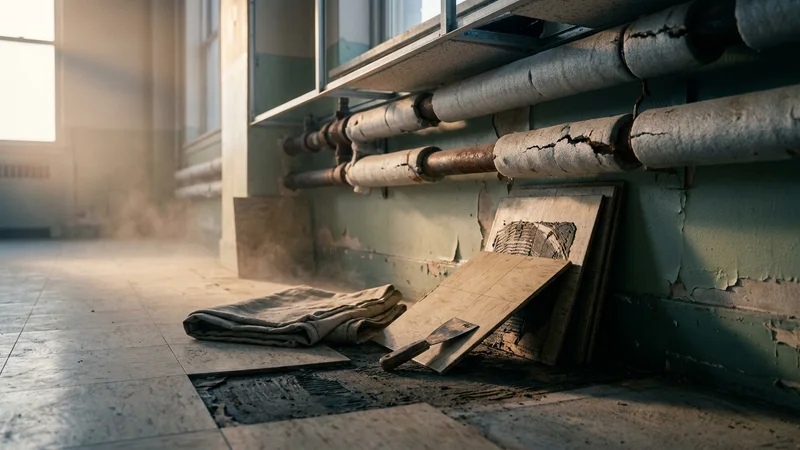
The Environmental Protection Agency is giving itself another year to write the rules that would manage the risks of legacy asbestos, the asbestos already sitting in millions of older buildings. On June 23, 2026, the agency said it will propose its Part 2 asbestos risk management rule by June 3, 2027, and it reopened a step to collect real-world exposure data first.
The move affects the second and broader half of the EPA’s asbestos work. Part 1, finalized in 2024, banned the ongoing uses of chrysotile, the only form of asbestos still imported into the country. Part 2 reaches much further, into the asbestos left behind in buildings, ships, and products across decades of past use.
What the EPA Announced
The agency published a notice saying it wants more information before it proposes the Part 2 rule. It opened a docket, EPA-HQ-OPPT-2025-0036, and set a comment deadline of August 24, 2026. The docket entry, posted on June 23, 2026, is a short memo that opens the record for public comment.
The EPA says it is asking for specific, practical data. It wants information on activities that disturb asbestos-containing materials, including work by self-employed people, on the use of legacy products such as construction materials, and on air-sampling methods and laboratory capacity. The agency says those details will sharpen its exposure and economic analyses, clarifying who is exposed, how often, and under what conditions.
To reset the timeline, the EPA is using a provision of the Toxic Substances Control Act, section 6(c)(1)(C), that lets it adjust the deadline for proposing a rule when it needs more information. The agency frames the extra year as a way to build a rule that holds up if industry or advocates challenge it in court.
The Date Is Late. It’s Also Still Inside the Legal Limit.
Two things are true here at once, and a reader deserves both.
The law set a hard first date. Section 6(c)(1)(A) gives the EPA one year from the day it publishes a final risk evaluation to propose the matching rule. The Part 2 evaluation published on December 3, 2024, so the proposal came due December 3, 2025. The agency didn’t meet it.
The same law lets the agency buy time, but not unlimited time. Section 6(c)(1)(C) allows extensions of “not more than 2 years” in total. Counted from the missed December 2025 date, that puts the outer legal boundary at December 3, 2027. The EPA’s new date of June 3, 2027 lands about six months inside it.
So the delay runs long, and on the face of the statute it holds up. That’s the honest reading, and it’s the one most coverage skips.
The provision carries a condition, though, and that’s the part worth watching. For a chemical drawn from the EPA’s 2014 TSCA Work Plan, the agency can’t extend a deadline “without adequate public justification that demonstrates” it can’t finish the rule without more information. Asbestos sits on that list. That’s why the agency opened a public docket asking for exposure data instead of simply announcing a later date.
The docket is the justification. Whether it’s adequate is now a live question in two places, the public comment record and a federal courtroom.
What “Legacy Asbestos” Means, and What Part 2 Covers
Legacy uses are uses where manufacturing, processing, and distribution have already ended, but where the material can still be present and disturbed. The EPA points to floor and ceiling tiles, pipe wraps, insulation, and heat-protective textiles as common examples.
Part 2 is wider than the chrysotile rule in another way. It covers six asbestos fiber types, chrysotile, crocidolite, amosite, anthophyllite, tremolite, and actinolite, along with Libby Amphibole Asbestos. The evaluation also assessed asbestos-containing talc, which has been implicated as a source of asbestos exposure.
The scope traces back to a court order. In November 2019, the Ninth Circuit ruled in Safer Chemicals, Healthy Families v. EPA that the agency had wrongly left legacy uses and their disposal out of its asbestos review, which forced the supplemental evaluation that became Part 2.
How Part 2 Differs From the 2024 Chrysotile Ban
The 2024 Part 1 rule banned ongoing chrysotile uses and is a finished regulation, though industry petitioners are challenging it at the Fifth Circuit, where a decision is pending. Part 2 is not a rule yet. It is a risk finding that still needs a management rule, and that rule is what the EPA has now pushed to 2027.
The EPA finalized the Part 2 risk evaluation in December 2024 and concluded that disturbing and handling legacy asbestos poses an unreasonable risk to human health. Under the Toxic Substances Control Act, a final unreasonable-risk finding starts a clock for the agency to propose management rules, which is the deadline the EPA is now adjusting.
Why the Timing Is Contested
The Asbestos Disease Awareness Organization, a patient-advocacy group, opposes the delay. It served a 60-day notice of intent to sue on February 13, 2026, then filed a citizen suit in federal court on April 21, 2026 to compel the agency to act. That case is Asbestos Disease Awareness Organization v. Zeldin, No. 1:26-cv-01350, in the US District Court for the District of Columbia. It was still open on the public docket as of July 20, 2026.
The suit came before the EPA announced its new date. The group asked the court to order a proposed rule “by a date certain,” so the June 2027 schedule the agency set in June arrives while a judge is already weighing whether to set one.
The organization’s core argument is that asbestos does not become safe because a product has aged or because no one makes it anymore. Education and cleanup can lower exposures, the group says, but neither removes the material already in homes, schools, and workplaces.
What It Means for People Tracing Exposure
For now, nothing about the legal status of asbestos in older buildings changes. The EPA’s own guidance holds that asbestos left undisturbed in insulation does not present a risk to the people living or working nearby. The risk arises when the material is cut, sanded, or broken during renovation, demolition, or repair.
The delay does mean that federal management rules for legacy asbestos, the exposure route most relevant to people diagnosed with mesothelioma today, remain a proposal for the future rather than a rule on the books. The August comment window is the next point where workers, building owners, states, and communities can add their own exposure data to the record.
References
U.S. Environmental Protection Agency. (2026-06-23). EPA Seeks Additional Information to Protect Americans From Legacy Uses and Associated Disposals of Asbestos.
https://www.epa.gov/chemicals-under-tsca/epa-seeks-additional-information-protect-americans-legacy-uses-and-associated
U.S. Environmental Protection Agency via Regulations.gov. (2026-06-23). Memo Opening Docket for Comment (EPA-HQ-OPPT-2025-0036).
https://www.regulations.gov/document/EPA-HQ-OPPT-2025-0036-0001
U.S. Environmental Protection Agency. (2026). EPA Actions to Protect the Public from Exposure to Asbestos.
https://www.epa.gov/asbestos/epa-actions-protect-public-exposure-asbestos
Asbestos Disease Awareness Organization. (2026-06-24). EPA Delays Part 2 Asbestos Rule Until 2027: Americans Cannot Afford to Wait.
https://www.asbestosdiseaseawareness.org/newsroom/blogs/epa-delays-part-2-asbestos-rule-until-2027/
US Code via Cornell Legal Information Institute. 15 U.S.C. 2605 (TSCA Section 6): deadlines and extension limits at subsection (c)(1).
https://www.law.cornell.edu/uscode/text/15/2605
US District Court for the District of Columbia via CourtListener. (2026-04-21). Asbestos Disease Awareness Organization v. Zeldin, No. 1:26-cv-01350 (D.D.C. filed Apr. 21, 2026), Complaint.
https://www.courtlistener.com/docket/73218918/asbestos-disease-awareness-v-zeldin-organization/
Federal Register. (2024-12-03). Asbestos Part 2 Supplemental Evaluation Including Legacy Uses and Associated Disposals, 89 Fed. Reg. 95777.
https://www.federalregister.gov/documents/2024/12/03/2024-28285/asbestos-part-2-supplemental-evaluation-including-legacy-uses-and-associated-disposals-risk
Reader Q&A
Frequently Asked Questions
What did the EPA decide about legacy asbestos in June 2026?
The EPA said on June 23, 2026, that it will propose its Part 2 asbestos risk management rule by June 3, 2027, rather than sooner. Part 2 covers legacy uses and associated disposals of asbestos, six asbestos fiber types plus Libby Amphibole Asbestos, and asbestos-containing talc. The agency also reopened a data-gathering step and is accepting public comment in docket EPA-HQ-OPPT-2025-0036 until August 24, 2026.
Is legacy asbestos now banned or regulated?
Not yet. The EPA finalized its Part 2 risk evaluation in December 2024 and found that disturbing legacy asbestos poses an unreasonable risk to human health. That finding is not a rule. It requires a separate risk management rule, which the EPA has now scheduled to propose by June 2027. The 2024 Part 1 rule, which banned ongoing chrysotile uses, is a separate, finished regulation.
How is Part 2 different from the EPA's chrysotile asbestos ban?
The 2024 Part 1 rule addressed only chrysotile, the single form of asbestos still imported into the United States, and banned its ongoing uses. Part 2 is broader. It covers six asbestos fiber types along with Libby Amphibole Asbestos, plus asbestos-containing talc, and it focuses on legacy uses such as old floor and ceiling tiles, pipe wraps, and insulation that can be disturbed during renovation or demolition.
Does asbestos in an older building put people at risk right now?
The EPA’s position is that asbestos left undisturbed does not present a risk to people living or working nearby. Exposure happens when asbestos-containing materials are disturbed, cut, sanded, or broken during renovation, demolition, repair, or disposal, which releases fibers into the air. That is the exposure route the Part 2 rule is meant to address.