NY Jury Awards $25M in Asbestos Tile Verdict
A New York jury awarded $25 million, including $5 million in punitive damages, to a flooring installer with mesothelioma from asbestos floor tiles.

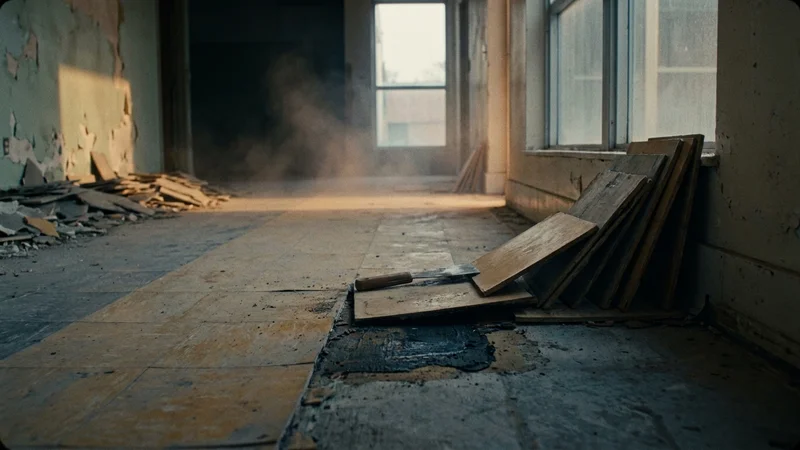
A New York County jury awarded $25 million on April 29, 2026, to a former flooring installer who developed mesothelioma after years of cutting and removing American Biltrite’s Amtico-brand asbestos floor tiles.
The award, returned in New York County Supreme Court before Justice Judy J. Kim, included $20 million in compensatory damages and $5 million in punitive damages against American Biltrite, Inc.
The compensatory portion split evenly: $10 million for past pain and suffering and $10 million for future pain and suffering, according to trial counsel. Brittany A. Russell and Pierre Ratzki of Weitz & Luxenberg tried the case. Russell also led the firm’s $117 million single-plaintiff asbestos verdict in New York in 2025.
How the Plaintiff Was Exposed
The plaintiff, who was not publicly identified, worked for years installing and removing Amtico-brand floor tiles manufactured by American Biltrite, according to the account his attorneys presented at trial. Cutting, scraping, and tearing out asbestos-containing tile releases respirable fibers, and flooring installers have long been documented as a high-risk occupational group in mesothelioma research.
He was later diagnosed with mesothelioma, a cancer of the lining of the lungs, abdomen, or heart that is almost exclusively linked to asbestos exposure.
The latency period between first exposure and diagnosis typically runs 20 to 50 years, which is why claims tied to tile work in the 1960s, 1970s, and early 1980s continue to reach juries today.
According to Weitz & Luxenberg’s own account of the trial record, American Biltrite continued to manufacture asbestos-containing floor tiles until 1985, and made non-asbestos vinyl tiles in parallel during the entire period it was selling the asbestos version.
OSHA’s construction asbestos standard at 29 CFR 1926.1101 classifies the removal of asbestos-containing floor tile and tile mastic as Class II asbestos work. An OSHA fact sheet (OSHA 3693) directs employers to presume that any floor tile installed before 1980 contains asbestos unless laboratory testing shows otherwise.
Why the Jury Added Punitive Damages
The $5 million punitive award turned on a single piece of evidence the plaintiff’s attorneys put in front of the jury.
By 1981, trial counsel argued, American Biltrite had developed a patent to manufacture a non-asbestos tile using the same process and equipment it used to make its asbestos tiles, and continued selling the asbestos version anyway.
That framing shifted the case from a product-defect claim to a question of corporate knowledge. Under New York law, a jury can award punitive damages when a defendant’s conduct goes beyond ordinary negligence and shows conscious disregard for public safety.
The 1981 patent gave the jury a specific date to anchor a finding that the company had a safer option and did not take it.
Punitive damages are separate from compensation for a person’s injury. They are meant to punish conduct a jury finds reckless or malicious and to deter similar conduct, and they require a higher showing than ordinary negligence.
Context: New York’s Asbestos Docket
New York remains one of the most active asbestos litigation venues in the United States, and floor tile cases are a recurring fixture. Tile installers, removers, and renovation workers continue to file claims decades after their exposures, and juries continue to credit the medical link between cumulative low-dose exposure and mesothelioma.
KCIC, a litigation-management firm that says it tracks more than 90% of US asbestos complaints, wrote in its 2025 mid-year report that “Philadelphia and New York City are continuing to be key areas to monitor” for new filing activity.
A 2023 review published in the journal Cancers, drawing on the Italian National Mesothelioma Register and a wider literature scan, identified floor layers among the construction-trades subgroups with documented elevated mesothelioma risk, alongside insulators, pipefitters, plumbers, and carpenters.
Flooring work routinely involved cutting, scraping, and tearing out asbestos-containing tile and mastic, the kind of activity OSHA’s construction standard treats as Class II asbestos work.
The verdict is subject to potential post-trial motions and appeal. As of publication, no post-trial ruling or notice of appeal had been reported.
Post-trial motions in New York asbestos cases commonly seek to set aside or reduce a verdict, and large awards are frequently adjusted before they are paid. Reporting on a jury award describes what a jury decided at trial, not a final or collected amount.
For people weighing a legal claim after a mesothelioma diagnosis, verdicts like this one show what a jury can award when exposure evidence is specific and a manufacturer’s own records document what it knew.
They do not predict the outcome of any individual case, which depends on the products involved, the exposure history, and the venue.
References
New York Law Journal. (2026-04-30). Weitz & Luxenberg Wins $25 Million Asbestos Tile Verdict.
https://www.law.com/newyorklawjournal/2026/04/30/weitz-luxenberg-wins-25-million-asbestos-tile-verdict/
US Department of Labor, OSHA. (2014). OSHA 3693: Protecting Workers from the Hazards of Asbestos-Containing Flooring Material.
https://www.osha.gov/sites/default/files/publications/OSHA3693.pdf
US Code of Federal Regulations. 29 CFR 1926.1101: Asbestos (Construction Standard).
https://www.ecfr.gov/current/title-29/subtitle-B/chapter-XVII/part-1926/subpart-Z/section-1926.1101
Cancers (PMC10281067). (2023). Mesothelioma Risk among Construction Workers According to Job Title (Italian Mesothelioma Register).
https://pmc.ncbi.nlm.nih.gov/articles/PMC10281067/
KCIC. (2025-08-12). 2025 Asbestos & Talc Filing Trends: Mid-Year Insights and Projections.
https://www.kcic.com/trending/feed/2025-asbestos-talc-filing-trends-mid-year-insights-and-projections/
Reader Q&A
Frequently Asked Questions
How much was the American Biltrite asbestos verdict?
A New York County jury awarded $25 million on April 29, 2026: $20 million in compensatory damages, split evenly between past and future pain and suffering, and $5 million in punitive damages against American Biltrite, Inc.
Why did the jury award punitive damages against American Biltrite?
Trial counsel presented evidence that by 1981 American Biltrite held a patent to make a non-asbestos tile using the same equipment and process as its asbestos tile, and continued selling the asbestos version. The jury found that conduct supported a punitive award.
What is the average payout for an asbestos claim?
There is no single average. Resolved asbestos claims range widely depending on the diagnosis, exposure history, the products and companies involved, and the venue. Trial verdicts are often higher than negotiated settlements and trust-fund payments, and they are frequently reduced on appeal or in post-trial motions before any money changes hands.
What are the verdicts for mesothelioma?
Reported mesothelioma jury verdicts vary widely, from low seven figures to more than $100 million in outlier single-plaintiff cases. The $25 million American Biltrite award and Weitz & Luxenberg’s $117 million 2025 New York verdict are recent examples, but a reported verdict reflects what a jury decided at trial, not a final or collected sum.
What is the average mesothelioma lawsuit settlement?
Settlements are negotiated privately and are usually not disclosed, so any cited average is an estimate. Settlement amounts depend on the strength of the exposure evidence, the diagnosis, the solvency of the companies involved, and whether claims also reach asbestos bankruptcy trusts. Settlements are generally lower than headline trial verdicts.
Can you still sue for asbestos exposure that happened decades ago?
In most states, yes. Because mesothelioma has a 20 to 50 year latency period, the statute of limitations generally begins to run from the date of diagnosis rather than the date of exposure. Specific deadlines vary by state and by whether a claim is brought as a personal injury or wrongful death action.
What jobs have the highest risk of asbestos exposure from floor tile?
Flooring installers, tile setters, and renovation and demolition workers face elevated risk, because cutting, sanding, scraping, and tearing out asbestos-containing tile and the adhesive beneath it releases respirable fibers. Building maintenance and abatement workers are also exposed during removal.
Is asbestos still in old floor tiles today?
Asbestos was widely used in vinyl-asbestos and asphalt floor tile and tile mastic through the early 1980s. Intact tile that is not disturbed generally does not release fibers, but cutting, breaking, or removing old tile can, which is why renovation and demolition of older buildings remains a recognized exposure source.