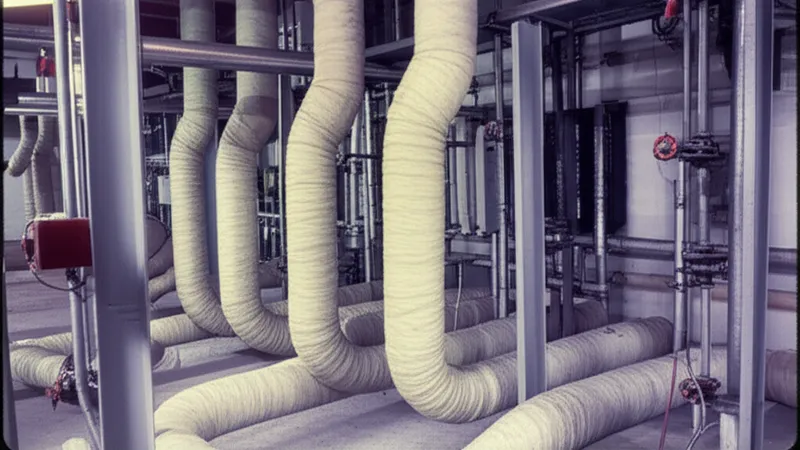
Overview
Insulators, workers who install and remove thermal insulation in buildings, ships, and industrial facilities, faced the highest asbestos exposure levels of any occupation. Studies published in the Journal of the National Cancer Institute show insulators developed mesothelioma at rates 50–100 times higher than the general population.
According to the International Association of Heat and Frost Insulators, approximately 45% of insulators who worked during the peak asbestos period developed an asbestos-related disease, the highest rate of any trade.
Why Insulators Had the Highest Exposure
Insulators worked directly with raw asbestos products daily. Their tasks included mixing and applying asbestos-containing materials, cutting and fitting pre-formed pipe covering, and removing deteriorating insulation, all without respiratory protection for decades.
These exposures were particularly dangerous because insulators handled friable asbestos, material that crumbles easily and releases fibers into the air.
Asbestos Products Used by Insulators
Insulators handled a wide range of asbestos-containing products throughout their careers. The table below shows typical asbestos content and exposure risk for common materials.
| Product | Asbestos Content | Exposure Level |
|---|---|---|
| Pipe insulation | 15–50% | Extreme |
| Block insulation | 15–35% | Extreme |
| Spray-on insulation | 5–20% | Extreme |
| Insulation cement | 10–50% | Very High |
| Asbestos cloth and blankets | 80–100% | Very High |
| Duct insulation | 10–25% | High |
These products were manufactured by companies including Johns-Manville, Owens Corning, and W.R. Grace, many of which later established asbestos trust funds.
Where Insulators Worked
Insulators were employed across many industries that relied heavily on thermal insulation. Their work took them to some of the most asbestos-intensive environments in American industry.
- Power plants: Boilers, turbines, steam pipes
- Shipyards: Engine rooms, boiler rooms, pipe systems
- Oil refineries: Process equipment, tanks, piping
- Chemical plants: Reactors, heat exchangers, piping
- Commercial buildings: HVAC systems, boiler rooms
- Steel mills: Furnaces, ladles, hot metal handling
Each of these work environments exposed insulators to concentrated asbestos fibers, often in enclosed or poorly ventilated spaces.
Related High-Risk Occupations
Workers in these trades often worked alongside insulators and faced similar exposures. Many bystander workers developed mesothelioma simply from working near insulation activities.
- Pipefitters, Installed pipes that insulators covered
- Steamfitters, High-pressure steam systems
- Boilermakers, Built and repaired insulated boilers
- Plumbers, Worked on insulated water systems
- Sheet metal workers, HVAC and ductwork
If you worked in any of these trades, documenting your exposure history is an important first step.
Mesothelioma and Other Health Risks
The health impact on insulators has been severe. Dr. Irving Selikoff’s landmark 1964 study of insulation workers first established the clear connection between asbestos exposure and mesothelioma.
Published in the Journal of the American Medical Association, Dr. Selikoff’s research showed that death rates from asbestos-related diseases were dramatically elevated among insulators, findings that fundamentally changed occupational health policy.
Insulators face elevated risk for several conditions:
- Mesothelioma: A cancer of the chest or abdominal lining with a latency period of 20–50 years
- Asbestosis: Progressive lung scarring that causes breathing difficulty
- Lung cancer: Risk is significantly elevated, particularly among smokers
- Pleural disease: Thickening and calcified plaques on the lung lining
Because mesothelioma symptoms often don’t appear for decades, insulators who worked in the 1960s–1980s are now in the peak period for diagnosis.
Legal Options for Insulators
Insulators diagnosed with mesothelioma may have several paths to compensation. Because insulators faced the highest documented exposure levels, their claims are often strong.
Asbestos Trust Funds
Major insulation manufacturers have established trust funds totaling more than $30 billion. Key trusts include:
- Johns-Manville Trust: The largest asbestos trust fund
- Owens Corning/Fibreboard Trust
- W.R. Grace Trust
- Armstrong World Industries Trust
Additional Legal Claims
Beyond trust funds, insulators may pursue:
- Personal injury lawsuits: Against companies not in bankruptcy
- VA benefits: For military service-related exposure
- Workers’ compensation: Through employer coverage
Many insulators worked at multiple job sites using products from dozens of manufacturers. An attorney experienced in asbestos litigation can identify all responsible parties and help maximize total compensation.