Canada Recalls Children's Craft Sand Over Asbestos
Health Canada recalled children's craft sand and candle kits after testing found asbestos fibers. Part of a global wave spanning seven countries.

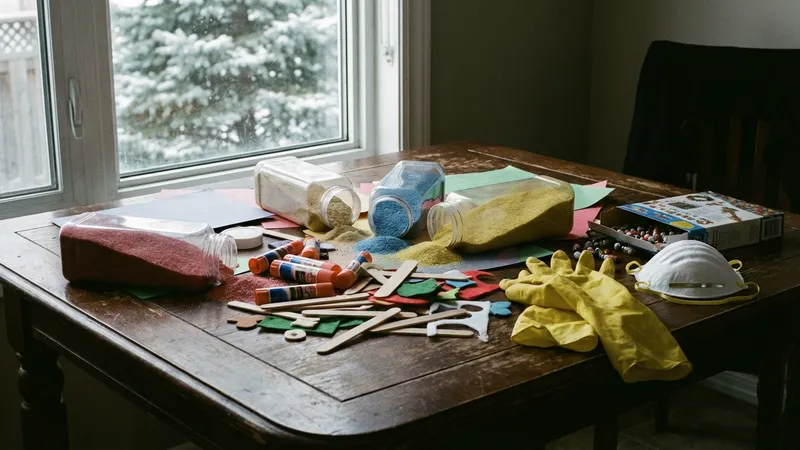
Health Canada has recalled children’s craft sand and candle-making kits after laboratory testing confirmed asbestos fibers in the products. The recall, announced in early March 2026, makes Canada the seventh country to pull children’s sand products from shelves over the same contamination issue. The Canadian recall is one node in MesoWatch’s full investigation of the global asbestos craft-sand recall wave, which now spans 12 countries and 80-plus separate regulator notices.
No health incidents have been reported. But the products were available for sale through Canadian retailers and online marketplaces before the recall was issued.

Part of a Global Wave
Canada’s recall is the latest in a chain that now spans seven countries. The contamination was first discovered in January 2026 when a parent in the United Kingdom had craft sand from Hobbycraft tested in a private lab. That initial finding triggered recalls across the UK, Australia, Germany, France, Ireland, and Malta before reaching Canada.
| Country | Date | Action | Products Affected |
|---|---|---|---|
| UK | January 2026 | OPSS recalled 14 children’s products | Sand art kits, stretchy toys, craft sets |
| Australia | February 2026 | Stretcherz toys recalled; 450+ schools closed | Stretch Squad, Slammerz, craft sand |
| Germany | February 26, 2026 | Pufferz dolls withdrawn | Stretchable rubber dolls with sand filling |
| France | February 26, 2026 | Nationwide suspension of all sand-based toys | All colored play sand, magic sand products |
| Ireland | February 25, 2026 | My Living World Worm Kit recalled | Sand-containing science kits |
| Malta | March 18, 2026 | Seven toys recalled | Stretcherz, Out to Impress, ORB Funkee |
| Canada | March 5, 2026 | Health Canada recall | Craft sand, candle kits |
Every affected product traces back to sand imported from Chinese manufacturers. The type of asbestos found, tremolite, is one of the most hazardous forms. It occurs naturally in certain mineral deposits and can contaminate sand products when mining and manufacturing controls are inadequate.
Known Affected Brands
The following brands have been subject to recalls across multiple countries. Canadian parents should check for these products regardless of where they were purchased.
| Brand | Products | Known Retailers |
|---|---|---|
| Stretcherz (HTI Toys) | Stretch Squad, Slammerz, Stretch Skulls, 4-Packs | Amazon, various retailers |
| ORB Funkee (Orb Toys) | Sand toys | The Entertainer, Tesco |
| Colour Day | Sand Art Kit | Amazon, eBay |
| Addo Play Limited | Out To Impress Sand Art Creations | The Entertainer, Tesco, Matalan |
| Hobbycraft | Sand & Pom Pom Art Kit, Basing Sand, Giant Box of Craft | Hobbycraft |
| Pufferz | Stretchable rubber dolls | Various |
Stop using any sand art kits, craft sand products, or stretchy sand-filled toys purchased in the last two years. If the sand is still sealed, place it in a heavy-duty plastic bag, double tape it shut, and label it. If the sand has been opened or used, clean surfaces with damp cloths while wearing gloves and a mask. Do not vacuum or sweep, as this can spread fibers. Double bag all materials and dispose in household waste. Contact the retailer for a full refund.
The Health Risk for Children
Canada banned asbestos in 2018 under the Prohibition of Asbestos and Products Containing Asbestos Regulations. But products manufactured before the ban, or imported from countries without equivalent restrictions, can still enter the market.
When children play with contaminated sand, they can inhale microscopic asbestos fibers. The risk from brief, low-level exposure is significantly lower than occupational exposure. But no level of asbestos exposure is considered safe, and children’s developing lungs are particularly vulnerable.
Mesothelioma typically develops 20 to 50 years after exposure. A child exposed today may not face a diagnosis until adulthood. Canada diagnoses approximately 560 people with mesothelioma each year, and rates have been rising despite the national ban.
Why This Keeps Happening
The contamination is a supply chain problem. Asbestos and the minerals used in craft sand, particularly talc and silica, are often found in the same geological formations. When manufacturing controls fail to screen for asbestos, contaminated raw materials enter the production line.
The same pattern caused asbestos contamination in cosmetics sold at Claire’s and in talc-based products that led to billions of dollars in litigation against Johnson & Johnson.
France took the most aggressive response, suspending all sand-based toys nationwide on February 26, 2026. Other countries have issued product-by-product recalls as testing confirms contamination.
See Also
Canada is one node in a 12-country pattern. For the running global tally with retailer-level attribution and country-by-country counts, see Asbestos Product Recalls 2026: A Running Global Tally. For the cornerstone investigation tracing the wave back to a single Chinese quarry across 80-plus separate regulator notices, see the global asbestos craft-sand recall investigation. Contrasting Canada’s action, a Houston shelf survey found six recalled brands still available in Texas stores.
For sealed products: place in a heavy-duty plastic bag, seal with tape, label clearly, and store away from children until disposal. For opened or used products: wear disposable gloves and a dust mask. Wipe surfaces with damp cloths only. Place all materials, including cloths, gloves, and mask, in a heavy-duty bag, seal, and dispose in household waste. Do not use compressed air, brooms, or vacuum cleaners.
References
Health Canada. (2026). Product Recall: Children's Arts and Crafts Sand Products.
https://recalls-rappels.canada.ca/en/alert-recall/children-s-arts-and-crafts-sand-products-may-pose-health-risk-due-asbestos
Inside Halton. (2026). Canada Recalls Kids' Sand Art, Candles Over Asbestos Risk.
https://www.insidehalton.com/news/canada-product-recall-craft-sand-candles-asbestos-risk
International Ban Asbestos Secretariat. (2026). IBAS Global Asbestos Recalls Timeline.
https://ibasecretariat.org/lka-asbestos-recalls-2026.php
Reader Q&A
Frequently Asked Questions
Which Canadian retailers sold these products?
Health Canada’s recall notice covers craft sand and candle-making kits sold through Canadian retailers and online marketplaces. Some of the affected brands, including Stretcherz and ORB Funkee, were also available through Amazon Canada. Check your purchase history for any sand art kits, craft sand, or stretchy sand-filled toys bought in 2024 or 2025.
How dangerous is brief exposure from a children's toy?
The risk from a single or brief exposure is very low compared to occupational exposure over months or years. However, no level of asbestos exposure is considered completely safe. The concern is that children playing repeatedly with contaminated sand could accumulate exposure over time. If your child used a recalled product a few times, the risk remains low.
Should I have my child tested?
There is no routine screening test for asbestos exposure in children. If your child used a recalled product, note the approximate dates and duration of use. Share this information with your child’s doctor so it can be part of their medical history for future reference.
Is this the same contamination as the Australian school closures?
Yes. The Australian recalls and the closure of more than 450 schools trace to the same root cause: sand imported from Chinese manufacturers contaminated with tremolite asbestos. The UK, Australia, and Canada incidents all involve overlapping brands and supply chains.
Has Canada recalled all sand-based toys?
No. Unlike France, which suspended all sand-based toys nationwide, Canada has issued recalls for specific products where testing confirmed asbestos. Parents should monitor Health Canada’s recall page for updates as testing continues.
Does Canada still use asbestos?
Canada banned the manufacture, import, sale, and use of asbestos and asbestos-containing products in December 2018 under the Prohibition of Asbestos and Products Containing Asbestos Regulations. Limited exemptions persist for specific industries, including chlor-alkali facilities (until 2030), military and nuclear facilities (until 2029), magnesium extraction from mining residues, and existing road infrastructure. Asbestos remains in many older buildings and products, posing exposure risks for people with potential mesothelioma links, but new uses are prohibited except under these exemptions.
Does vermiculite in Canada contain asbestos?
Some vermiculite insulation in Canada contains asbestos, particularly products from the Libby Mine in Montana sold as Zonolite® Attic Insulation between the 1920s and 1990. The Libby Mine had natural tremolite asbestos deposits that contaminated the vermiculite during extraction. However, not all vermiculite sold in Canada before 1990 contains asbestos fibers, as some was imported from uncontaminated sources in South Africa. Health Canada found that asbestos-contaminated vermiculite poses no health risk if sealed behind walls or isolated in attics, but can release harmful fibers if disturbed during renovation or demolition. Testing is recommended before any work on older vermiculite insulation.
How many people died from asbestos in Canada?
Mesothelioma deaths in Canada, almost exclusively caused by asbestos exposure, totaled nearly 7,000 from 2000 to 2016, with annual figures rising from 292 in 2000 to 510 in 2016 (a 70% increase). In 2022, 472 people died from mesothelioma (377 men and 95 women). Occupational asbestos exposure is estimated to cause about 430 mesothelioma deaths and 1,900 lung cancer deaths annually, based on past exposures from 1961-2001. Asbestos-related diseases account for the majority of occupational fatalities in provinces like British Columbia, where they caused 36 of 79 occupational disease deaths in one recent year. Statistics Canada data through 2022 shows 458 total mesothelioma deaths that year, with 377 among men.